Imagine unlocking a hidden dimension of your brain, one that enhances memory, deepens emotional intelligence, and builds unshakable discipline. This isn't a futuristic concept; it's the proven result of learning a musical instrument. While many see music lessons as a simple hobby, decades of research reveal a profound impact on cognitive, emotional, social, and even physical development for learners of all ages.
The benefits of learning to play an instrument extend far beyond the stage. They are woven into the very fabric of how we think, feel, and interact with the world around us. For young children, it can mean a significant boost in academic readiness and focus. For teens, it provides a powerful outlet for self-expression and stress management. For adults, it becomes a tool for maintaining cognitive health and finding fulfilling new passions.
This guide moves beyond generic praise for music and dives into the specific, science-backed advantages that await every student. We will explore the 10 most significant benefits, from improved fine motor skills to enhanced long-term brain health, supported by research and real-world examples from our community at East Valley School of Music.
Whether you're a parent considering your child’s first lessons, an adult returning to a long-lost hobby, or a teen aiming for their next audition, you will find actionable insights here. Discover how picking up a guitar, sitting at a piano, or joining a strings ensemble can become one of the most impactful investments you ever make in yourself or your child. Let's explore the symphony of advantages that awaits.
1. Enhanced Cognitive Development and Academic Performance
One of the most extensively researched benefits of learning to play an instrument is its profound impact on brain development and academic achievement. Engaging in music training acts as a full-brain workout, strengthening the neural pathways responsible for complex cognitive tasks. This isn't just a theory; it's a measurable phenomenon that translates directly into classroom success.
When a musician plays, they simultaneously process rhythm, pitch, tempo, and physical coordination. This multitasking strengthens the brain's executive functions: skills like planning, problem-solving, and working memory. Research pioneered by experts like Dr. Laurel Trainor at McMaster University has demonstrated how musicians’ brains are more structurally and functionally connected, particularly in areas linking auditory and motor regions.
From Practice Room to Classroom
The cognitive skills honed during music lessons have a remarkable carryover effect into academic subjects. The discipline of reading sheet music, for instance, enhances language processing and reading comprehension. Understanding rhythm and time signatures builds a foundation for mathematical concepts like fractions and pattern recognition.
- Real-World Impact: Students enrolled in East Valley School of Music's early childhood programs, like our Little Pianist course for ages 4-6, often demonstrate improved focus and listening skills when they enter kindergarten and first grade.
- Proven Results: A landmark study by the National Association for Music Education revealed that students with consistent music education scored, on average, 22 percentile points higher in math and 20 points higher in language arts on standardized tests compared to their non-musical peers.
Actionable Tips for Cognitive Growth
To maximize these academic benefits, a structured approach is key.
Key Insight: Consistent, focused practice is more effective than sporadic, long sessions. It builds the neural "muscle memory" that strengthens cognitive function.
- Establish a Routine: For young beginners, 15-30 minutes of daily practice creates a powerful habit that reinforces learning.
- Connect the Dots: Actively link musical concepts to school subjects. Ask your child how a 4/4 time signature relates to fractions or how a musical scale is a type of sequence.
- Use Structured Materials: Follow a progressive method book, like those available at EVSM's on-site store, to ensure concepts build logically and scaffold learning effectively.
This powerful connection between music and intellect makes learning an instrument a strategic investment in a child’s long-term academic journey. For parents looking to give their children an educational edge, exploring music lessons for kids can provide a fun and engaging path to cognitive enhancement.
2. Increased Emotional Intelligence and Stress Management
Beyond academics, another of the core benefits of learning to play an instrument is its powerful ability to foster emotional intelligence and serve as a constructive outlet for stress. Engaging with music provides a unique language for expressing feelings that words often cannot capture. This process activates the brain's reward centers, releasing dopamine and lowering levels of the stress hormone cortisol, leading to a calmer, more resilient state of mind.
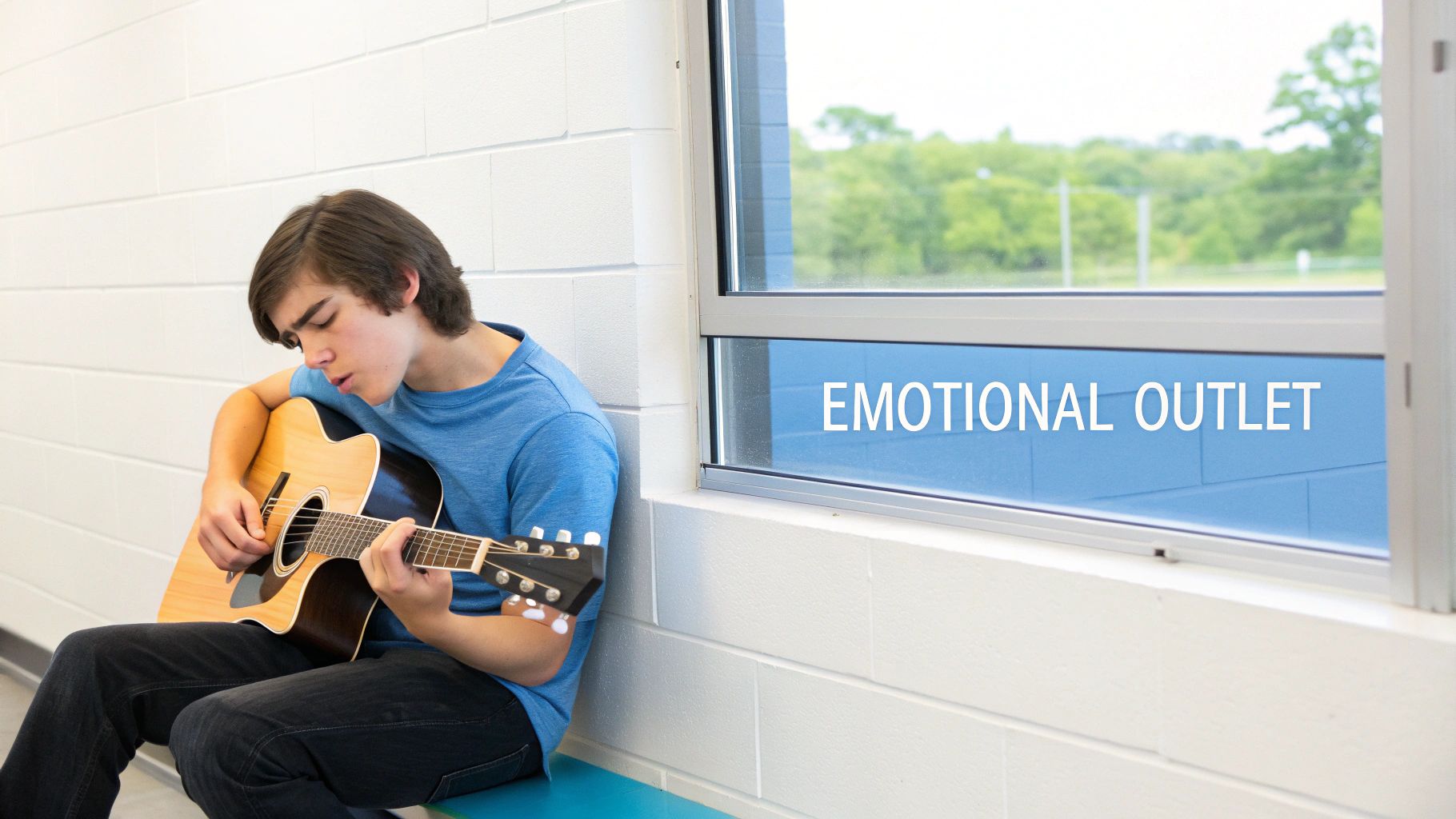
Learning to interpret a composer's intentions and convey emotion through dynamics and phrasing develops a student's own emotional awareness and empathy. This concept, central to the work of emotional intelligence pioneer Dr. Daniel Goleman, shows how identifying and managing emotions through music can build mental fortitude. It becomes a reliable tool for navigating life's challenges.
From Performance Anxiety to Emotional Confidence
The skills learned in music lessons translate directly into better emotional regulation in daily life. A teenager learns to channel pre-performance jitters into a focused, powerful delivery, a skill they can use before a school presentation. A young child struggling with a family change might find solace and a sense of control by playing a familiar, comforting melody on the piano.
- Real-World Impact: We often see teen musicians preparing for school ensembles or college auditions at East Valley School of Music learn to manage high-pressure situations. They transform nervous energy into compelling performances, a skill that serves them well beyond the stage.
- Proven Results: Numerous studies in the field of music therapy have demonstrated that active music engagement can reduce anxiety and symptoms of depression. The act of creating music provides a non-verbal means of processing and releasing complex emotions.
Actionable Tips for Emotional Growth
To harness music as a tool for emotional well-being, the focus should be on expression and connection.
Key Insight: Music is an emotional language. Allowing for personal interpretation and connection to a piece is just as important as technical accuracy for developing emotional intelligence.
- Encourage Emotional Choice: Let students choose or discover pieces that resonate with how they feel. Whether it's an upbeat tune on a happy day or a somber melody during a tough time, this empowers them to use music as an emotional tool.
- Embrace Performance Opportunities: Use EVSM's spring and winter recitals as safe, supportive environments to build emotional confidence and share personal expression with an audience.
- Focus on Feeling: Encourage students to think about the story or emotion behind the music. This shifts the goal from mere perfection to expressive communication, a skill that also applies to vocalists in adult voice lessons.
3. Improved Fine Motor Skills and Physical Coordination
Beyond the mental and emotional rewards, learning an instrument is an inherently physical activity that significantly enhances dexterity and coordination. The act of playing requires precise, controlled movements, effectively training the brain and body to work in harmony. This development of neural-motor pathways is a key benefit of learning to play an instrument, with applications that extend far beyond the music room.
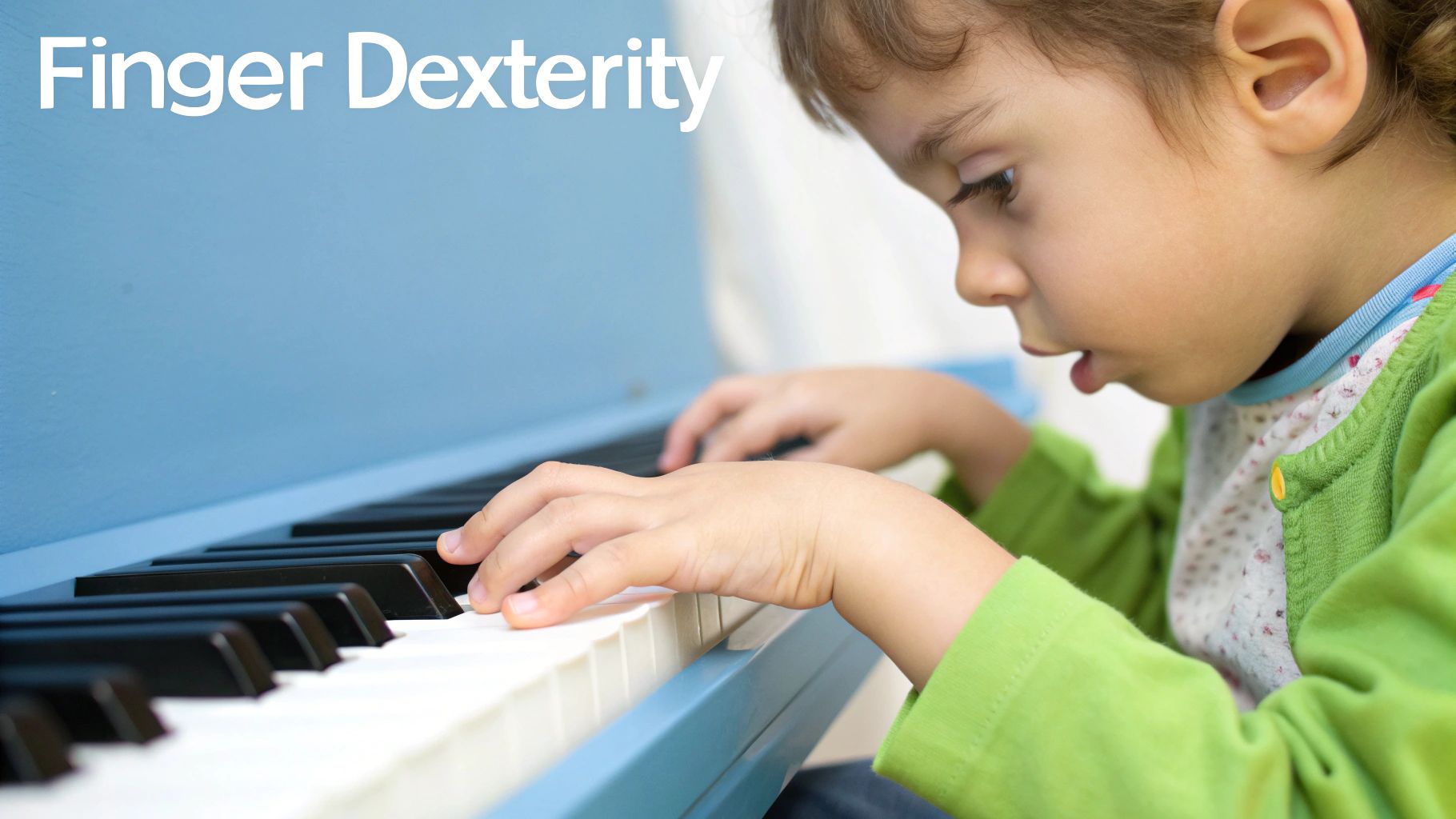
From the delicate finger placements on a violin to the independent hand movements required for piano, every action strengthens fine motor skills. This concept is a cornerstone of the Suzuki Method, which emphasizes proper physical technique from the earliest stages. Similarly, physical therapists often use musical instruments in rehabilitation to rebuild motor control and dexterity after an injury.
From Concert Hall to Everyday Life
The physical discipline learned through music translates directly into greater control and precision in daily tasks. The hand-eye coordination required to read music and play simultaneously is the same skill used for typing, playing sports, or even developing neat handwriting. This physical training is beneficial at every age.
- Real-World Impact: Piano students at East Valley School of Music learn bilateral coordination as their hands perform different rhythms and melodies at the same time. This skill can improve ambidexterity and reaction time in activities from sports to video games.
- Proven Results: Drummers and percussionists exhibit remarkable overall body coordination. They develop a strong internal sense of timing and limb independence that enhances balance, rhythm, and athletic ability, as demonstrated in this inspiring performance.
Actionable Tips for Physical Development
To ensure healthy physical development, proper technique and equipment are essential from the very first lesson.
Key Insight: A correctly sized instrument and proper posture are not just for comfort; they are foundational to preventing injury and building correct muscle memory for lifelong playing.
- Ensure Proper Instrument Fit: For string instruments, it's crucial that the instrument is not too large. EVSM’s partnership with Milano Music ensures students can rent appropriately sized violins, violas, and cellos.
- Emphasize Correct Posture: Our instructors prioritize teaching correct posture from day one to prevent strain and facilitate better breath control or hand positioning.
- Incorporate Warm-Up Exercises: Just like an athlete, a musician should warm up. Simple finger stretches or scale runs prepare the hands and mind for practice, a technique you can explore when you sign up for violin lessons.
4. Development of Discipline, Focus, and Practice Habits
Learning to play an instrument is one of the most effective ways to cultivate discipline, focus, and the invaluable skill of consistent practice. Unlike many instant-gratification activities, musical progress is a direct result of sustained effort over time. This process teaches students the powerful connection between dedication and tangible improvement, building a resilient work ethic.
The very act of mastering a piece of music requires breaking it down into smaller, manageable sections, practicing them repeatedly, and persisting through challenging passages. This cycle of effort, feedback, and achievement builds what psychologist Carol Dweck calls a "growth mindset." Students learn that their abilities are not fixed but can be developed through deliberate practice, a cornerstone concept also explored in Angela Duckworth's research on "grit."
From Practice Room to Life Skills
The discipline forged during music lessons translates directly into other areas of life, from academics and sports to future professional careers. The ability to set a long-term goal, create a routine, and stick with it through difficulty is a universal key to success.
- Real-World Impact: We see this firsthand when our teen students at East Valley School of Music prepare for school ensemble auditions. They develop highly focused practice routines, learn to manage their time effectively, and build the confidence that comes from achieving a challenging goal.
- Proven Results: Research consistently shows that the meta-skills learned in music, such as delayed gratification and sustained attention, are strong predictors of academic success and personal achievement. The structured nature of practice builds the self-regulatory skills essential for tackling complex school projects and standardized tests.
Actionable Tips for Building Discipline
To harness the full potential of music as a tool for developing discipline, a structured and supportive environment is crucial.
Key Insight: The goal of practice is not perfection, but consistent, incremental progress. Celebrating small victories is essential for maintaining long-term motivation and focus.
- Establish a Routine: Designate a consistent, distraction-free time and space for practice. Even 15-20 minutes of daily focus is far more impactful than one long, sporadic session.
- Set Clear Goals: Work with an instructor to set achievable short-term goals, such as mastering four new measures a week or perfecting a specific scale.
- Visualize Progress: Use a practice log or journal to track time spent and specific achievements. This makes progress tangible and helps students see the direct rewards of their hard work.
This powerful development of discipline is one of the most significant benefits of learning to play an instrument, providing students with a foundational skill set that will support them throughout their entire lives. For parents aiming to instill these values, enrolling in structured music lessons for kids is an excellent first step.
5. Boosted Self-Confidence and Self-Esteem
One of the most transformative benefits of learning to play an instrument is the profound and lasting boost it provides to a student's self-confidence. The journey from learning the first note to performing a complete piece is a tangible cycle of effort, persistence, and achievement. This process builds a strong sense of self-efficacy, the belief in one's own ability to succeed.
This concept is famously explored in Albert Bandura's Self-Efficacy Theory, which posits that mastering challenging tasks is a primary source of confidence. When a student overcomes a difficult musical passage or performs for an audience, they aren't just learning music; they are learning that dedicated work leads to tangible success. This powerful lesson in competence extends far beyond the practice room.
From Stage Fright to Self-Assurance
The experience of performing, even on a small scale, is a crucial part of this confidence-building process. Overcoming performance anxiety and receiving positive feedback reinforces a student’s self-image and builds resilience. This newfound assurance often translates into greater participation in class, improved social interactions, and a willingness to tackle new challenges in all areas of life.
- Real-World Impact: EVSM's spring and winter recitals provide a supportive, low-pressure environment for students to build performance skills. Young students in our Little Pianist program gain immense confidence from their very first performance, celebrating the milestone of playing a song for others.
- Proven Results: Research by figures like Brené Brown emphasizes the link between vulnerability (like performing) and courage. Consistently stepping onto a stage, no matter how small, rewires the brain to view challenges as opportunities for growth, fostering a resilient and confident mindset.
Actionable Tips for Building Confidence
To cultivate this self-esteem, the focus must be on progress, not just perfection.
Key Insight: Confidence isn't built by avoiding mistakes, but by learning how to handle them gracefully and continue on. The goal is resilience, not flawlessness.
- Start Small: Begin with low-pressure performances for family members before moving to larger audiences. This incremental approach builds comfort and reduces anxiety.
- Celebrate the Process: Emphasize the effort and dedication shown during practice. Acknowledge and celebrate every performance equally, regardless of technical execution.
- Practice Performing: Utilize opportunities like practicing in EVSM’s Performance Hall to simulate the recital experience, making the official event feel familiar and less intimidating.
- Focus on Strengths: Help students identify what they do well, whether it's their expressive timing, consistent rhythm, or beautiful tone.
By creating a positive feedback loop of effort and achievement, music education becomes a powerful tool for developing the kind of deep-seated self-confidence that helps students succeed in music and in life.
6. Enhanced Social Skills and Peer Connection
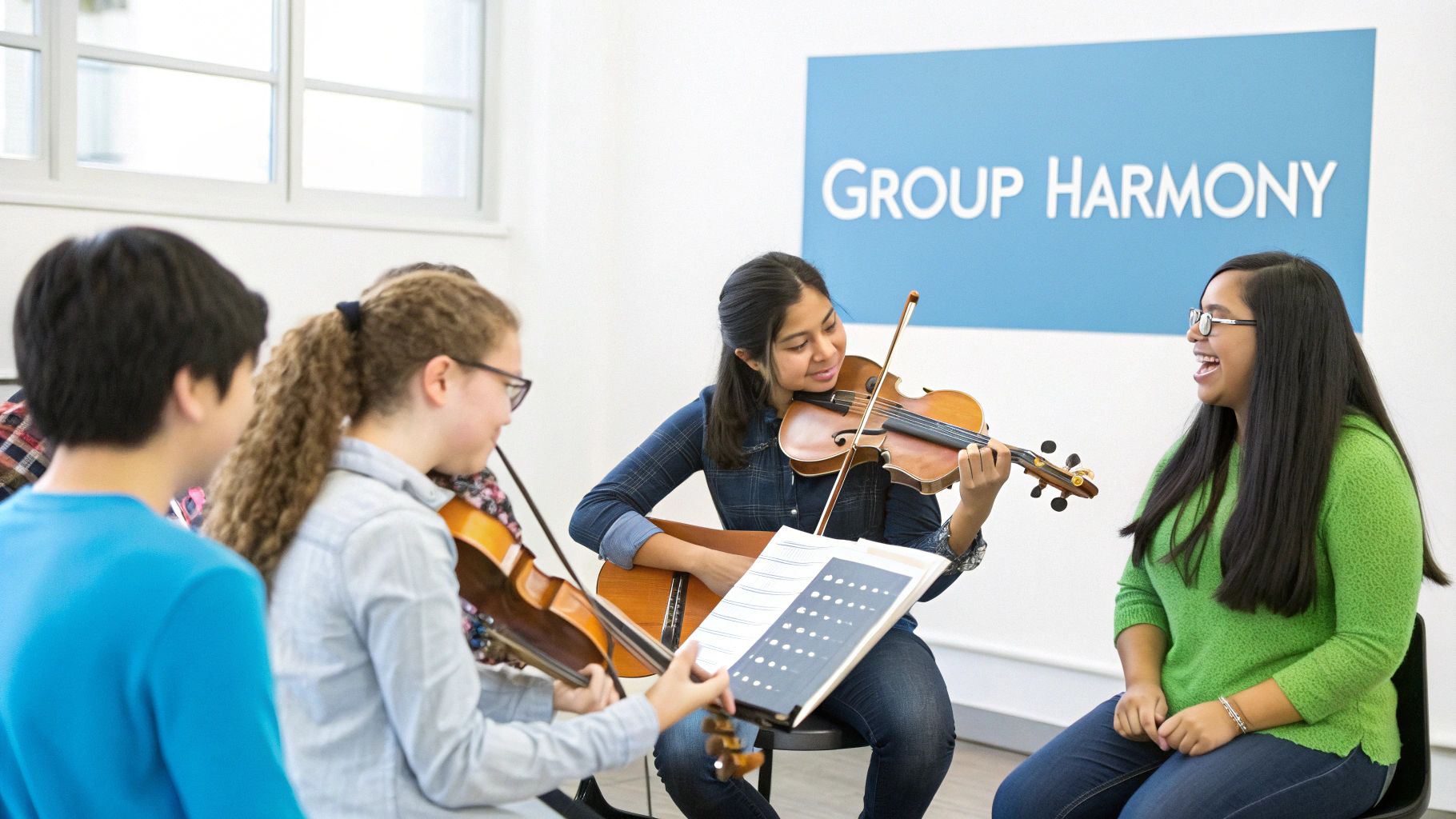
Beyond solo practice, one of the most rewarding benefits of learning to play an instrument is its power to foster social connections and teamwork. Group musical experiences provide a unique, structured environment where students learn vital interpersonal skills, building a sense of community and shared purpose that can be difficult to find elsewhere.
Playing in an ensemble requires individuals to listen intently to one another, synchronize their efforts, and work collaboratively toward a unified sound. This process mirrors the dynamics of successful teamwork in any field, teaching communication, compromise, and mutual respect. As author Daniel Coyle highlights in The Culture Code, great teams are built on vulnerability and interdependence, principles that are at the core of making music together.
From Ensemble Practice to Lifelong Friendships
The skills developed in a group music setting translate directly into stronger social competence in everyday life. For students who may be shy or socially anxious, the shared goal of a performance provides a low-pressure framework for interaction, building confidence and forming lasting bonds with peers who share a common passion.
- Real-World Impact: East Valley School of Music's Guitar Group Classes for teens and adults often become vibrant social hubs, where students not only learn chords but also encourage each other, share tips, and build friendships outside of class.
- Proven Results: Research in music education consistently shows that students involved in ensembles report higher levels of social integration, self-esteem, and a greater sense of belonging within their school community compared to those who do not participate in group music activities.
Actionable Tips for Social Growth
To harness the social benefits of music, actively seeking collaborative opportunities is essential.
Key Insight: Making music with others teaches a profound lesson in non-verbal communication and empathy; you learn to anticipate, react to, and support your fellow musicians in real-time.
- Join an Ensemble: Encourage your student to join a group that matches their skill level, such as EVSM’s Strings Ensemble or Class Voice program, to experience the power of collective achievement.
- Understand Your Role: Help students recognize how their individual part contributes to the whole. This fosters a sense of responsibility and appreciation for the interdependence of the group.
- Celebrate Group Wins: Attend performances at EVSM's on-site Performance Hall to reinforce the value of teamwork and celebrate the ensemble's collective success, building pride and camaraderie.
This emphasis on collaboration makes learning an instrument a powerful vehicle for social development, equipping students with the teamwork and communication skills needed to thrive in all areas of life.
7. Increased Creativity and Artistic Expression
Beyond technical skill, one of the most fulfilling benefits of learning to play an instrument is the cultivation of creativity and a unique artistic voice. Music is a language of emotion, and learning to play it provides a powerful medium for self-expression. It activates different neural pathways than purely analytical thinking, fostering the divergent, "out-of-the-box" mindset that fuels innovation in every aspect of life.
This process evolves from imitation to innovation. Initially, students learn to replicate notes on a page. Over time, they begin to interpret the music, making conscious choices about dynamics, phrasing, and articulation. This is the essence of artistry, a skill championed by educators like Sir Ken Robinson, who argued for the central role of creativity in education. It is this interpretive freedom that allows for vastly different and equally valid performances of the same piece by artists like Glenn Gould or Wynton Marsalis.
From Notation to Personal Interpretation
This creative journey is woven into the curriculum at East Valley School of Music, transforming students from technicians into true artists. The goal is not just to play the right notes but to express something meaningful with them.
- Real-World Impact: An advanced piano student at EVSM doesn't just play a Beethoven sonata; they learn to add personal interpretive touches, making the piece their own. Similarly, our guitar students learn chord theory not just to play songs, but to create original melodies and improvise solos.
- Proven Results: Our Musical Theater classes are a prime example, where students go beyond singing notes to develop character interpretations, using music as a tool for dramatic expression. Percussion students also explore improvisation, moving beyond standard rhythms to create complex, original patterns.
Actionable Tips for Creative Growth
Nurturing this artistic side requires a supportive and intentional approach from both the teacher and the student.
Key Insight: Creativity flourishes when there is a safe space to experiment. Allowing for "wrong" choices is a critical part of the process of discovering a unique artistic voice.
- Encourage Experimentation: Once technical basics are solid (typically after 6+ months), encourage students to play a familiar piece with different emotions: happy, sad, or angry.
- Assign Creative Projects: At EVSM, instructors often assign small composition or improvisation tasks as learning milestones, empowering students to create something entirely new.
- Listen Widely: Play recordings of different artists performing the same piece to highlight how interpretation can dramatically change the music’s feel and inspire new ideas.
By focusing on expression alongside accuracy, music education becomes a profound tool for developing a creative mindset, an invaluable asset that extends far beyond the practice room.
8. Improved Language and Auditory Processing Skills
One of the most compelling benefits of learning to play an instrument is its direct link to strengthening language and auditory skills. The brain pathways used to process musical sounds and rhythms overlap significantly with those used for language. This shared neural circuitry means that when you train your ear for music, you are simultaneously sharpening your brain’s ability to decode speech.
This connection isn't just theoretical; it's backed by extensive research from experts like Dr. Nina Kraus at Northwestern University, whose work demonstrates that musicians are better at processing the fundamental elements of speech. Playing an instrument trains the brain to distinguish subtle differences in pitch, timing, and timbre, the very same skills needed to differentiate between similar-sounding words and comprehend nuances in spoken language.
From Melodies to Vocabulary
The skills developed in the music studio translate directly into enhanced verbal abilities. Learning to read musical notation, for example, strengthens the same pattern-recognition abilities used for reading text. The fine auditory discrimination required by string players or the precise articulation practiced by vocal students directly supports clearer pronunciation and comprehension.
- Real-World Impact: Children in our Little Pianist program (ages 4-6) often develop stronger phonemic awareness, a crucial building block for early reading. We've seen how this musical foundation gives them a head start in literacy.
- Proven Results: Research using brain imaging, pioneered by neuroscientists like Gottfried Schlaug, has shown that musicians have more developed auditory and language processing centers in the brain, leading to better verbal memory and reading fluency.
Actionable Tips for Language Growth
To leverage music for linguistic development, make the connection between sound and language explicit.
Key Insight: Music is a language of its own. Actively linking musical patterns to linguistic patterns can accelerate development in both areas, especially for young learners and those acquiring a second language.
- Combine Music and Reading: After a music lesson, engage in read-aloud activities. This reinforces the auditory processing skills your child just practiced.
- Use Lyrical Content: Select method books that include songs with lyrics. Singing along helps connect melody with words, improving diction and memory.
- Explore Multiple Languages: Encourage students to learn simple songs in another language. This is a fun, low-pressure way to improve second-language pronunciation and auditory skills.
This powerful synergy makes music education an invaluable tool for communication. For any family looking to boost literacy or support bilingual learning, exploring group music classes provides a dynamic and effective path to stronger language skills.
9. Long-Term Health Benefits and Brain Aging Prevention
Beyond immediate academic or emotional gains, learning to play an instrument offers powerful, long-term protection for the brain. Lifelong musical engagement acts as a shield against age-related cognitive decline, building what researchers call a "cognitive reserve." This reserve helps the brain resist damage and stay sharper for longer.
Playing music is a uniquely complex activity, demanding the simultaneous coordination of auditory, motor, visual, and emotional centers. This intense neural workout forges and strengthens connections across the brain, enhancing its resilience. Research, including work highlighted by AARP and dementia prevention specialists, consistently shows that musicians maintain higher cognitive function well into their later years, effectively delaying the effects of brain aging.
From Hobby to Health Strategy
The skills developed through music are directly transferable to maintaining mental acuity in older age. The constant need to recall melodies, interpret notation, and coordinate hand-eye movements strengthens memory, processing speed, and executive function. This makes music a proactive and enjoyable strategy for long-term brain health.
- Real-World Impact: East Valley School of Music's adult lesson programs are designed to be welcoming and effective for both new and returning learners. We see adults rediscover their passion and, in doing so, actively engage their minds in a way that crosswords or other passive hobbies cannot match.
- Proven Results: Studies have shown that older adults who actively play music demonstrate measurable improvements in memory, verbal fluency, and processing speed compared to their non-musical counterparts. Some research suggests this engagement can postpone cognitive decline by several years.
Actionable Tips for Lifelong Brain Health
It is never too late to start reaping the cognitive rewards of music. A supportive and structured environment is crucial for adult learners.
Key Insight: The brain's ability to change and form new connections (neuroplasticity) persists throughout life. Learning an instrument as an adult is one of the most effective ways to stimulate this process.
- Embrace a Fresh Start: Join a program specifically for adult beginners. EVSM’s private lessons for adults offer a judgment-free space to learn at your own pace with a supportive instructor.
- Find Your Community: Group classes, like a guitar ensemble or piano workshop, combine cognitive benefits with the social engagement that is also vital for healthy aging.
- Set Realistic Goals: Focus on the joy of creating music rather than perfection. Consistent, enjoyable practice, even just 20 minutes a day, is the key to building and maintaining that crucial cognitive reserve.
Investing in music lessons as an adult is not just a hobby; it's a strategic investment in your future cognitive well-being, making it one of the most rewarding benefits of learning to play an instrument at any age.
10. Professional Development and Career Pathway Opportunities
Beyond personal enrichment, one of the key benefits of learning to play an instrument is its ability to open doors to professional pathways and career opportunities. The skills acquired through dedicated music study are highly transferable, creating advantages in both artistic and traditional job markets. This long-term value positions music education as a strategic investment in a student's future success.
The discipline, creative problem-solving, and collaborative skills developed in music lessons are highly sought after by employers and college admissions officers. Learning an instrument demonstrates commitment, resilience, and a unique capacity for detail-oriented work, making any applicant stand out in a competitive field.
From Audition Room to Boardroom
The practical experience gained through musical training directly prepares students for professional environments. The process of preparing for auditions, participating in ensembles, and performing in public builds a portfolio of skills applicable to any career, from music therapy and audio production to law and engineering.
- Real-World Impact: Teen musicians at East Valley School of Music who prepare for regional ensemble auditions or perform in our on-site Performance Hall are actively building a professional portfolio, gaining invaluable experience in high-pressure situations.
- Proven Results: College admissions counselors frequently note that sustained involvement in music, particularly in leadership roles like section leader in an orchestra, signals a candidate's capacity for collaboration, discipline, and long-term dedication, strengthening their overall application.
Actionable Tips for Career Growth
To leverage music for professional development, a proactive approach is essential.
Key Insight: Documenting musical achievements creates a powerful narrative of growth and commitment that enhances college applications and resumes, regardless of the chosen field of study.
- Build a Portfolio: Encourage students to document their achievements, including performances, competition results, and milestones. Our Musical Theater students, for example, build robust performance portfolios for future studies.
- Seek Leadership Roles: Participation in school bands or orchestras provides a bridge to potential careers. Aiming for leadership positions within these ensembles demonstrates valuable skills.
- Connect Music to Goals: Actively discuss how skills like focused practice and performance confidence translate to non-musical careers, strengthening interview and application essays.
This powerful link between musical training and professional readiness is one of the most practical benefits of learning to play an instrument, equipping students with a unique edge for their future endeavors.
10-Benefit Comparison: Learning an Instrument
| Benefit | Implementation complexity | Resource requirements | Expected outcomes | Ideal use cases | Key advantages |
|---|---|---|---|---|---|
| Enhanced Cognitive Development and Academic Performance | Moderate — structured instruction and regular practice | Instrument, weekly lessons, 15–30 min/day practice, parental support for young children | Improved working memory, math/reading scores, executive function (6–12 months) | School-aged children, struggling learners, academic enrichment programs | Broad academic transfer, measurable gains, foundation for lifelong learning |
| Increased Emotional Intelligence and Stress Management | Low–Moderate — integrate expressive repertoire and reflection | Instrument/lessons, supportive instructor, performance opportunities | Better emotion regulation, reduced stress/anxiety, increased resilience (immediate to months) | Teens/adults needing emotional outlet, students with anxiety or transitions | Immediate stress relief, healthy expressive outlet, mental health benefits |
| Improved Fine Motor Skills and Physical Coordination | Moderate — focused technique and posture training | Properly sized instruments, teacher guidance, warm-up exercises | Enhanced finger dexterity, hand‑eye coordination, posture within weeks | Young children, students with coordination challenges, rehabilitation programs | Rapid physical gains, transferable motor skills (typing, sports) |
| Development of Discipline, Focus, and Practice Habits | Moderate — requires goal-setting and routine building | Consistent practice schedule, accountability (parents/teacher), practice logs | Stronger focus, consistent practice habits, growth mindset | Students needing study skills, homeschoolers, adults building routines | Transferable life/work habits, sustained motivation, measurable progress |
| Boosted Self-Confidence and Self-Esteem | Low–Moderate — regular performance and positive feedback | Recitals/performance spaces, supportive instructors, small initial audiences | Increased self-efficacy, reduced social inhibition after performances | Shy or reserved students, youth development programs, public‑speaking prep | Visible early gains, identity as “a musician,” improved presentation skills |
| Enhanced Social Skills and Peer Connection | Moderate — coordination of ensembles and group classes | Group lessons/ensembles, rehearsal space, schedule coordination | Better teamwork, communication, peer support, reduced social anxiety | Introverted or socially anxious students, teens, group learners | Community belonging, collaborative skills, peer mentorship |
| Increased Creativity and Artistic Expression | Moderate–High — needs open-ended tasks and mentorship | Time for improvisation/composition, instructor encouraging experimentation | Improved divergent thinking, improvisation and composition abilities | Advanced students, creative arts programs, students seeking self-expression | Fosters innovation, unique artistic voice, creative problem-solving |
| Improved Language and Auditory Processing Skills | Moderate — includes ear training and singing in curricula | Auditory-focused lessons, method books with lyrics, regular practice | Enhanced phonemic awareness, reading fluency, support for L2 acquisition | Young children, bilingual families, students with reading difficulties | Measurable language gains, stronger listening and literacy skills |
| Long-Term Health Benefits and Brain Aging Prevention | Low–Moderate — sustained lifelong engagement required | Accessible adult lessons/groups, regular practice, social classes | Cognitive reserve, preserved memory and processing speed over years | Adults and seniors, returning learners, wellness programs | Preventive cognitive benefits, enjoyable adherence, combined social/cognitive gains |
| Professional Development and Career Pathway Opportunities | High — intensive training and performance experience | Advanced instruction, ensembles, audition/competition prep, portfolio documentation | Pathways to music careers, stronger college/job applications, professional skills | Teens aiming for music careers, conservatory applicants, serious performers | Direct career opportunities, transferable professional and collaborative skills |
Start Your Musical Journey and Experience the Benefits Today
We've explored a comprehensive symphony of advantages that come with musical training, moving far beyond the simple joy of creating a melody. The evidence is compelling and clear: the benefits of learning to play an instrument are not just numerous, they are transformative, touching every aspect of our lives from cognitive function to emotional well-being and social connection. This is not about becoming a world-famous virtuoso; it is about unlocking a more capable, resilient, and expressive version of yourself.
The journey through music is a powerful investment in human potential. For the young child taking their first piano lesson at our Chandler studio, it's about building a brain wired for academic success and developing the fine motor skills essential for life. For the teenager mastering a challenging guitar solo, it's a profound exercise in discipline, focus, and building the self-confidence needed to navigate the complexities of adolescence. And for the adult returning to the violin after decades, it is a scientifically-backed method for preserving brain health, managing stress, and rediscovering a vital source of personal fulfillment.
From Knowledge to Action: Your Next Steps
Reading about these benefits is the first note, but the true harmony begins when you take action. The path from appreciating music to creating it is more accessible than you might think. It begins not with a grand performance, but with a single, intentional step.
Consider where you are in your life and what you hope to gain.
- For Parents: Are you looking to give your child an academic and emotional advantage? The cognitive and self-esteem boosts from early music education are unparalleled. Starting with a private lesson in piano or violin can lay a foundation for lifelong learning.
- For Teens: Do you need a constructive outlet for self-expression or a way to stand out in school activities? Joining one of our ensembles or preparing for an audition with a dedicated instructor develops not just skill, but also crucial social and teamwork abilities.
- For Adults: Are you seeking a new challenge, a way to reduce stress, or a method to keep your mind sharp? The benefits of learning an instrument extend well into adulthood, offering a rewarding hobby that actively fights cognitive decline.
Your Invitation to a More Musical Life
The journey of a thousand songs begins with a single note. Each benefit we've detailed, from improved memory and enhanced creativity to deeper social bonds and greater emotional intelligence, is waiting to be unlocked. It's an active process of growth, one that rewards patience with progress and practice with proficiency. The skills you build while learning scales, chords, and compositions will echo in your professional life, your personal relationships, and your overall sense of well-being.
Don't let this inspiration fade. The opportunity to enrich your life or the life of your child through music is here and now. The beautiful thing about music is that it's never too late to begin, and the rewards start accumulating from the very first lesson. You have the potential to not just listen to music, but to become a part of it.
Ready to experience these profound benefits firsthand? The dedicated instructors at East Valley School of Music are here to guide you every step of the way, providing personalized instruction in a supportive community environment right here in Chandler. Visit East Valley School of Music to explore our programs and schedule your introductory lesson today.