The very first keyboard lesson isn't about mastering a concerto. Far from it. It's really all about positive, hands-on exploration. The goal is to build a fun, foundational connection with the instrument by learning a few key basics—like finger numbers and the layout of the keys—and trying out some simple exercises. It's also about getting comfortable with the teacher and the new learning space.
What To Expect In Your First Keyboard Lesson
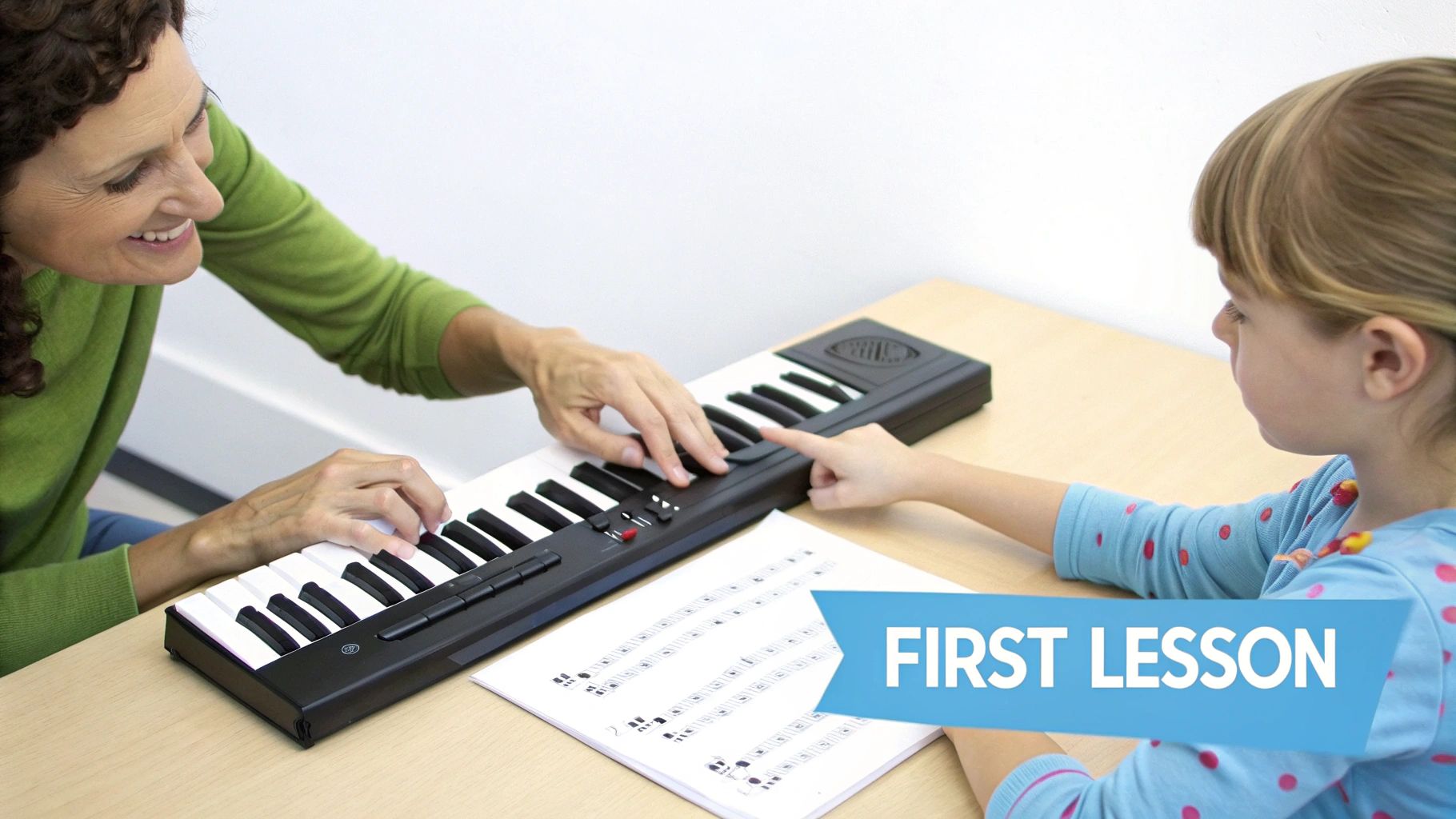
Walking into that first lesson can feel like a big, mysterious step, but it’s designed to be welcoming and totally low-pressure for students and parents alike. Forget any old-fashioned ideas of strict teachers and grueling scales. Today, it’s all about discovery.
Honestly, the main goal is simple: make the student want to come back for a second lesson.
Think of this initial meeting as more of an orientation than a performance. The instructor will likely spend the first few minutes just chatting and building a friendly rapport, asking about favorite songs and getting a feel for the student's personality. This isn't just small talk; it helps the teacher understand what makes the student tick, which is key to keeping future lessons engaging.
Getting Hands-On With The Keyboard
After breaking the ice, it’s time to explore the keyboard. A great teacher knows how to make this feel like a game. Instead of jumping into dense theory, the focus will be on learning through sight and touch.
You can expect to see activities like:
- Learning Finger Numbers: The teacher will introduce the standard 1-5 numbering system (thumb is 1, pinky is 5). This is often done with fun things like tracing hands or using silly rhymes to help it stick.
- Keyboard Geography: Students learn to find their way around by spotting the repeating patterns of two and three black keys. This is the fundamental map they'll use to find every other note.
- Simple Rhythm Games: The teacher might tap out a simple rhythm on one key and have the student echo it back. It’s a great way to build a sense of timing without the pressure of reading music.
A fantastic and common first exercise is what I call the "C-Note Scavenger Hunt." The student's mission is to find every single C on the keyboard. This reinforces the black key pattern and gets them comfortable moving all over the instrument right from day one.
A Look Inside Your First 30-Minute Keyboard Lesson
Every teacher brings their own flair, but a typical first 30-minute lesson usually follows a gentle, predictable flow. The pacing is deliberately relaxed, with plenty of time for questions and encouragement. Knowing what to expect can really help calm any pre-lesson jitters. If you want a more in-depth look, we’ve put together a guide to what you can expect from your first lessons.
But for now, here is a realistic breakdown of how those 30 minutes will likely fly by.
| Time Segment (Minutes) | Activity | Goal for the Student |
|---|---|---|
| 0–5 | Greeting and Warm-Up Chat | Build comfort and rapport with the teacher. |
| 5–15 | Keyboard Exploration & Finger Numbers | Learn how to navigate the keys and number fingers (1-5). |
| 15–25 | First Musical Activity | Play a simple rhythm or find specific notes (like all the C's). |
| 25–30 | Review and Next Steps | Recap what was learned and get a fun, simple "mission" for home. |
At the end of the day, a successful first keyboard lesson isn't measured by how many notes were played correctly. It’s measured in smiles and curiosity. The real win is leaving the student feeling capable, excited, and eager to start their musical adventure.
Choosing the Right Keyboard and Gear
You absolutely don’t need a grand piano to get started. Far from it. But the right instrument can make a world of difference in a student's first beginners keyboard lesson, turning potential frustration into a truly enjoyable experience.
The good news? A quality digital keyboard is the perfect starting point for almost every beginner. They’re affordable, versatile, and don't require tuning. But you have to know what to look for—not all keyboards are built the same, and a few key features are non-negotiable for building a solid foundation.
What to Look For in a Starter Keyboard
If there’s one feature I tell every new parent to look for, it’s touch sensitivity. This is what allows the keyboard to respond to how hard or soft you press the keys, just like a real piano. It's the key to playing with expression, to making music sound loud or soft, angry or gentle. Without it, a student simply can't develop control.
Next up, you have to think about the keys themselves. You’ll see the terms weighted or semi-weighted keys. This just means the keys have some resistance, mimicking the feel of an acoustic piano. It’s absolutely crucial for building finger strength. Unweighted "waterfall" keys might feel easy at first, but they do a real disservice to a student in the long run.
Finally, how many keys do you actually need?
- 61 Keys: This is a great starting point for most young beginners. It gives them more than enough room to play all their early-level music without feeling overwhelmed by a massive instrument.
- 88 Keys: This is the gold standard, the full size of a traditional piano. If you have the space and the budget, an 88-key keyboard ensures your student will never outgrow it.
Your goal is to find an instrument that encourages good habits from day one. A keyboard with touch-sensitive, weighted keys gives a new student the best possible start, making the transition to any piano seamless down the road.
Don't Forget the Accessories
Beyond the keyboard itself, a few other pieces of gear are surprisingly important. Good posture is foundational to good playing, and you can’t have good posture without the right setup.
First, get a sturdy, adjustable keyboard stand. Trust me, putting the keyboard on a random table or desk is a recipe for bad habits. It’s almost always the wrong height, forcing poor hand position and causing discomfort. In the same vein, an adjustable bench is a must-have to ensure the student is seated properly, with their arms comfortably parallel to the floor.
You’ll also need a sustain pedal. This little device lets the notes ring out even after you’ve lifted your fingers, adding a beautiful richness to the music. Most decent beginner keyboards come with one, and it's a tool students start using much earlier than you might think.
Getting all this gear doesn’t have to break the bank. Many families find that exploring instrument rental programs is a smart, budget-friendly way to get high-quality equipment without the big upfront cost. It’s a great way to test the waters before you commit to a purchase.
Finding the Best Lesson Format for Your Family
The how of learning keyboard is just as crucial as the what. Picking the right lesson format can make or break a student's motivation and, ultimately, their progress. It’s less about finding a single "best" way and more about matching the learning environment to your child’s personality and your family's schedule.
Most families land on one of three main paths: private lessons at a studio, lessons in your own home, or group classes. Each has its own vibe, and what works wonders for one kid might be a total miss for another.
Private Lessons: The Focused Approach
There’s a reason private, one-on-one lessons at a music studio are the classic choice. This setup offers a teacher's undivided attention, meaning every minute of the lesson is tailored to your child's specific needs and pace.
Let's say a student is really struggling to grasp rhythm. In a private lesson, the teacher can stop everything and focus solely on that, trying different exercises and games until the concept finally clicks. This focused setting is a game-changer for shy kids or those who get easily distracted in a group. It’s where they can build a real bond with their teacher and move forward without pressure.
Group Classes: The Social Spark
On the flip side, group keyboard classes bring an energy and social dynamic that can be incredibly motivating. For outgoing kids who feed off the energy of others, learning with peers adds a layer of fun, camaraderie, and even a little friendly competition.
Think about a pre-teen who loves group projects at school. Seeing a classmate nail a tricky part of a song can be the exact push they need to go home and practice. At East Valley School of Music, we design our group classes to create that positive peer momentum, turning what could be a solitary activity into a team effort.
A student’s personality is the best guide. A quiet, analytical six-year-old may blossom with the focused attention of private lessons, while an energetic and social ten-year-old might be supercharged by the fun and peer motivation of a group class.
In-Home Lessons: The Ultimate Convenience
For families with packed schedules, nothing beats the convenience of a teacher coming to you. In-home lessons eliminate commute time and let students learn on their own instrument in a familiar, comfortable space.
This is a fantastic option if you're juggling multiple kids' activities or for very young beginners who simply feel more secure at home. It’s worth noting that this convenience usually comes at a premium, as you’re also covering the instructor's travel time.
And speaking of your home setup, this decision tree can help you sort through the options for buying a keyboard, based on your budget, space, and the kind of feel you're looking for.
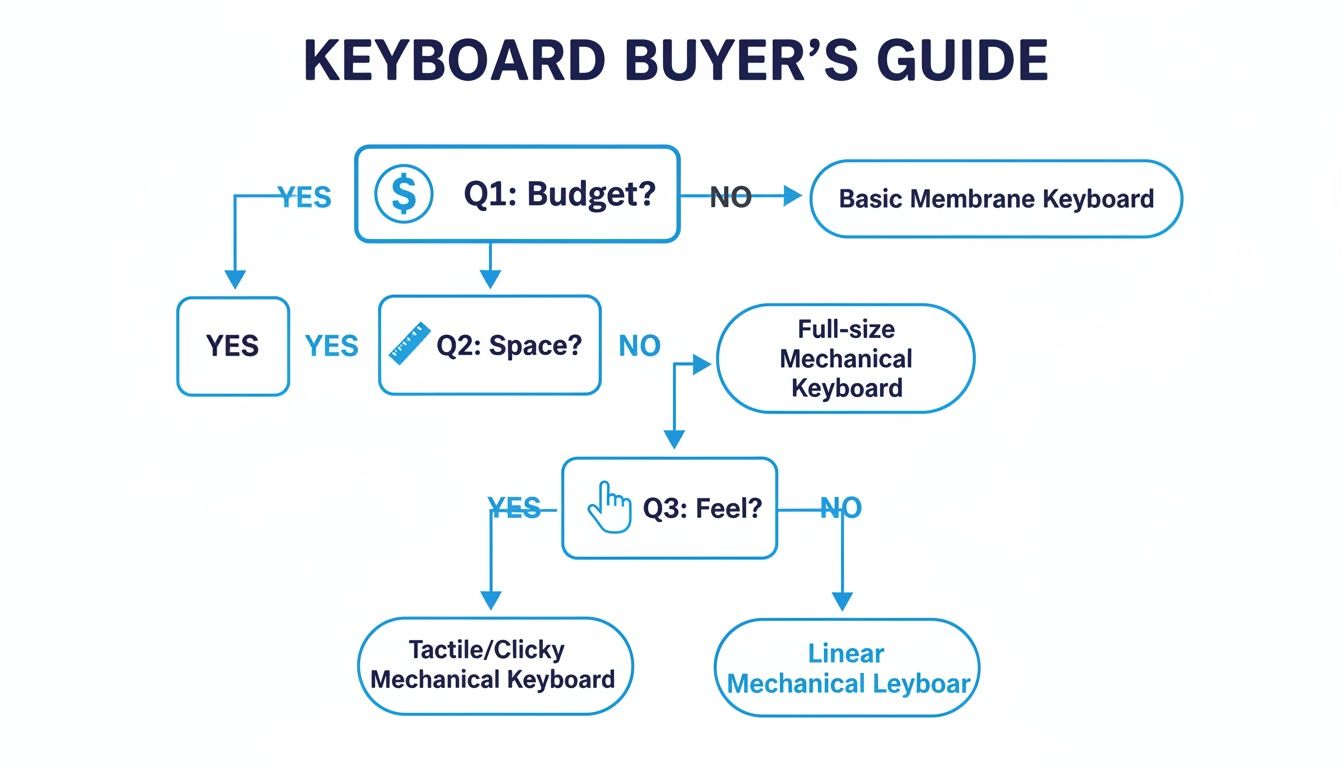
As the chart shows, your budget is really the first domino to fall. After that, you can figure out what works for your space before diving into the finer details like key feel.
Of course, cost is a huge factor for every family. While the global average for lessons is around $45 per hour, you can expect to see prices closer to $60-$65 per hour here in the US. Most beginners start with a 30-minute lesson each week, which adds up to roughly $1,000-$3,000 annually. When weighing the costs, don't forget to factor in performance opportunities. Studios that host recitals often see a 25% higher advancement rate in students who participate, making that investment pay off in real, tangible progress. You can dig into more music lesson statistics to see how these different elements come together.
Building a Fun and Effective Practice Routine
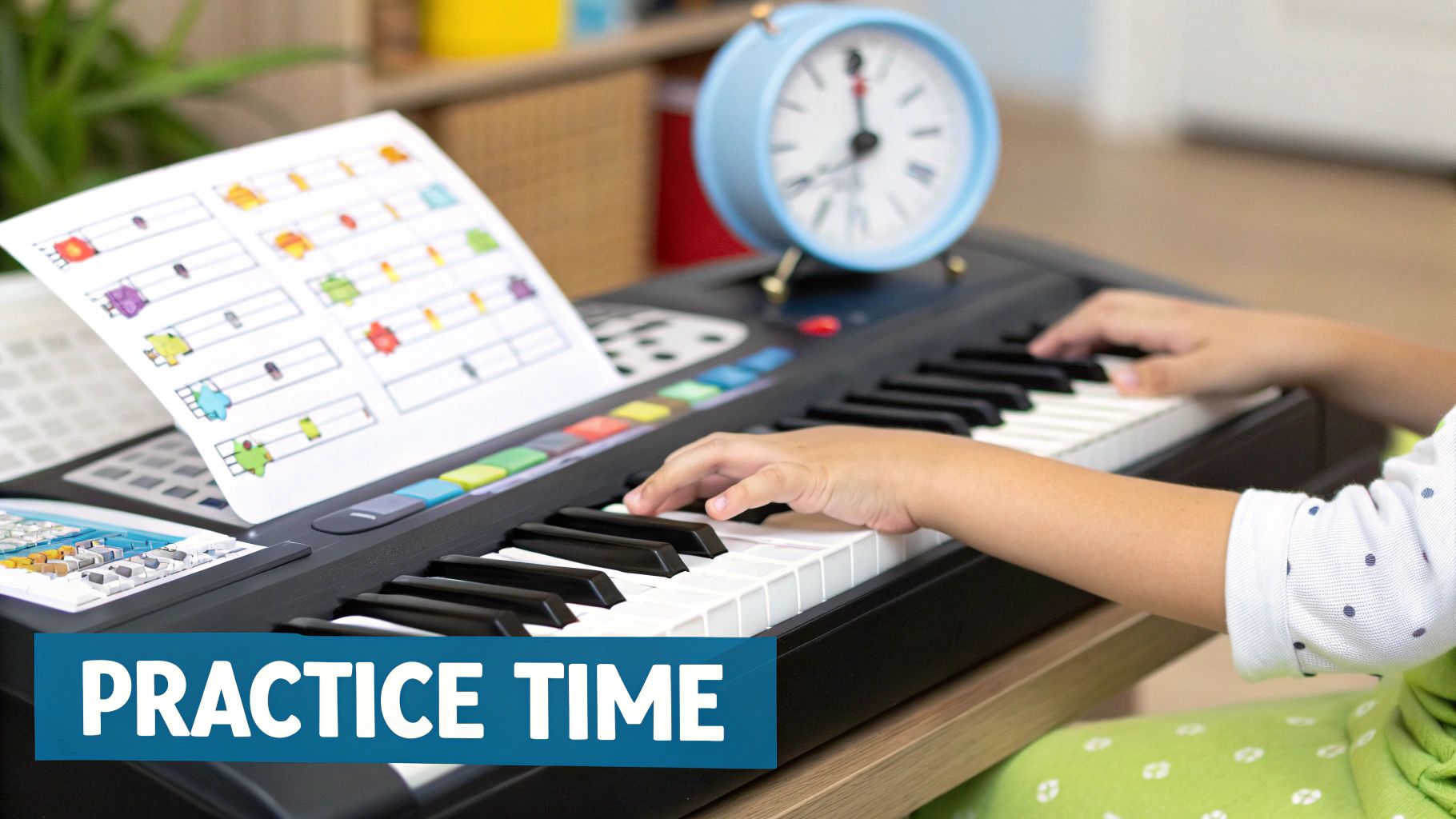
The weekly beginners keyboard lesson is where the seeds are planted, but it’s the consistent practice at home that truly makes the music grow. The real trick is creating a routine that feels less like a chore and more like a rewarding part of the day.
If you’re imagining a strict, 30-minute session at the keyboard every day, think again. For young beginners, that can feel like an eternity and is one of the quickest routes to burnout. The modern, more effective approach is all about short, focused bursts.
It’s amazing, but 10-15 minutes of focused daily practice is far more powerful than one long, grueling session per week. This method helps build muscle memory, keeps the material fresh in their mind, and prevents that "I'm so overwhelmed" feeling.
Making Practice Feel Like Play
The secret to a routine that actually sticks is making it engaging. When practice is fun, a child is infinitely more likely to do it without you having to ask a dozen times. The goal is to weave their musical growth into activities they already find enjoyable.
Here are a few creative ways to keep things fresh and fun:
- Gamify the Experience: Music learning apps can be fantastic for this. They often present concepts with points, levels, and fun graphics, turning skill-building into a challenge they’ll actually want to take on.
- Set Micro-Missions: Instead of a vague direction like "practice your song," give them a specific, achievable mission. For instance, "play the first two measures perfectly three times in a row." This gives them a clear finish line and a real sense of accomplishment when they hit it.
- Try a Simple Reward System: A sticker chart is classic for a reason—it works! Every practice session earns a sticker, and after a certain number, they can cash them in for a small reward, like choosing the family movie or getting an extra 15 minutes of screen time.
As a parent, try to shift your role from "practice police" to "practice coach." Your job isn't to enforce the rules, but to be their biggest fan. Sit with them for the first five minutes, offer a high-five when they nail a tricky part, and celebrate those small wins. Your positive presence makes all the difference.
The Power of a Tangible Goal
Nothing fuels motivation quite like having something to work towards. This is where performance opportunities, like the recitals we host here at East Valley School of Music, become such a powerful tool.
Suddenly, practice has a clear purpose. It’s not just about playing notes anymore; it's about preparing a special song to share with family and friends. This sense of purpose can completely transform a student’s approach, making every session feel that much more meaningful.
Studies on practice habits show that while the average beginner practices just 30-60 minutes per week, programs that build in peer motivation—like group classes or ensembles—can boost that time by up to 50%. Even better, short, consistent sessions lead to 80% higher retention of skills compared to cramming. You can discover more insights about practice habits and how they shape learning. It all points to the same thing: building a community around music is one of the best ways to keep a student excited and engaged for the long haul.
Overcoming Common Hurdles in the First Few Months
The first few weeks of keyboard lessons are usually a blast. It’s all new and exciting! But once that initial "honeymoon phase" wears off, it's totally normal for a few challenges to pop up. Being ready for these little bumps in the road is the secret to moving past them without losing steam.
Sooner or later, every single student hits a wall. Progress feels like it's crawling, one particular song feels impossible, or the motivation just isn't there. This isn't a sign that something is wrong—it's just a natural part of the process. Knowing this from the start helps everyone stay positive when things get a little tough.
For example, when a student gets frustrated, it’s often because they're biting off more than they can chew. A good teacher sees this right away. They might break a tricky section down into tiny, manageable pieces or pivot to a fun, familiar tune just to get the good vibes flowing again.
Navigating Frustration and Plateaus
One of the biggest hurdles I see is hand coordination. It’s a classic. Getting your left and right hands to do two different things at the same time is a sophisticated skill that simply takes time to build. Think of it like trying to pat your head and rub your stomach, only you have ten fingers that all need to land in the right place at the right moment.
When this happens, the game plan is all about patience and simplification. Here are a few tried-and-true strategies:
- Hands-Separate Practice: Focus only on the right-hand melody until it feels solid. Then, give the left hand the same focused attention. Only after both are comfortable should you try putting them together—very, very slowly.
- Isolate the Rhythm: Sometimes the notes aren't the problem, it's the timing. Have the student try clapping or tapping the rhythm of each hand’s part separately before even touching the keys.
- Celebrate the Small Stuff: Did they nail the first two notes together? Great! Acknowledge that win before even thinking about the next two. Positive reinforcement goes a long way.
Don't underestimate the power of open communication with the teacher. A quick text or a chat before the lesson gives them a heads-up, so they can come prepared with exercises to target that exact issue. Trust me, they've seen it all before and have a whole bag of tricks ready.
Keeping Motivation High
Another common challenge? The motivation dip. After the novelty fades, the reality of daily practice can start to feel like a chore. This is where we need to shift our perspective and remember the big picture.
Piano is one of the most popular instruments on the planet for a reason—about 25% of the population has tried it. Its layout is so intuitive that even a young child can press a key and make a nice sound, which is a fantastic confidence booster right from the get-go.
And here's a great little tip: having a goal to work towards makes a huge difference. Research shows that participating in events like recitals can boost student retention by up to 40%. It transforms practice from a daily task into a meaningful preparation for a real performance. You can read more about why piano lessons are so popular at forbesmusic.com.
Ultimately, getting past these early hurdles is a team effort between the student, the parents, and the teacher. By anticipating the challenges and meeting them with patience and creativity, we can make sure the journey into music stays fun and rewarding.
Common Questions We Hear About Keyboard Lessons
Taking that first step into music lessons can bring up a lot of questions for parents and new students. That’s perfectly normal! From wondering about the right age to start to what kind of instrument you need at home, getting clear answers helps everyone feel more confident.
Let's walk through some of the most common questions we get from families just like yours.
What’s the Best Age for a Child to Start Keyboard Lessons?
While there's no single "perfect" age, we find that most children are ready for more formal beginners keyboard lessons somewhere between the ages of 5 and 7. Around this time, they’ve usually developed enough finger strength and the ability to focus for a short lesson.
But honestly, the calendar isn't the most important thing. The real indicators are your child’s own readiness and genuine interest in music. We’ve seen incredible success with specialized programs like our Little Pianist course, which introduces core musical ideas to kids as young as 4 through fun, game-based activities. The key is to follow their curiosity, not just their age.
How Quickly Can Someone Learn to Play a Real Song?
It happens faster than you might think! Most beginners can start picking out a simple, recognizable melody with one hand within their first few lessons. Modern teaching is all about getting students to make music right away—it’s a huge confidence booster and keeps them motivated.
Of course, learning a more complex piece with both hands and dynamic expression will take a few months of steady practice. Progress really boils down to how consistently they practice and the difficulty of the song, but celebrating those early, simple wins is what keeps a student excited to keep going.
Is a Digital Keyboard Okay, or Do We Need a Real Piano?
A digital keyboard is a fantastic and practical choice for any beginner. If you're going to invest in one, the single most important feature to look for is touch sensitivity. This just means the keys respond to how hard or soft you press them, mimicking the dynamic control of an acoustic piano.
An instrument with at least 61 keys is a solid starting point. While the long-term goal might be a full-size, 88-key instrument with weighted keys, it’s definitely not a requirement for day one. A good digital keyboard gives a student everything they need to build a strong musical foundation. We break down all the options in our guide to the costs associated with piano lessons and equipment.
For our youngest students (ages 4-8), parental involvement is a huge piece of the puzzle. This doesn't mean you need to be a musician! It’s about being a practice partner—helping to set a routine, offering tons of encouragement, and staying connected with their teacher.
Think of yourself as their musical cheerleader. As students get older, your role might shift to providing encouragement from the sidelines and handling the logistics, but that positive presence at home makes all the difference in helping them stick with it.
Ready to start a musical adventure with a team that’s got your back? East Valley School of Music offers everything from our fun Little Pianist program to private and group classes designed to fit your family. Learn more and enroll today!