Ever felt like opera is a secret club with its own language? It's a common feeling, but I promise you it's not. The best way to think of an opera is as a massive, intricate puzzle. Every single component, from the first notes the orchestra plays to the final curtain call, is a unique piece designed to fit perfectly together, creating one stunning, emotional picture.
Let's break down that puzzle together. We'll explore the essential parts of the opera using simple analogies that make this incredible art form feel accessible and, frankly, exciting.
We can boil it all down to three main pillars:
- The Music: This is the story's emotional engine, powered by the full force of the orchestra.
- The Story: Known as the libretto, this is the script that provides the plot and structure.
- The Vocals: The singers use different musical styles to convey their innermost thoughts, feelings, and move the story forward.
This diagram shows how these three core pillars, and all their smaller elements, come together to form the building blocks of any opera performance.
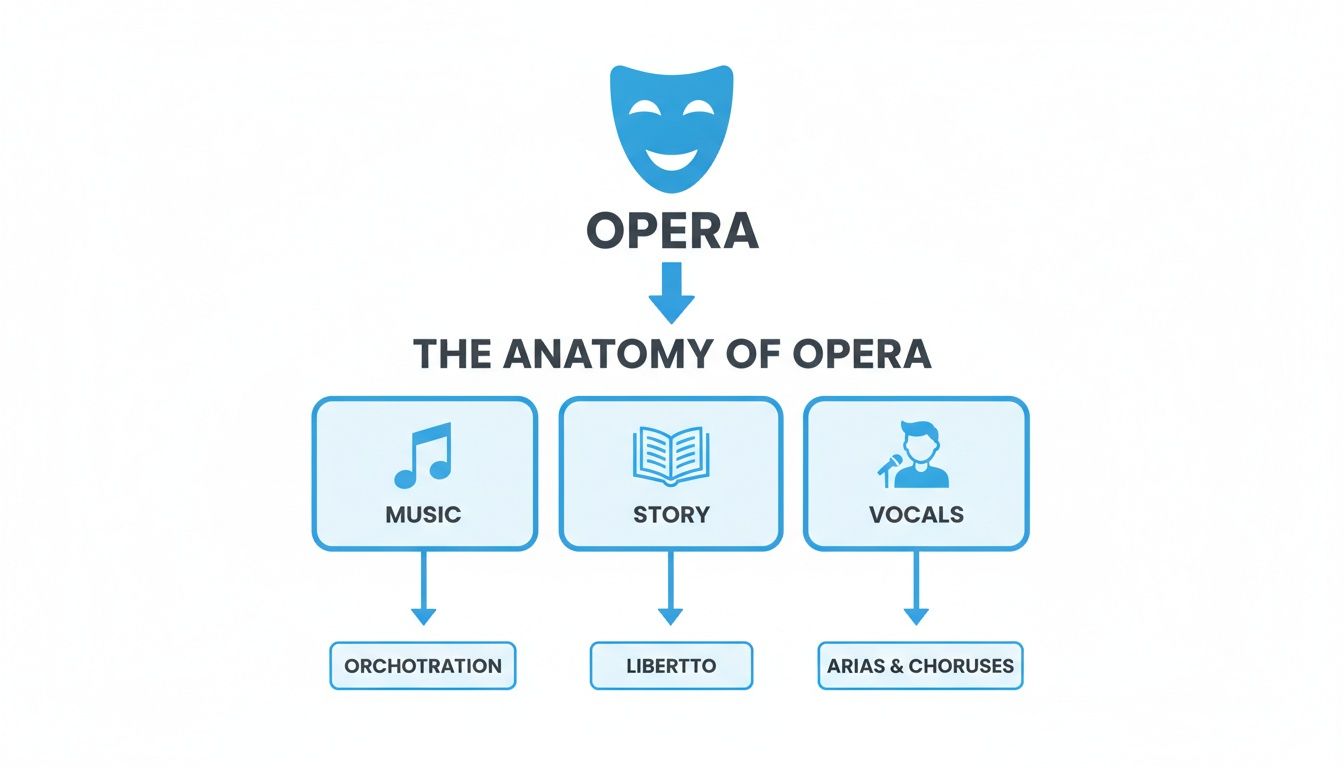
As you can see, a complete opera is a synthesis of these foundational elements. Each one has its own crucial role to play in telling the story.
To give you a quick cheat sheet before we dive deeper, here’s a simple table outlining the core components.
The Core Components of an Opera at a Glance
This table offers a quick summary of the primary building blocks of an opera, what they are, and their main function in the performance.
| Opera Part | What It Is | Main Purpose |
|---|---|---|
| Overture | An instrumental piece played by the orchestra at the beginning. | Sets the mood and often introduces key musical themes from the opera. |
| Acts & Scenes | The major divisions of the opera, similar to acts in a play. | Organizes the plot into manageable sections and marks shifts in time/place. |
| Libretto | The complete text or script of the opera. | Provides the words for the singers, dialogue, and stage directions. |
| Aria | A solo song where a character expresses deep emotion or thought. | Pauses the action for a moment of emotional reflection and vocal display. |
| Recitative | Sung dialogue that moves the plot forward. | Conveys dialogue and advances the story in a speech-like singing style. |
| Chorus | A group of singers who perform together as a single entity. | Represents a community (e.g., soldiers, townspeople) and adds commentary. |
Think of this as your program guide. Now, let’s explore each of these elements in more detail.
Why Opera Still Fills Theaters Today
Even with its centuries-old roots, opera is far from a museum piece. It remains a vibrant, powerful art form with a passionate global following. Why? Because its unique combination of epic music, high-stakes drama, and breathtaking visuals creates an immersive experience that no other medium can quite match.
This isn't just a niche interest; its enduring appeal has a major cultural and economic impact.
Just look at the Verona Arena Opera Festival. Its 100th edition in 2023 was a massive success, attracting 402,722 spectators and generating a staggering €33,048,000 in box office revenue from only 49 performances. That success proves that the grand scale and raw emotional power of opera continue to draw huge crowds. You can read more about this landmark festival's results on the Arena di Verona website.
Setting the Stage with Overture and Orchestration
Long before the curtain rises or a single singer steps into the spotlight, the opera has already begun. The story's emotional foundation is laid by two crucial musical elements that set the mood from the very first note: the overture and the orchestration.
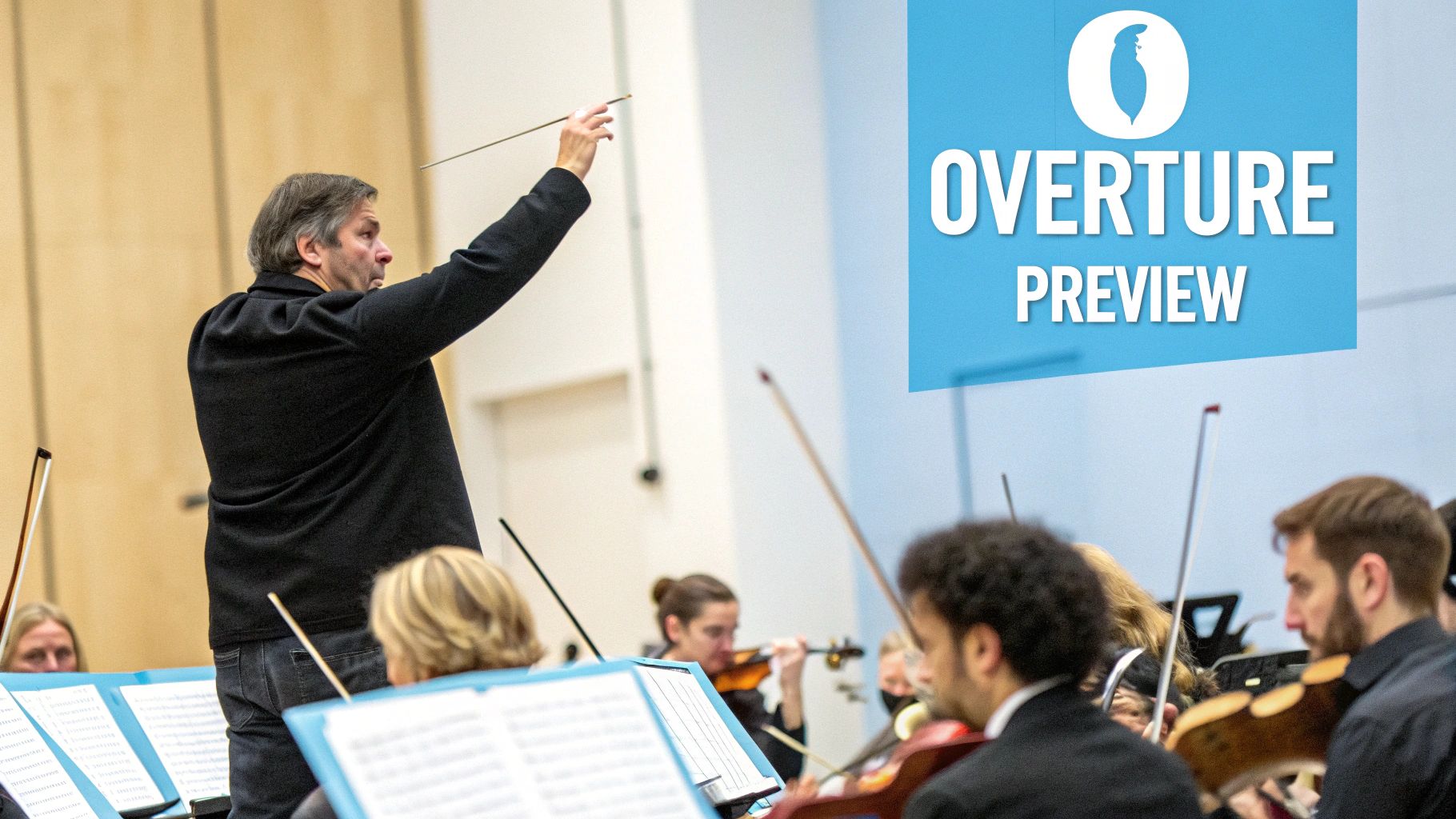
Think of the overture as the movie trailer for the opera. It’s a purely instrumental piece played by the orchestra, serving as a musical preview of what’s to come. It immediately establishes the overall tone—are we in for a heart-wrenching tragedy, a lighthearted comedy, or a sweeping romance? More often than not, it cleverly weaves in the main musical themes you'll hear again later.
An effective overture doesn't just warm up the audience; it tells them what to feel. It’s a roadmap of the emotional journey ahead, hinting at conflict, love, and destiny without spoiling the plot.
A perfect example is the overture to Mozart's Don Giovanni. It kicks off with dark, ominous chords that practically scream of the main character's eventual doom. But then, it pivots to a bubbly, energetic melody that perfectly captures his reckless charm. You get a complete picture of the drama before anyone even says a word.
The Composer's Color Palette
If the overture is a specific piece, orchestration is the art of assigning different musical lines to specific instruments throughout the entire opera. Think of the composer as a painter and the orchestra as their palette of colors. How they choose to mix and match those "colors" is one of the most powerful storytelling tools they have.
This is exactly how a composer paints an emotional landscape with sound.
- Soaring strings almost always signal big emotions like love, passion, or profound sadness. Their lush, collective sound can make a moment feel epic.
- Melancholic woodwinds like the flute, oboe, or clarinet can bring forth feelings of innocence, nature, or lonely contemplation.
- Triumphant brass—your trumpets and trombones—are perfect for announcing royalty, signaling a battle, or celebrating a heroic victory.
The genius is in how these instruments are combined to define characters, build nail-biting suspense, and create the rich sonic world of the performance. For anyone inspired by these powerful instrumental sounds, exploring a strings ensemble is a fantastic way to experience this collaborative magic firsthand. Each section of the orchestra plays a vital role, weaving together to form the unforgettable tapestry of sound that makes opera so compelling.
The Story's Blueprint: Libretto, Acts, and Scenes
While the music is the heart of an opera, the story is its skeleton. Every opera needs a narrative to hang its melodies on, and that entire structure—from the sung words to the stage directions—is laid out in a document called the libretto.
Think of the libretto as the opera's screenplay. It’s the text the composer uses to write the score and the roadmap the director follows to bring the drama to life. It doesn't just contain dialogue; it often gives crucial instructions like "he draws his sword" or "she looks out the window, weeping." Reading the libretto before a show is a fantastic pro-tip for getting a handle on the plot before the curtain even rises.
Acts: The Major Chapters
To keep these often epic tales from feeling overwhelming, the libretto breaks the story into large sections called acts. If an opera is a novel, the acts are its chapters. Each act usually wraps up a major piece of the story, often culminating in a massive musical number that leaves the audience eager to see what happens next.
Most classic operas are built with anywhere from two to five acts. The break between acts is called an intermission—your chance to stretch your legs while the crew hustles to make major set changes. This structure is all about pacing the drama, signaling big shifts in the plot, time, or location.
Scenes: The Individual Moments
Drilling down even further, each act is made up of scenes. You can think of scenes as smaller, continuous chunks of action that happen in a single place and time. A scene usually ends when the setting changes or a different group of characters comes on stage.
This framework makes the dramatic arc easy to follow. For instance:
- Act I might set the stage, introducing the main characters and their central problem.
- Scene 1 could be a bustling marketplace where we first meet our hero.
- Scene 2 could then shift to a quiet garden for a secret, romantic rendezvous.
Grasping the relationship between the libretto, acts, and scenes is like having a GPS for the plot. It helps you feel the story’s rhythm, spot the major turning points, and appreciate how the tension builds from one moment to the next, guiding you through the whole experience.
4. Decoding the Vocal Performances: Arias, Recitatives, and Ensembles
If the libretto is the skeleton and the orchestra is the heart, then the vocal performances are the very soul of the opera. This is where characters stop just being part of a story and start feeling right in front of us. To really get what’s going on, you need to understand the two most fundamental ways singers express themselves: the aria and the recitative. Each one has a completely different job to do.
The Emotional Heartbeat: The Aria
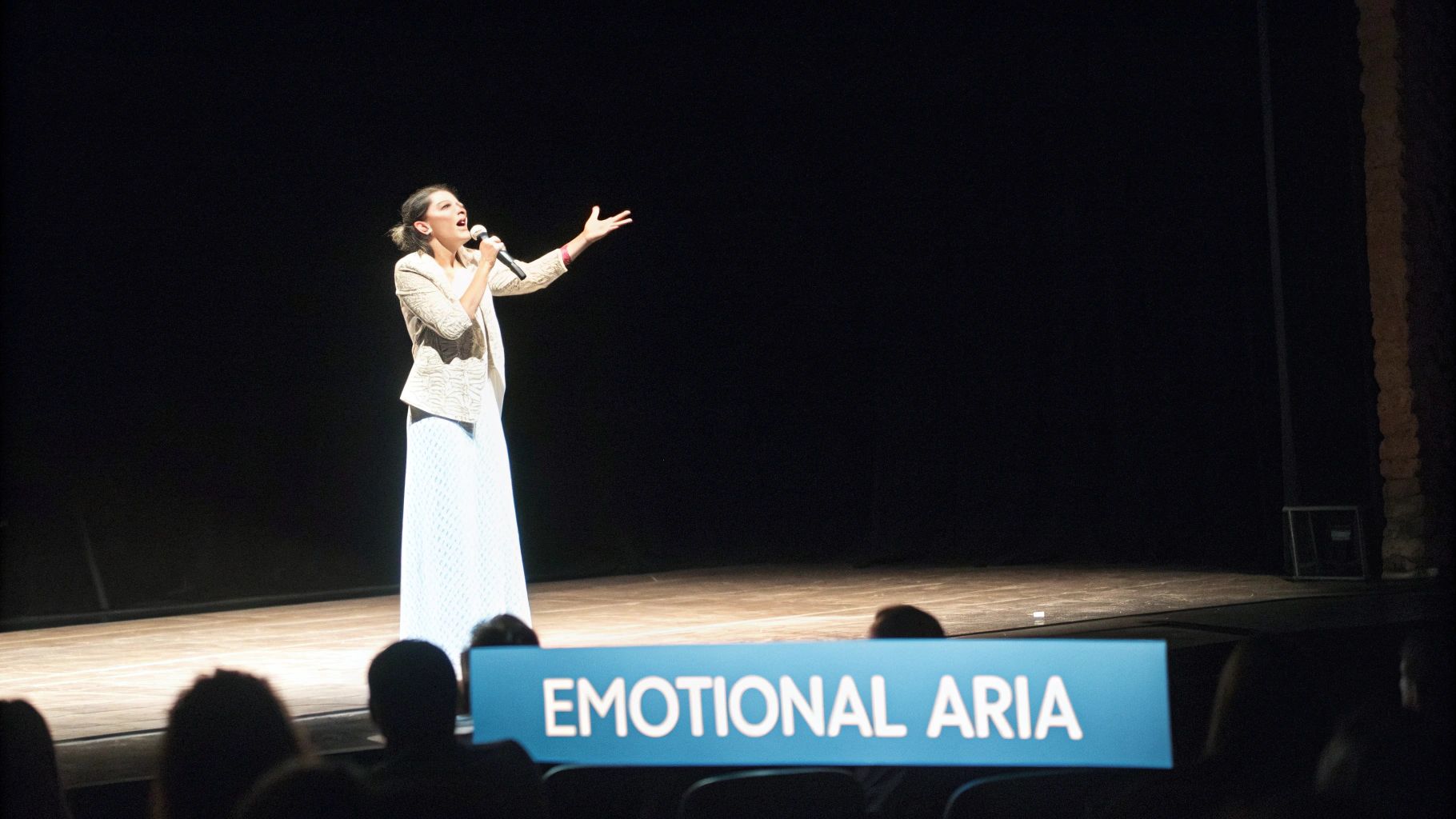
Think of an aria as a character’s emotional monologue set to glorious, expansive music. The plot hits the pause button, a singer steps into the spotlight, and for the next few minutes, they unpack their deepest desires, sorrows, or joys. It’s the musical equivalent of a soliloquy in a Shakespeare play—a moment of pure reflection and often vocal fireworks.
Arias are designed to showcase the singer's talent and explore a single, powerful emotion. They’re often the most famous and memorable parts of an opera—the tunes you can't help humming on your way home.
An aria is the ultimate "show, don't tell" moment in opera. It’s where a character’s inner world becomes the main event, allowing the audience to connect with them on a profoundly emotional level.
- What it does: Expresses a character's internal state—love, grief, anger, hope.
- What it sounds like: Lyrical, melodic, and often technically demanding, with full orchestral accompaniment that swells and supports the emotion.
- A perfect example: "Nessun dorma" from Puccini's Turandot. The story literally freezes as Prince Calaf sings about his determination to win the princess, his voice soaring with unshakeable hope and resolve.
Driving the Story Forward: The Recitative
So if the aria is an emotional diary entry, how does the story actually move forward? That’s the job of the recitative. It's essentially sung conversation that pushes the plot along. Its primary role is to deliver dialogue, share crucial information, and act as a bridge between the big, emotional arias.
Recitative sounds much more like speech than a typical song. The rhythm follows the natural cadence of the words, and the music is much simpler, often accompanied by just a harpsichord or a few instruments from the orchestra. It's the narrative glue that holds the opera together, making sure the story flows logically from one dramatic peak to the next.
For any aspiring singer, mastering the shift between these two distinct styles is a crucial skill honed in private voice lessons.
Table: Vocal Styles in Opera
To see how these vocal parts function side-by-side, along with another key element—the ensemble—let's break them down. This table compares the three primary vocal forms used in opera to convey emotion, plot, and character interaction.
| Vocal Part | Analogy | Primary Function | Example Listening |
|---|---|---|---|
| Aria | A soliloquy or monologue | Express a single character's deep emotion; stop time to reflect | "O mio babbino caro" from Puccini's Gianni Schicchi |
| Recitative | A conversation or dialogue | Move the plot forward; convey information and action | The dialogue sections in Mozart's The Marriage of Figaro |
| Ensemble | A group discussion or argument | Show multiple characters' reactions simultaneously | The famous Quartet from Verdi's Rigoletto |
Each of these vocal forms is a powerful tool in the composer's toolkit, allowing them to paint a rich, complex picture of human experience through music.
These timeless vocal forms are a huge reason for opera's staying power. Bachtrack's 2023 statistics logged a staggering 9,271 opera performances worldwide. It’s no surprise that works by Verdi, Puccini, and Mozart still dominate the charts, largely thanks to their unforgettable arias and compelling dramatic scenes. You can dive deeper into the trends in their annual classical music report.
A quick note on modern technology: while traditional opera relies entirely on the unamplified power of the human voice, some contemporary productions, especially in massive venues, might use professional wireless microphones. This is usually done to achieve a specific artistic effect or to ensure that every subtle, emotional detail of the performance reaches every single person in the audience.
The Power of the Collective Voice: Chorus and Finales
While we often focus on the solo stars, some of opera's most breathtaking moments come from the power of the group. Two key ingredients here are the mighty chorus and the show-stopping finale. This is where everyone comes together, and the result is a wave of sound and emotion that can be absolutely overwhelming in the best way.
Think of the chorus as the "voice of the people" in the story. They aren't just background singers—they are a character in their own right. The chorus can be anyone: angry villagers, celebrating soldiers, praying nuns, or even a haunting group of ghosts.
When dozens of singers join forces on stage, the sound is electric. It’s a wall of sound that can express a whole community's joy, fear, or solemn prayer. It adds a scale and texture to the performance that a single voice just can't match.
The Role of the Chorus
So, what exactly does the chorus do? They're more than just scenery; they often act as both participants and commentators on the main story.
- Setting the Scene: Their music can instantly tell you where you are, whether it's a rowdy tavern or a sacred temple.
- Driving the Plot: A chorus can push the story forward by reacting to events, spreading gossip, or demanding that the heroes take action.
- Adding Emotional Weight: Seeing a whole crowd react to a character's decision amplifies the drama and shows the wider impact of their choices.
A perfect example is the "Anvil Chorus" from Verdi's Il Trovatore. You hear a group of Roma people singing joyfully as they work, and it brings their entire community to life in a vibrant, unforgettable scene. This collective power is a huge part of opera's magic. In 2022, Europe's opera houses put on over 20,000 performances for more than 13 million people, proving just how vital this art form remains. You can dive deeper into opera's powerful return in this 2023 statement from World Opera Day.
Bringing It All Home with the Finale
As an act—or the entire opera—nears its end, composers pull out their secret weapon: the finale. This is the ultimate musical climax, a massive, complex piece where all the story's conflicts finally boil over.
The finale is where every thread of the plot gets woven together. The soloists' personal dramas and the chorus's reactions all collide in a spectacular tapestry of sound. It’s built to be an unforgettable conclusion that leaves you breathless.
In a finale, you’ll often see all the main characters and the chorus on stage at the same time, with their voices layering over one another in complex, beautiful ways. This musical explosion provides a powerful sense of resolution, whether it's tragic or triumphant, making sure the opera goes out with a bang.
Bringing the World to Life: Staging and Visual Design
We've explored the music and the voices, but opera is a feast for the eyes, too. Now we get to the visual magic that builds the entire world on stage. These elements work together to transport the audience, transforming a bare platform into ancient Egypt, a fairy-tale forest, or a bustling Parisian cafe.
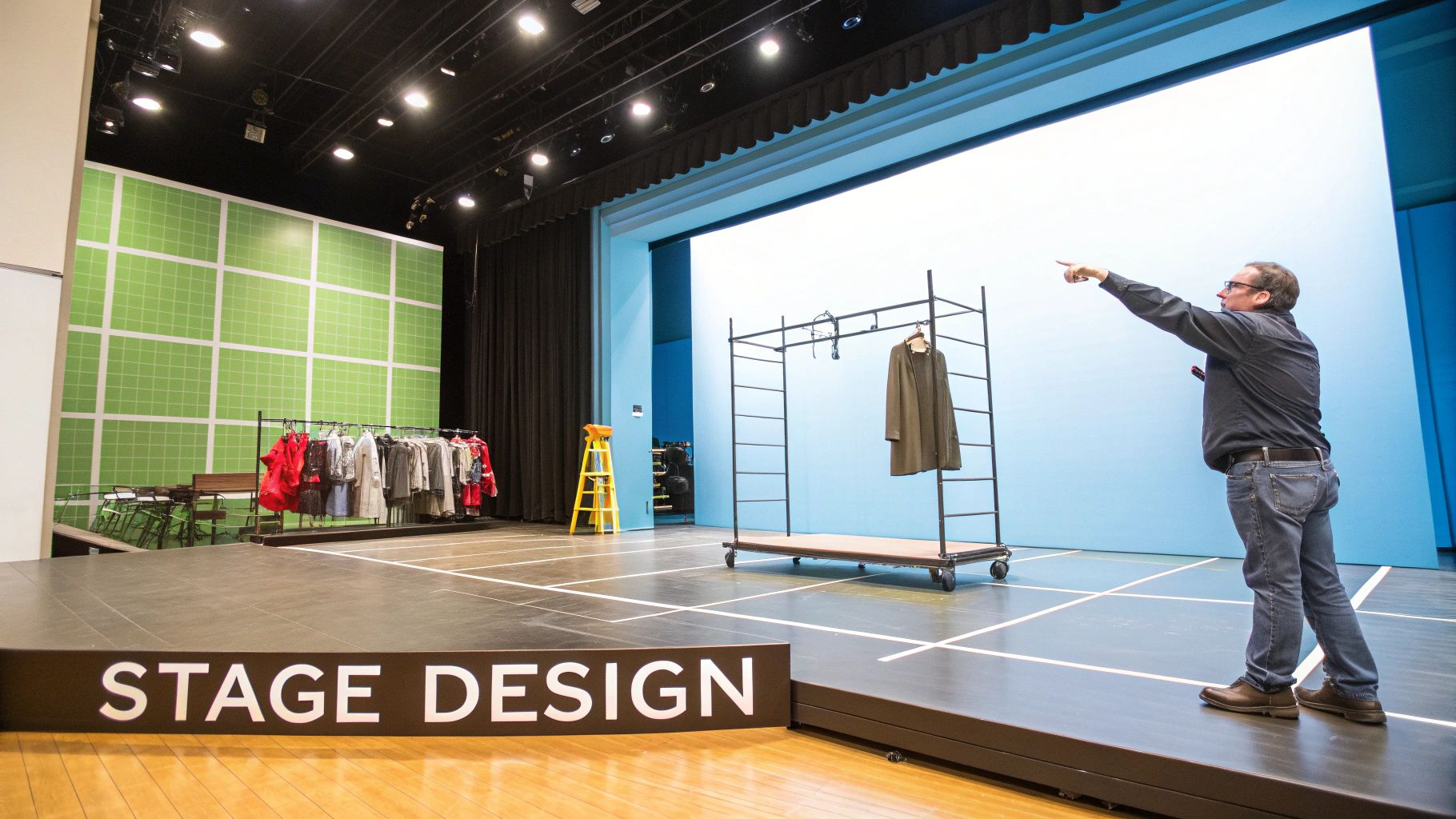
This whole visual universe hinges on the staging. Think of it as the opera’s master plan for movement. It’s the director’s vision for where singers stand, how they interact, and what they do to tell the story. Good staging makes the drama feel believable and ensures the emotional heart of every scene hits home.
The Pillars of Visual Storytelling
Beyond just movement, three key design elements come together to create a completely immersive world. Each one has a specific job in shaping how the audience feels and what they understand.
These three pillars are:
- Sets: This is the physical environment on stage. It can be anything from a massive, hyper-realistic castle to a few simple blocks that merely suggest a location.
- Costumes: What the performers wear is a huge storyteller. Costumes instantly establish the historical period, a character's social status, and even hints about their personality.
- Lighting: The use of light, shadow, and color is essential for creating atmosphere. Lighting guides your eye, signals a change in mood, and can crank up the emotional intensity of a scene.
Together, these visual components are far more than just decoration; they are active storytellers. They establish the setting, define the era, create a specific atmosphere, and amplify the narrative's emotional core.
For instance, warm, golden lighting can make a love scene feel deeply intimate, while stark, blue light might create a sense of unease or dread. A lavish, jewel-toned gown tells us we’re looking at royalty, just as a bare, gray set can scream poverty or isolation. This fusion of visual elements is what turns a great performance into an unforgettable, multi-sensory journey.
Common Questions About Attending the Opera
Stepping into the grand world of opera for the first time might seem a little intimidating, but it absolutely doesn't have to be. Now that we’ve broken down the building blocks of an opera, let’s tackle a few practical questions that often pop up before the curtain rises. My goal here is to demystify the experience so you feel nothing but confident and excited for your first show.
Do I Need to Understand Italian to Enjoy an Opera?
Not at all! This is probably the biggest myth that keeps people away from the opera house. Just about every modern performance uses supertitles, which are simply translations projected on a screen above the stage—think of them as subtitles for a live show. You can follow the story perfectly, even if you don't speak a word of Italian, German, or French.
But more importantly, the music itself is a universal language. The sheer power of a singer's voice and the emotional swell of the orchestra communicate the drama so directly that you can feel the story's joy or heartbreak without understanding a single word. It’s an experience that hits you on a gut level.
What Is the Difference Between Opera and a Musical?
The main distinction really comes down to vocal style and musical structure. In opera, the story is almost always sung from start to finish. Performers train for years to master a specific classical technique that allows their voices to soar over a full orchestra without any microphones. It’s an acoustic, powerful sound designed to fill the entire hall naturally.
Musicals, on the other hand, frequently mix spoken dialogue with songs. They also embrace a much broader range of singing styles and almost always use amplification and microphones to balance the voices with the band or orchestra. Think of it as the difference between hearing an acoustic symphony versus an amplified rock concert—both tell incredible stories with music, but the delivery is fundamentally different.
Opera's unique power comes from the unamplified human voice performing incredible athletic feats. It's a live, acoustic experience that connects the audience directly to the raw emotion on stage in a way that is truly unique.
For anyone new to live performances, seating can also be a point of confusion. Many venues offer different kinds of tickets, and for some events, understanding general admission tickets can help clarify how everything works.
How Can I Introduce My Child to Opera?
The trick here is to start small and make it a blast. You don’t need to drag them to a three-hour epic for their first experience. Instead, start with the "greatest hits" to get them hooked.
- Watch clips online: YouTube is your best friend. Show them famous, exciting arias or big, powerful choruses. The "Queen of the Night" aria from The Magic Flute is almost always a winner with kids because it’s just so dazzling.
- Focus on the story: A lot of classic operas are based on fairytales and myths filled with magic, heroes, and villains that kids already love.
- Look for family events: Keep an eye out for special productions. Many opera companies now offer shorter, family-friendly shows or even animated versions designed specifically for younger audiences.
By framing opera as an exciting adventure full of spectacular music and enchanting stories, you can spark a genuine interest. Before you attend any performance, it’s always a good idea to get familiar with the venue. You can learn more about what to expect at our space by checking out our performance hall information.
At East Valley School of Music, we believe that understanding and appreciating music is a lifelong joy. From a child's first piano lesson to an adult's vocal coaching, our experienced instructors are here to guide your musical journey. Explore our programs and start your adventure in music today at https://evsm.net.