Introduction: Understanding Your Music Education Options
Why Families Switch from School of Rock to East Valley School of Music
Families in Arizona have more choices than ever when it comes to music education. Between performance-based programs, community ensembles, independent teachers, and traditional studios, it can be hard to know which path best suits your child. Many parents begin with a band-centered program like School of Rock and later look for a more individualized approach that supports steady musical growth. That’s where East Valley School of Music (EVSM) often enters the conversation.
For families comparing options for music lessons for students, the decision typically centers around two questions: Which environment will foster the most confidence and musical fluency, and how can you set up a sustainable plan—financially and logistically—for the long term? EVSM, located in Chandler, provides professional private and group instruction for all ages, complemented by instrument rental partnerships and a dedicated 100-seat performance venue. The combination of one-on-one attention and collaborative opportunities gives learners both the structure and flexibility they need to thrive.
In this guide, we’ll explore why families switch from a performance-only focus to a well-rounded program, what to expect from personalized music education, and how to make a smooth transition without losing momentum.
What Makes School of Rock Different from Traditional Music Schools
School of Rock popularized a performance-first model: students learn songs, rehearse with a band, and work toward live shows. This approach is exciting and can be a great introduction to stagecraft, set lists, and teamwork. It’s also structured around popular genres and contemporary repertoire, which has strong appeal for many young musicians.
Traditional music schools like EVSM organize learning around comprehensive musicianship. The curriculum typically focuses on technique, music reading, ear training, theory, and stylistic understanding across classical, jazz, and popular traditions. Performances are still central, but they serve the broader goal of developing durable skills that students can apply in any ensemble or style.
Key differences many families consider:
- Emphasis: Band shows and set lists versus foundational technique and individualized goals.
- Instruction format: Primarily group rehearsals and performance prep versus a mix of private lessons and group classes.
- Pace: Collective progress toward a performance date versus personal pacing and benchmarked milestones.
- Repertoire: Contemporary rock-centered focus versus a broad palette that includes classical, jazz, and contemporary.
Neither approach is inherently better for every student. Some learners are motivated by the energy of a band from day one, while others benefit from mastering fundamentals before taking the stage. Families who switch often say they’re looking for balance—ongoing ensemble opportunities with stronger individual guidance to support technique, reading, and long-term progress.
The Advantages of Personalized One-on-One Instruction

Private music instruction is the backbone of lasting musical development. In one-on-one lessons, teachers can tailor pacing, repertoire, and technical focus to the student’s goals and learning style. That customization becomes invaluable as students encounter challenges that are hard to address in a full band setting.
Where individualized lessons make a noticeable difference:
- Technique and tone: From piano hand shape and fingering to violin bowing, guitar fretting, vocal breath support, and brass embouchure, small adjustments dramatically affect sound and ease of playing.
- Reading and rhythm fluency: Students learn to decode notation, subdivisions, and syncopation at a pace that matches their current level.
- Musicianship tools: Ear training, scales, chord vocabulary, and theory are introduced methodically so students know not just what to play, but why it works.
- Practice planning: Weekly, personalized assignments show students exactly what to focus on, how often, and how to measure improvement.
- Goal alignment: Whether preparing for school auditions, jazz band placements, college applications, or simply playing for enjoyment, lessons align with concrete milestones.
Personalized music education also supports different learning needs. Students who are neurodivergent or who manage attention or processing differences often thrive when instruction is predictable, individualized, and broken into manageable steps. Over time, the confidence gained from measurable weekly progress carries into rehearsals, performances, and daily practice.
Group Classes and Collaborative Learning Opportunities
While private lessons drive individual growth, group music classes build the skills needed to make music with others. EVSM’s collaborative classes emphasize listening, timing, dynamics, and ensemble etiquette—competencies that are equally valuable in a rock band, orchestra, jazz combo, or choir.
How group experiences complement lessons:
- Ensemble skills: Students learn to blend, balance parts, follow a conductor or leader, and cue fellow musicians.
- Accountability and motivation: Regular peers and shared goals keep practice purposeful between lessons.
- Musical vocabulary in context: Concepts learned in private lessons—like time signatures, chord functions, or articulations—turn into real-time musical decisions with others.
- Confidence on stage: Rehearsing and performing as a group reduces stage anxiety while strengthening focus and adaptability.
Group classes at a traditional school also allow for varied formats. Depending on level and interests, learners might join beginning ensembles, theory labs, rhythm workshops, or style-specific sessions. For families who enjoyed the collaborative energy of a band program, this structure preserves the social and performance-driven aspects while tightening the connection to foundational skills.
Qualified Instructors and Professional Credentials
The expertise of a teacher is one of the strongest predictors of student progress and retention. At East Valley School of Music, lessons are taught by degree-holding, professional music teachers who specialize in both pedagogy and performance. That dual focus matters: students get the benefit of clear, age-appropriate instruction and the lived perspective of working musicians.
What a professionally credentialed faculty brings:
- Pedagogical training: Instructors understand how to sequence skills, adapt for different learners, and diagnose technical challenges efficiently.
- Genre fluency: Teachers can support classical technique while introducing jazz harmony or contemporary styles, depending on the student’s interests.
- Consistent standards: Benchmarks for tone, rhythm, reading, and expression are applied thoughtfully so students and families can see progress over time.
- Preparedness for next steps: Faculty guide students through auditions, competitions, recitals, and college application requirements.
To get a sense of the breadth of training and specialties at EVSM, you can explore our instructors. When evaluating any school, ask about teachers’ academic backgrounds, performance experience, and approach to student goal-setting. In a city with many choices for music lessons in Chandler, faculty credentials help you understand what kind of coaching your child will receive week after week.
Financial Benefits: ESA Scholarships and Instrument Rentals
A long-term music education plan should also work for your budget. Arizona’s Empowerment Scholarship Account (ESA) program enables eligible families to request reimbursement for qualifying educational expenses, which can include private music lessons. East Valley School of Music is eligible for ESA scholarship reimbursement, offering families a way to align financial support with their child’s training.
Consider these steps to make the most of ESA:
- Review current ESA guidelines: Eligible expenses and documentation requirements can change; consult official resources to understand what’s needed.
- Keep clear records: Save invoices and attendance records for reimbursement submissions.
- Plan your calendar: Map lessons and any add-on classes for the term so you can anticipate monthly costs and reimbursement timing.
Instrument access is the other major cost consideration. EVSM partners as a Milano Music instrument rental agent, which simplifies getting a quality instrument in the correct size and setup for your child. Renting is often the most cost-effective path early on—particularly for string instruments where students may need to size up—or for families exploring a new instrument before committing to a purchase.
Benefits of renting through a trusted agent:
- Proper fit and setup: Teachers can check the instrument to ensure playability and comfort.
- Maintenance support: Rental plans typically include service options, reducing unexpected repair costs.
- Upgrade paths: As students advance, rental-to-own or trade-up programs make it easier to match their new level without a large upfront expense.
When combined—ESA reimbursement and a reliable rental plan—families can create a sustainable budget for consistent lessons, the most important investment in successful outcomes.
Performance Opportunities and Student Recitals
Performing is both a milestone and a motivator. EVSM offers biannual student recital opportunities so learners can share their progress in a supportive setting. These events are intentionally structured to be celebratory rather than high-pressure, giving students a chance to demonstrate skills they’ve built through the semester.
Distinct advantages of the EVSM performance model:
- Purposeful timing: Recitals are scheduled to align with instructional cycles, encouraging steady preparation in lessons.
- Level-appropriate repertoire: Teachers help students select pieces that showcase growth while remaining achievable.
- Reflection and feedback: After performing, students receive guidance about what went well and what to polish next.
- Family engagement: Recitals connect parents to the learning process and give students a tangible sense of accomplishment.
EVSM also maintains a dedicated, on-site performance venue that seats approximately 100 audience members. This hall provides a professional atmosphere—with reliable acoustics, sightlines, and audience capacity—without the logistics of renting an external theater. The space is available for rentals as well, making it a practical option for small ensembles, studio classes, and community events that benefit from a formal stage experience.
Creating a Supportive Learning Environment
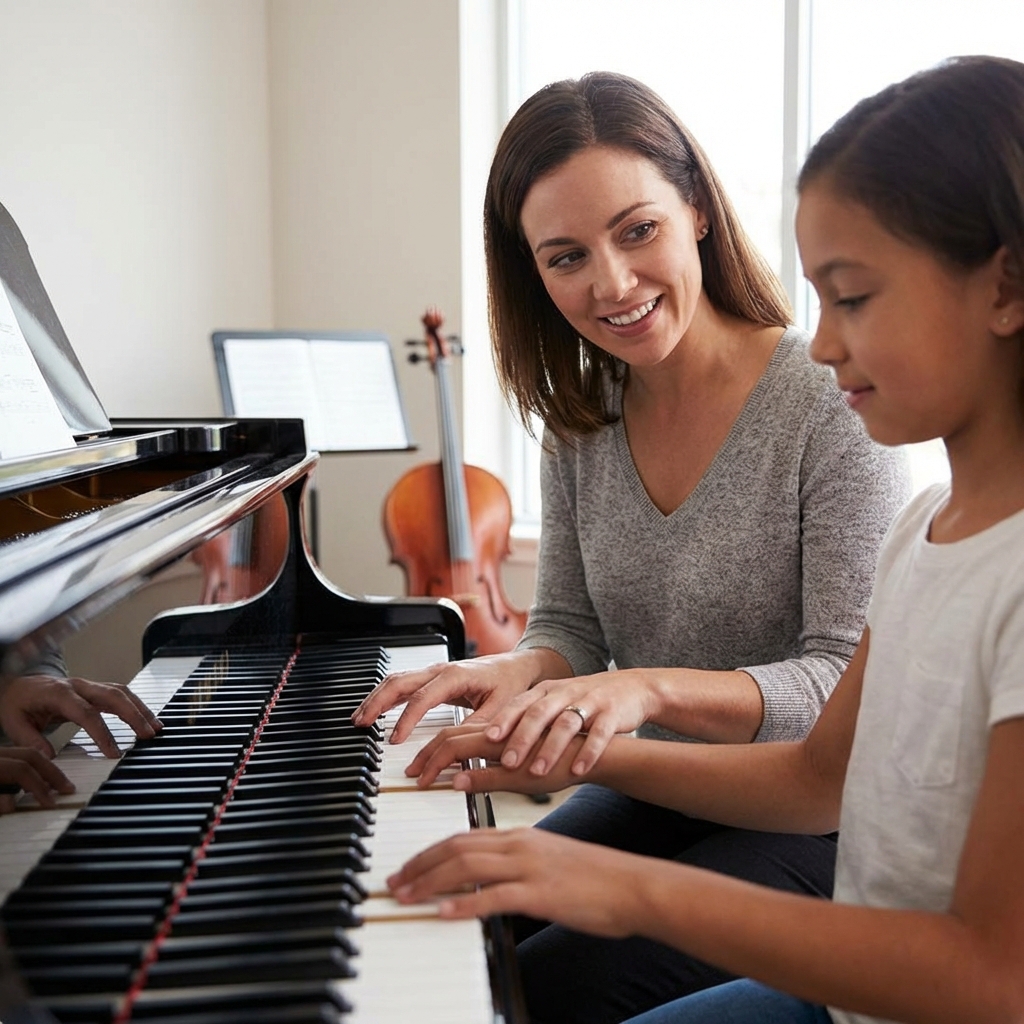
Progress is strongest when instruction, practice, and encouragement work in tandem. A supportive environment creates structure and celebrates effort—two ingredients that are essential whether a student is five or fifty. At EVSM, that environment is built around clarity, consistency, and community.
What support looks like in day-to-day learning:
- Clear goals: Each lesson ends with a focused plan—technique, repertoire, and listening—so students know exactly what to practice.
- Measurable milestones: Teachers track achievements like new rhythms mastered, scales added, or performance-ready pieces, making progress visible.
- Smart practice habits: Students learn how to break down passages, use a metronome effectively, and rotate focus areas across the week.
- Encouragement and accountability: Regular check-ins and ensemble commitments keep motivation high and practicing consistent.
For families in the Chandler area, a supportive studio culture also means practical considerations: convenient scheduling options, coordination between private and group offerings, and the continuity of working with the same teacher over time. Adult learners benefit from the same clarity and flexibility—especially when returning to music after a long break or starting an instrument from scratch.
How to Transition Your Child’s Music Education
If your child currently participates in a band-centric program and you’re considering a switch to a more personalized model, a thoughtful transition preserves momentum and motivation. The goal is not to undo previous progress, but to build on it with targeted skill development.
A practical, low-stress transition plan:
- Clarify goals together. Ask your child what they enjoy most—performing on stage, learning new songs, composing—and where they feel stuck. Share your goals too (e.g., reading fluency, audition prep, confidence).
- Share prior materials. Bring charts, recordings, and any methods used so far to your first EVSM lesson. This gives the new teacher a clear starting point.
- Schedule a placement lesson. An initial session allows the instructor to assess technique, reading, and repertoire level. From there, you’ll get a customized plan.
- Align the calendar. Decide on a consistent weekly lesson time and consider adding a complementary group class to maintain ensemble motivation.
- Optimize the instrument setup. If you need to rent or upgrade, use EVSM’s Milano Music rental partnership to secure a properly set-up instrument before lessons ramp up.
- Organize practice. Create a quiet practice spot at home and set a realistic schedule—short, focused sessions are better than infrequent marathons.
- Coordinate any overlap. If your child wants to finish a current band cycle or performance, your EVSM teacher can integrate that repertoire into lessons to ensure continuity.
- Explore ESA reimbursement. If eligible, collect invoices and follow current program guidelines for submitting expenses tied to private music instruction.
Throughout the first month, expect foundational work alongside familiar repertoire. Many students see rapid gains when core technique and reading catch up to their performance experience. Celebrate the small wins—cleaner tone, quicker rhythm recognition, more secure transitions between sections—because those are the building blocks of confident musicianship.
Making the Right Choice for Your Family’s Musical Journey
Selecting the right studio is about fit: the teaching approach, instructor qualifications, scheduling, financial plan, and the day-to-day experience your child will have. Families who move from School of Rock to East Valley School of Music usually do so to add structure and personalization to a performance-rich beginning. One-on-one lessons keep progress steady; group classes maintain the joy of playing with others; and regular recitals, a dedicated performance hall, and accessible rentals support a complete, long-term plan.
If you’re exploring music lessons in Chandler, consider how each option addresses:
- Individualized growth: Is there a clear path for technique, reading, and theory?
- Qualified instruction: Do professional music teachers with relevant degrees and experience guide learning?
- Ensemble opportunities: Can your child collaborate while still receiving targeted feedback each week?
- Practical logistics: Are instrument rentals, scheduling, and performance spaces convenient?
- Financial sustainability: Do ESA reimbursement pathways and rental options support your budget?
When you’re ready to take the next step, browse EVSM’s private lessons to see available instruments and formats, and review our instructors to match your child with a teacher whose expertise and style align with your goals. With the right team and a thoughtful plan, music lessons for students become more than a weekly appointment—they become a foundation for creativity, confidence, and a lifelong connection to music.