Introduction to Student Instrument Rental Programs
For many Arizona families, the most practical path into music education starts with instrument rental. The right rental program lowers upfront costs, ensures a properly sized and well-maintained instrument, and lets students explore confidently before committing to a purchase. At East Valley School of Music in Chandler, students benefit from a streamlined approach that connects lessons with reliable rentals through Milano Music, with clear, supervised policies that keep everyone aligned on care, usage, and accountability.
Instrument rental assistance for students is more than a budget-friendly option; it’s a support system. When instructors, families, and a trusted rental partner work together, students get consistent sound quality, fewer interruptions from repair needs, and an instrument that fits their hands, embouchure, or bow arm correctly. In Arizona, this pathway can also intersect with ESA reimbursements when documentation and program rules are followed, further reducing barriers to sustained progress.
Whether you’re starting a child in a beginner ensemble or returning to music as an adult, structured rentals make it easier to match the instrument to your goals, class format, and practice routine. The result is a stronger foundation for technique, better practice outcomes, and a smoother road to performances—whether in the studio, at biannual recitals, or on a larger stage.
Understanding Instrument Rental Benefits for Music Students
The first year of study is a period of discovery—discovering how a student learns, what instrument size feels natural, and what tone inspires them to keep practicing. Rental programs are designed with these realities in mind, especially for families balancing budgets and schedules.
Key benefits include:
- Lower upfront cost: Monthly fees replace large purchases, keeping music lesson instrument rental options accessible for more households.
- Size and model flexibility: Students who outgrow a violin or find a more suitable woodwind can exchange without restarting from scratch.
- Service and support: Many rental agreements include maintenance plans or optional coverage that help with normal wear, repair access, and tune-ups.
- Trial without long-term risk: If a student decides to switch instruments or pause lessons, rental returns are straightforward.
- Instructional alignment: Teachers can standardize expectations for tone, intonation, and reliability, improving ensemble blend and lesson efficiency.
These advantages don’t just save money—they protect progress. An instrument in good condition shortens the time between instruction and results. For young learners, that quick feedback loop is essential; for adult learners, it preserves motivation when balancing practice with work and family life.
Types of Instruments Available Through Rental Services
Most families can find what they need through reputable Arizona rental providers such as Milano Music. While specifics vary by inventory and season, typical categories include:
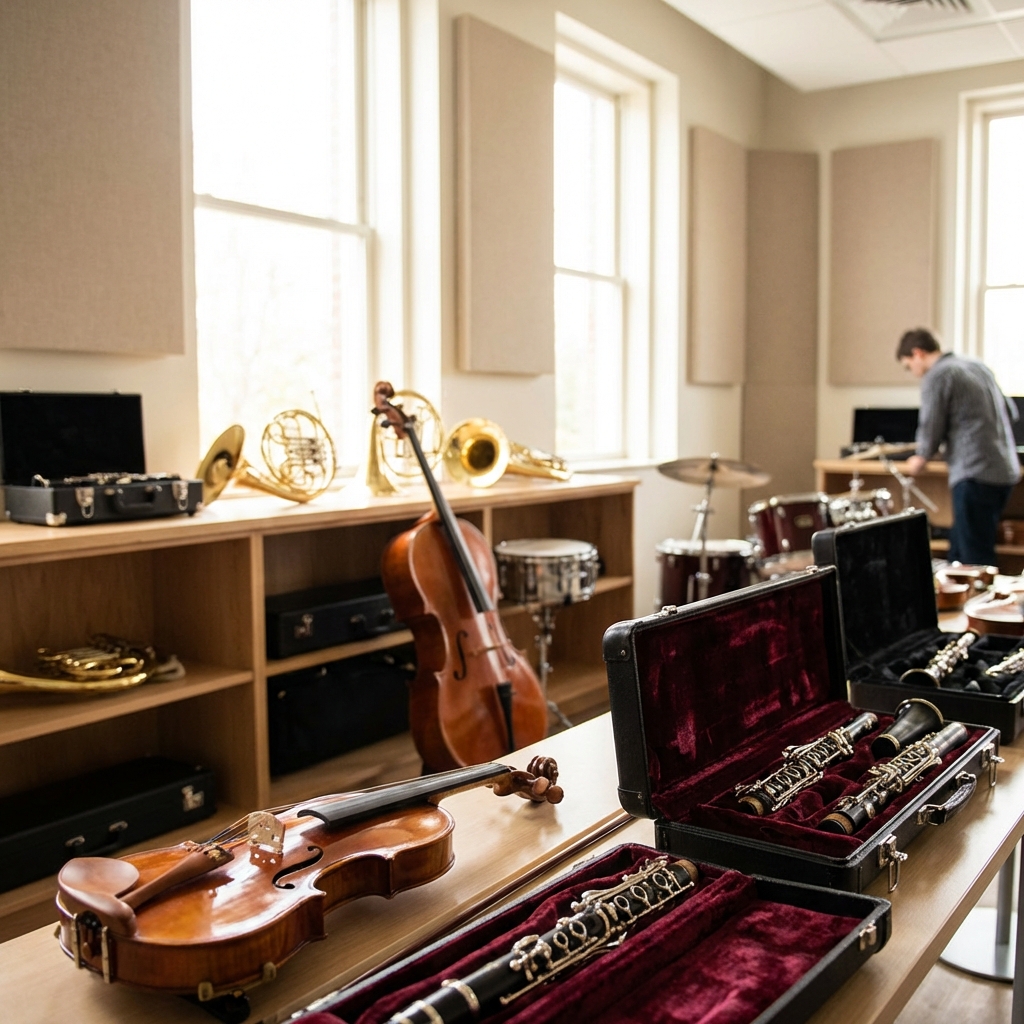
- Orchestral strings: Violin, viola, cello, and double bass in fractional sizes to full size, with bow and case. Size exchanges are common as students grow.
- Woodwinds: Flute, clarinet, alto/tenor saxophone, and oboe. Mouthpieces are usually included; reeds and swabs are consumables families purchase separately.
- Brass: Trumpet, trombone, French horn, baritone/euphonium, and tuba. Valve oil, slide grease, and a cleaning kit help keep instruments responsive.
- Percussion kits: Practice pads, snare kits, or bell kits suitable for band programs, sometimes combined kits depending on school requirements.
- Guitar and ukulele: Classical, acoustic, or fractional-size models for young learners, with soft cases; electric options may be available.
- Keyboards: Select providers offer digital piano rentals with weighted keys for proper technique when an acoustic piano isn’t practical at home.

Accessories are part of learning, and rental bundles may be complemented with a stand, method book, tuner, metronome, cleaning supplies, and (for string players) rosin. Discuss with your instructor which model and accessory set support the curriculum used in lessons and ensembles. When in doubt, ask the studio or Milano Music to confirm availability and suitability for your student’s age, size, and goals.
How to Access Rental Assistance and Financial Support
Families often ask what support is available to make rentals affordable and straightforward. In Arizona, the pathway typically includes program guidance from your studio, flexible options from the rental provider, and, for eligible families, ESA reimbursement.
A simple process to get started:
- Consultation: Speak with your instructor about instrument type, size, and brand-level expectations. Teacher alignment reduces hassles later.
- In-studio guidance: East Valley School of Music staff can outline the rental steps with Milano Music and clarify timelines before your first lesson or group class.
- Fit and trial: Students may be sized for orchestral strings or guided on embouchure and key reach for woodwinds and brass, confirming the right starting point.
- Contract setup: Families complete a rental agreement with the provider, typically including a payment method and optional maintenance coverage.
- Pickup or delivery: Coordinate a pickup plan or verify delivery options. Ensure the first lesson follows soon after so new renters build momentum.
- Financial supports: Ask about introductory promotions from the rental provider, rent-to-own credit, and whether your household’s ESA status may allow reimbursement for rental expenses in your student’s learning plan.
Beyond ESA, some families explore community foundations, school music booster clubs, or church and civic groups for short-term rental assistance for young musicians. Document everything, keep receipts, and ensure the specific instrument and term align with your student’s official learning plan.
Supervised Rental Policies and Maintenance Responsibilities
Supervised instrument rental policies keep expectations clear for students, parents, and instructors. When everyone is aligned, instruments last longer, lessons stay productive, and accidental damage is less likely.
Elements of supervised policies often include:
- Parent/guardian oversight: For minors, a parent co-signs the rental agreement and ensures safe storage, transport, and daily care.
- Instructor check-ins: Teachers may perform quick visual inspections during lessons, noting issues like loose corks, frayed strings, sticky valves, or warped bows.
- Condition logs: Families record incidents, repairs, and maintenance. A simple log helps determine whether issues fall under normal wear or accidental damage.
- Authorized repairs only: To protect warranties and maintain quality, use the rental provider’s approved service channels. DIY fixes can worsen problems.
- Timely reporting: Notify the provider promptly about breaks, cracks, pad leaks, or suspect noises. Early service prevents costly secondary damage.
- Responsible use in ensembles: Students follow conductor or teacher directions about stands, seating, and storage to avoid collisions, drops, or weather exposure.
Maintenance responsibilities are shared. Providers handle normal wear per the contract; families handle daily care, consumables (reeds, strings, oil), and careful handling. Discuss who pays for what before signing. For policy specifics (including lesson makeup and studio expectations that intersect with rentals), review the studio’s published guidelines and the rental agreement together.
ESA Scholarship Reimbursement for Rental Costs
Arizona’s Empowerment Scholarship Account (ESA) program can make affordable music education equipment even more accessible when used within program rules. Many families find that instrument rentals—when directly tied to a student’s educational plan and music instruction—may be eligible for reimbursement. The key is accurate documentation and adherence to the Arizona Department of Education’s current ESA guidance.
Best practices for ESA-related rentals:
- Confirm eligibility: Check the latest ESA handbook and portal for categories covering “educational supplies” or equipment used for instruction. Rules may change; verify before committing.
- Align with instruction: Document how the rental supports your student’s lessons or group classes at East Valley School of Music.
- Keep complete records: Save invoices, rental agreements, and payment confirmations. Note student name, instrument type, and rental period on all paperwork.
- Month-by-month clarity: Many ESA submissions are easier to process when invoices clearly show dates and the educational purpose over time.
- Submit promptly: Follow ESA portal instructions for uploading receipts and responding to any request for clarification.

Studio offices can help by issuing lesson documentation and providing invoices that clearly state the instructional purpose, while the rental provider documents the instrument and dates. For EVSM’s general expectations and paperwork standards that support ESA families, see the studio’s Tuition and Policies. Families should consult the ESA program directly for definitive guidance; studio staff can share experience but cannot provide legal or financial advice.
Instrument Care Guidelines and Student Accountability
Daily care is the most effective form of rental insurance. A few minutes after each practice session can prevent tone problems, sticky keys, frayed bow hair, and costly repairs that interrupt progress.
Core care routines by instrument family:
- Woodwinds (flute, clarinet, saxophone, oboe)
– Swab the bore after each use to prevent moisture damage. – Store with mouthpiece caps on; replace reeds regularly and rotate 3–4 reeds. – Avoid eating or sugary drinks right before playing.
- Brass (trumpet, trombone, horn, baritone/tuba)
– Oil valves or grease slides weekly (or as recommended by your instructor). – Empty water keys to avoid corrosion and gurgling sounds. – Protect bell and slides in crowded band rooms and during transport.
- Orchestral strings (violin, viola, cello, bass)
– Wipe rosin dust from strings and top plate after playing. – Keep bridge upright; report string grooves, open seams, or slipping pegs. – Loosen bow hair after each session; store in a climate-stable area.
- Percussion
– Use appropriate sticks/mallets; avoid striking rims or hardware unnecessarily. – Keep practice pads clean and level; store kits in cases between uses.
- Guitar/Ukulele/Keyboard
– Wipe strings and fingerboard to reduce grime and prolong string life. – Keep keyboards covered and away from heat, liquids, and power surges.
Accountability tips:
- Label the case with student name and contact info.
- Use a stand at home; never prop instruments on chairs or beds.
- Avoid leaving instruments in cars (Arizona heat damages pads, glues, and finishes).
- Photograph the instrument at the start of the rental period for a condition baseline.
- Report accidents quickly; early intervention often reduces costs.
Teachers at East Valley School of Music incorporate care reminders into lessons so students learn not just what to play, but how to protect their instrument—a vital part of supervised instrument rental policies.
Comparing Rental vs. Purchase Options for Music Education
Families often reach a crossroads: continue renting, or purchase? The right answer depends on age, growth rate, commitment level, and ensemble demands.
When renting may be best:
- Early-stage students exploring interest or switching instruments.
- Young string players who will change sizes within 6–18 months.
- Households seeking a maintenance plan and easy exchanges.
- Students in group classes who need consistent, teacher-approved models.
When purchasing may be best:
- Students settled on an instrument and ready for intermediate or advanced models.
- Families seeking long-term cost efficiency once size and instrument choice are stable.
- Learners whose practice habits, ensemble roles, and performance needs justify a higher-grade instrument.
Cost considerations:
- Rental fees can include maintenance coverage and protect against large, unexpected repair bills.
- Many rentals offer rent-to-own credit; ask how much of your payment applies toward future purchase.
- A quality purchase holds resale value better than a low-quality new instrument; used intermediate models can be a strong value.
Instructional outcomes also matter. Consistent tone, accurate intonation, and mechanical reliability help students succeed in private lessons, collaborative group classes, and performances in EVSM’s 100-seat hall. For some, a stable rental with predictable maintenance delivers that reliability; for others, a well-vetted purchase becomes a better long-term platform for growth.
Rental Terms, Duration, and Upgrade Pathways
Clear terms help families plan budgets and avoid surprises. While specifics depend on the rental provider, common structures include:
- Monthly agreements: Most contracts are month-to-month with automatic payments. Ask about any minimum term or early return conditions.
- Maintenance coverage: Some plans include routine service; others offer optional protection for accidental damage. Clarify what’s covered versus wear-and-tear.
- Size exchanges: String players typically exchange sizes at no extra fee beyond continued monthly rent; confirm if reconditioning or administrative fees apply.
- Rent-to-own credit: A portion of each payment may accrue toward purchase of the current instrument or an approved step-up model. Get the conversion rate in writing.
- Upgrades: As students progress, ask how to transition to intermediate or performance-level instruments and whether existing credits transfer.
- Accessory packages: Stands, cleaning kits, reeds, or rosin can be bundled; ensure you’re not paying for items you already own.
- Replacement terms: Understand the process and downtime expectations if an instrument needs extended repair.
- Responsibility for loss or theft: Confirm expectations around insurance claims, police reports, and any deductibles.
Students who advance quickly benefit from structured upgrade pathways. For example, a clarinetist moving into wind ensemble may need a wooden intermediate instrument; a violinist earning principal roles might require a higher-grade bow. Plan upgrades around festival schedules, auditions, and EVSM recitals to minimize disruption.
Getting Started with Your Instrument Rental Journey
A smooth start helps students stay motivated and focused. If you’re new to rentals or returning to music after a break, a clear checklist makes the process manageable.
Suggested steps:
- Define goals: Are you preparing for private lessons, a school band, or a group dynamics class? Share timelines and repertoire goals with your instructor.
- Confirm teacher-approved models: Your instructor can recommend reputable makes and accessories to standardize tone and technique.
- Fit the instrument: For strings, ensure correct size; for winds/brass, check hand position and reach. Comfort drives longer, more effective practice.
- Set up the rental: Complete the contract with the provider; add maintenance coverage if it aligns with your risk tolerance and schedule.
- Acquire essentials: Cleaning kits, method books, a music stand, and a metronome or tuner support daily practice habits.
- Coordinate lessons and ensembles: Start lessons promptly so technique builds alongside early instrument familiarity.
- Establish care routines: Post a care checklist in the practice space; schedule weekly maintenance tasks.
- Plan for documentation: If using ESA, keep monthly invoices and align your rental period with your learning plan.
If you’re learning through East Valley School of Music, the studio team can guide you through local options, including Milano Music’s offerings and model recommendations tied to your curriculum. To see what the studio highlights and how rentals integrate with lessons, review the Instrument Rentals page.
Conclusion: Making Music Education Accessible Through Rentals
Instrument rental assistance for students creates a practical bridge between aspiration and consistent music study. By combining thoughtful teacher guidance, reputable local rental services, and supervised instrument rental policies, Arizona families can launch or continue their musical paths without large upfront investments. For many, ESA reimbursement further expands access, turning affordable music education equipment into a sustainable, year-round plan.
At East Valley School of Music, rentals align with personalized one-on-one lessons and collaborative group classes, giving learners a dependable instrument to match their curriculum and performance opportunities. With clear maintenance responsibilities, upgrade pathways, and support for documentation, families can focus on what matters most: steady progress, confident performances, and a lifelong connection to music.
When you’re ready, start with a conversation about goals, size and model fit, and your budget. With the right rental setup, your student’s first strong notes can arrive sooner—and carry further.