Introduction: Understanding Your Music Education Options
If you live in the East Valley and you’re evaluating private music lessons in Chandler, you’ll likely compare specialized music schools with community college offerings. Both pathways can lead to strong musicianship, but the day-to-day experience, pace of learning, and resources you’ll receive are distinctly different. Families enrolling a first-time learner, teens preparing auditions, and adults returning to music often have unique needs that influence which route is the better fit.
At East Valley School of Music (EVSM) in Chandler, private one-on-one lessons are paired with group music classes, on-site instrument rental support, and regular performance opportunities. Local community college programs, by contrast, organize instruction around semesters, credit hours, and structured degree pathways. This music instruction comparison looks closely at instructor expertise, lesson formats, costs, scheduling, performance access, and outcomes so you can decide which environment aligns with your goals.
Key Differences Between Private Lessons and Community College Programs
Private studios and community colleges share the goal of building musical fluency, yet they approach it through different systems. Understanding how instruction is organized helps you anticipate what your weekly routine will look like and how quickly you can progress.
Consider these core distinctions:
- Admissions and placement: EVSM places students directly into the appropriate lesson level based on age, experience, and goals; community colleges often require placement exams, auditions for ensembles, or prerequisite coursework for higher-level classes.
- Curriculum design: Private lessons are tailored around personal goals—song choice, style, technique, and pace—while community college courses follow a standardized syllabus tied to credit and grading.
- Instruction format: EVSM emphasizes individualized, one-on-one coaching with optional group music classes; community colleges are primarily course-based, combining lecture, ensemble rehearsals, and, in some cases, applied lessons for music majors or for-credit students.
- Timing and enrollment: Private schools enroll year-round with rolling starts; colleges adhere to semester schedules with add/drop deadlines.
- Accountability and evaluation: Private instruction evaluates progress through teacher feedback, recitals, and personalized benchmarks; colleges use juries, written exams, attendance, and letter grades.
- Outcomes: Private lessons target practical musicianship, performance confidence, and repertoire; college programs award transferable credits, certificates, or degrees for students meeting academic requirements.
For many students, this structural difference is decisive. If you need highly individualized attention and flexible pacing, private music lessons are often ideal. If you’re after college credit, a formal transcript, or broad academic music study, a community college program may serve you better.
Instructor Qualifications and Teaching Experience
Professional background matters, but so does the match between an instructor’s experience and your learning stage. At EVSM, instructors are degree-holding musicians who specialize in teaching all ages, from young beginners to advanced teens and adult learners. Private lesson teachers typically balance performance credentials with extensive studio experience, which is essential when guiding first-time learners and helping families build effective at-home practice routines.
Community college faculty often hold advanced degrees and have substantial performance experience. Applied lesson instructors may be adjunct professionals active in the local music scene, and ensemble directors frequently bring strong conducting and chamber coaching résumés. For students ready to engage with academic coursework—music theory, ear training, and survey classes—college faculty expertise is a significant asset.
The distinction is less about credentials and more about mission. Private studio teachers focus on one-to-one development, goal alignment, and consistent weekly progress. College faculty operate inside a broader academic framework, teaching larger cohorts, grading assignments, and maintaining course outcomes. If you want instructors who specialize in individualized coaching for a variety of ages, a private school such as EVSM is built around that model. To review faculty backgrounds and specializations, EVSM provides public bios under Our instructors.

Lesson Structure: One-on-One vs. Group Dynamics
How you learn is as important as what you learn. Private lessons at EVSM are centered on weekly one-on-one sessions, which allow the teacher to refine posture, technique, tone, rhythm, and interpretation in real time. Students move at their own pace, changing repertoire as interests evolve—classical one month, jazz standards or pop arrangements the next—without waiting for a class syllabus to catch up.
Group dynamics are still part of the EVSM experience. The school offers collaborative group music classes that build ensemble skills, listening, and teamwork. For younger students, group settings can also foster motivation through peer accountability and friendly exchange. Importantly, these group offerings complement—not replace—private coaching, so students maintain individualized growth while benefiting from ensemble interaction.
In community college programs, group formats dominate. Ensembles, sectionals, and lecture-based theory classes are fundamental to the curriculum. Applied one-on-one lessons typically exist for declared majors or enrolled students seeking credit, and they follow semester calendars with formal juries or finals. If you’re seeking regular solo attention and customized repertoire choices every week, the private lesson model generally delivers that more consistently.
Cost Comparison and Financial Assistance Options
Music training is a long-term investment, and understanding cost structures upfront helps you plan sustainably. Pricing models between private studios and community colleges differ not only in amount but also in what the fee includes.
Expect the following differences:
- Billing model: EVSM typically charges tuition on a monthly basis per lesson length (for example, 30-, 45-, or 60-minute lessons). Families can set a predictable budget aligned to the student’s schedule and goals.
- College tuition: Community colleges charge per credit hour plus fees. Applied lessons, theory classes, and ensembles each carry credit loads; the total cost depends on your course mix. Materials, accompanists, and lab fees may be additional.
- Hidden time costs: College formats often bundle rehearsals, concerts, and practice room bookings into the academic rhythm. While valuable, these commitments can increase time costs beyond face-to-face instruction, especially during midterms and finals.
- Financial aid: EVSM is eligible for ESA scholarship reimbursement in Arizona, offering families a pathway to offset tuition for K–12 learners. Community colleges primarily accept federal financial aid and institutional scholarships aimed at degree or certificate seekers; merit awards may require auditions and minimum enrollments.
- Materials and rentals: At private studios, families often purchase method books and scores directly through the school or local vendors; at colleges, required texts and materials are tied to course syllabi and can vary semester to semester.
For many families, the combination of monthly tuition predictability and ESA reimbursement makes private lessons an accessible, affordable music education path. For students seeking credit accumulation toward a degree, college tuition may be cost-effective within a broader academic plan.
Flexibility and Scheduling Considerations
Life rhythms—work, school, family—shape the practicality of your music study. Flexibility is a hallmark benefit of private music lessons in Chandler, particularly for multi-child families and professionals balancing full-time schedules.
What flexibility looks like at EVSM:
- Rolling starts: Begin lessons at any point in the year without waiting for semester openings.
- Custom lesson length and frequency: Choose 30-, 45-, or 60-minute sessions; add lessons temporarily before auditions or scale back briefly during busy seasons.
- Instructor matching: Change instructors or instruments as interests evolve without reapplying to a new program.
- Make-up policies: Private studios generally provide structured policies for rescheduling within reason, offering far more agility than fixed academic timetables.
Community college structures prioritize predictability at scale:
- Fixed semesters: Start and end dates, add/drop windows, and exam periods are set well in advance.
- Set class times: Ensembles, theory, and applied lessons meet at scheduled hours, which may conflict with work or family commitments.
- Administrative changes: Switching courses or teachers mid-semester can be difficult or impossible; refunds and changes follow institutional policy.
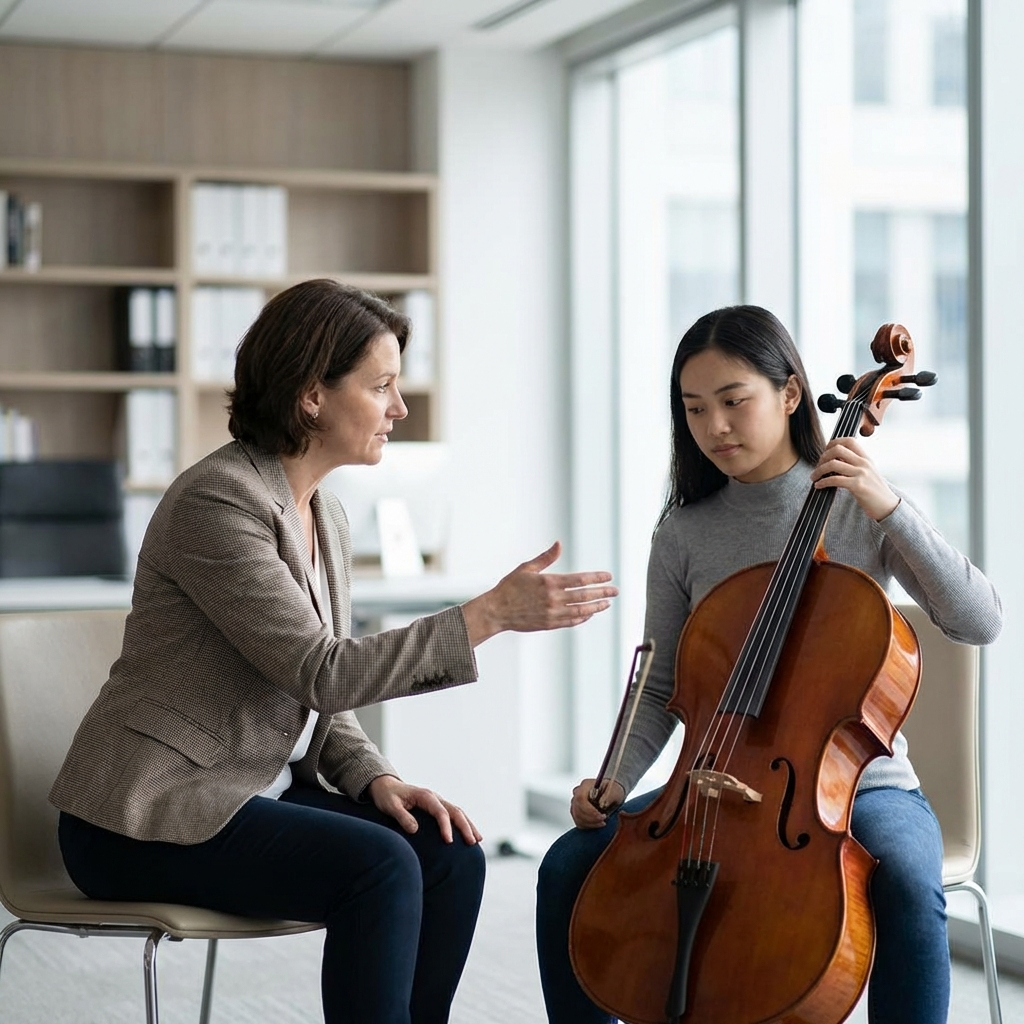
Adult music lessons benefit from private lesson flexibility, especially for professionals with fluctuating workloads. Families with shifting after-school activities often find the private model easier to sustain through the year.
Performance Opportunities and Recitals
Performance chances are the crucible where technique becomes musicianship. EVSM integrates performance into the learning journey through biannual student recitals, designed to help players of all ages gain stage poise and learn repertoire preparation from beginning to end. These events are structured, supportive, and matched to experience level, making them ideal first steps for nervous newcomers.
A distinctive resource at EVSM is its 100-seat performance hall. The venue hosts recitals, masterclasses, and studio events, and it’s available for rental to teachers, chamber groups, and community ensembles. The ability to rehearse and perform in a consistent, acoustically appropriate space accelerates learning, particularly for students preparing auditions, juries, or competitions.
Community college programs also emphasize performance, though often in a different format:
- Ensemble concerts: Students perform with choirs, bands, jazz combos, orchestras, and small groups on campus series.
- Juries: Applied students frequently present juries—end-of-term evaluations before a faculty panel—advancing technical and interpretive standards.
- Guest artist events: Colleges may host clinics, residencies, and workshops that expose students to a broad professional network.
Both pathways provide meaningful stages. Private studio recitals are especially effective for building confidence early and often, while college ensembles build collaborative skills in larger settings.
Instrument Rentals and Additional Resources
Having the right instrument from day one matters. EVSM partners as a Milano Music instrument rental agent, helping families secure quality, properly sized instruments—particularly critical for strings and band instruments. Staff can guide you through setup, maintenance basics, and upgrade timelines so the instrument doesn’t become a barrier to progress.
Beyond rentals, private studios frequently streamline the essentials:
- Materials: Teachers coordinate method books, etudes, and scores tailored to current goals, minimizing unnecessary purchases.
- Accompanists and rehearsal: EVSM’s performance hall supports rehearsal scheduling; students can prepare with piano accompaniment in the same space they’ll perform.
- Communication: Direct parent-teacher feedback loops keep practice plans clear and trackable, sustaining momentum between lessons.
Community colleges offer different resources:
- Practice facilities: Access to dedicated practice rooms and ensemble spaces during posted hours.
- Libraries and labs: Scores, recordings, and music technology labs for exploration and coursework.
- Advising: Academic advisors and faculty mentors support degree planning and transfer preparation.
For beginning families and returning adults, the convenience of on-site rentals and consolidated resources at a private school often shortens the time from sign-up to confident sound production.
Learning Outcomes and Student Progress
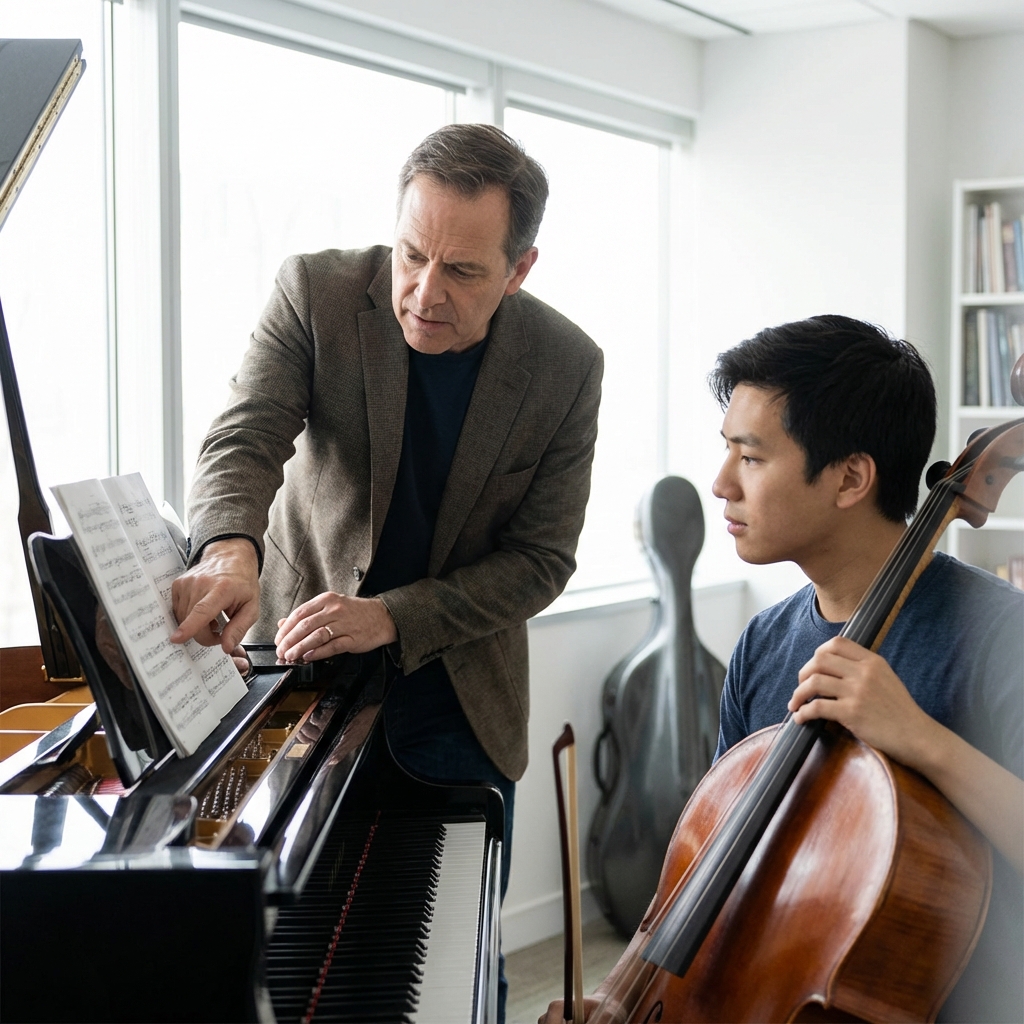
The best indicator of value is sustained progress that aligns with your goals. In a private setting, progress is measured against personalized milestones—hand shape improvements on piano, articulation clarity on clarinet, rhythmic accuracy in drum set grooves, or stylistic nuance for jazz standards. Teachers adjust assignments weekly, tighten feedback, and shift repertoire to keep motivation high while maintaining technical rigor.
To make progress visible, private studios often use:
- Goal plans: Short- and long-term targets (e.g., finish a level method book, prepare two contrasting pieces for recital).
- Practice frameworks: Age-appropriate practice schedules that prioritize quality over raw minutes.
- Performance checkpoints: Recitals and informal studio classes to test readiness and build resilience.
Community college outcomes are calibrated to course objectives:
- Skill proficiencies: Scales, sight-reading, and etudes for applied lessons; compositional skills and aural recognition for theory.
- Graded milestones: Midterms, finals, and juries provide summative assessments.
- Transcript value: Progress is recorded as credits and grades, which can support transfer or degree completion.
Both paths can produce strong musicians. The question is which assessment style motivates you. If grades and structured syllabi keep you accountable, college courses might fit. If individualized targets and steady feedback drive your best work, private lessons will likely feel more effective.
Which Option Best Fits Your Goals
Different learners thrive in different ecosystems. Use these goal-based profiles to identify the better match.
Choose private music lessons if:
- You want individualized coaching tailored to your pace, repertoire interests, and learning style.
- Your schedule requires flexibility, including rolling starts, adjustable lesson lengths, or occasional reschedules.
- You’re seeking affordable music education with ESA scholarship reimbursement potential for K–12 learners.
- You value early and regular performance experience through biannual recitals and access to a 100-seat hall.
- You need on-site instrument rentals and streamlined resources to minimize logistical hurdles.
Consider a community college program if:
- You want academic credit, a transcript, or a degree/certificate as part of your music journey.
- You’re drawn to ensemble work at scale—choirs, bands, orchestras—and structured juried assessments.
- You plan to transfer to a four-year program and want foundational theory, ear training, and music history on record.
- You thrive on fixed timetables and formal coursework with graded accountability.
Go hybrid if:
- You’re a dedicated student who wants the best of both: credit-bearing ensembles and theory at college, plus targeted one-on-one coaching in a private studio for auditions, juries, or stylistic work.
- You’re an adult learner whose work schedule doesn’t align perfectly with semester calendars; private lessons can fill skill gaps between academic terms.
Conclusion: Making Your Decision
Private music lessons in Chandler and community college music programs both cultivate serious musicians; they simply optimize for different outcomes. Private study at a dedicated school like East Valley School of Music emphasizes personalized coaching, flexible scheduling, biannual recitals, and convenient resources such as Milano Music instrument rentals and an on-site performance hall. Community college tracks are designed for credit-bearing study, robust ensemble experiences, and structured academic benchmarks.
As you weigh this music instruction comparison, align the environment with your real-world constraints and musical ambitions. If you’re ready to begin with a tailored plan and consistent one-on-one support, explore EVSM’s Private lessons and meet the studio’s Our instructors. If credit accumulation and large-scale ensemble work are your priorities, a community college program can be the right foundation. The best choice is the one that keeps you learning continuously, performing confidently, and enjoying music for the long term.