Whether you're a budding clarinetist preparing for your first recital or an advanced student tackling a college audition, the journey is marked by the music you play. Choosing the right piece is crucial; it should challenge you, inspire you, and showcase your unique talents at just the right level. This curated guide explores ten of the most popular clarinet songs, spanning classical concertos, beloved movie themes, traditional folk tunes, and modern pop hits.
Finding repertoire that resonates is key to maintaining motivation and achieving your musical goals. For students and parents, selecting appropriate music can feel overwhelming. This list simplifies the process by breaking down each selection with specific, actionable information.
We'll cover each piece's difficulty, suggest the ideal skill level or grade, and provide practical practice tips to help you master challenging passages. You will also find guidance on where to find sheet music and recordings to support your learning. This resource is designed to help you and your instructor select the perfect song for your next performance, audition, or personal enjoyment. Let's explore the music that will define the next step in your artistic journey.
1. Clarinet Concerto in A Major, K.622 by Wolfgang Amadeus Mozart
Composed in 1791 for clarinetist Anton Stadler, Mozart's Clarinet Concerto is arguably the most essential and popular clarinet song in the entire classical repertoire. This three-movement masterpiece is the benchmark against which advanced clarinetists are measured, showcasing the instrument's full expressive and technical range. From the lyrical beauty of the Adagio to the playful virtuosity of the Rondo, it remains a cornerstone of the clarinet world.
This concerto is not just a piece of music; it's a rite of passage for serious students. Its universal appeal and technical demands make it a standard audition requirement for university music programs, professional orchestras, and prestigious competitions.
Practice and Performance Tips
- Phased Learning: Don't try to learn the entire concerto at once. Begin by studying one movement at a time, or even find simplified arrangements to understand the melodic structure before tackling the original.
- Focus on Tone: Mozart's elegant phrasing demands a consistently beautiful, resonant tone across all registers. Long tones and scale exercises are crucial for building the breath support needed for this piece.
- Historical Context: Listen to recordings from celebrated clarinetists like Sabine Meyer or Karl Leister to understand different interpretive styles. Mastering this concerto requires more than just hitting the right notes; it demands a deep musical understanding.
Due to its complexity, this piece is best suited for advanced high school or collegiate players. A dedicated student should plan for 6-12 months of focused study to prepare it for performance. To master the nuanced interpretation and technical challenges, working with an experienced teacher is essential. You can find highly qualified instructors to guide you through this iconic work by exploring our East Valley woodwinds instructors.
2. Carnival of the Animals – The Elephant arrangement by Saint-Saëns
Originally written for the double bass, the clarinet arrangement of "L'Éléphant" from Camille Saint-Saëns's 1886 suite The Carnival of the Animals has become one of the most beloved popular clarinet songs for beginners. This short, whimsical piece perfectly captures the lumbering grace of an elephant, making it an instant favorite for young students and audiences. Its focus on the chalumeau (low) register provides an excellent opportunity to teach foundational tone production and expressive, legato playing.
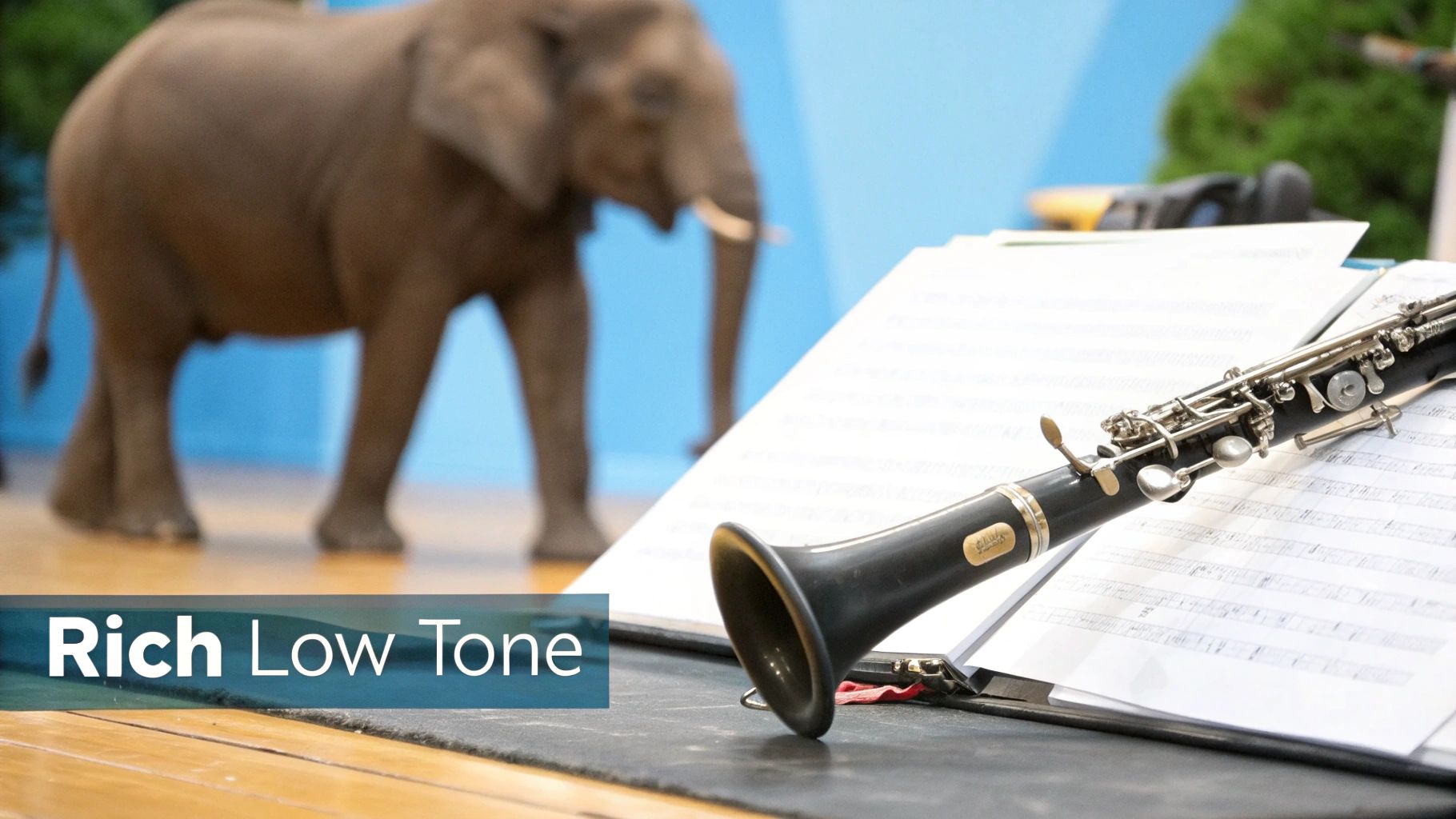
This piece is a staple in student recitals and school band concerts because it is accessible yet musically satisfying. It effectively introduces emerging musicians to ensemble playing and the concept of portraying a character or story through music, a key skill for developing artists.
Practice and Performance Tips
- Legato Phrasing: The primary goal is to create a smooth, connected, and song-like line that mimics the elephant's heavy, graceful steps. Focus on maintaining a steady airstream through each note.
- Dynamic Control: Work on producing a rich, resonant tone at a soft volume. Practice gentle crescendos and decrescendos to add musical shape without becoming harsh or overpowering.
- Musical Storytelling: Listen to recordings of the full orchestral suite and discuss how the music depicts the animal. Encourage students to use their imagination to inform their playing, which makes practice more engaging.
Ideal for elementary or early middle school students, this piece can typically be prepared for a recital in 4-8 weeks. It serves as a fantastic introduction to classical music and builds crucial skills in tone and phrasing. To ensure your young musician develops these foundational techniques correctly, consider guidance from a professional. You can explore our roster of East Valley woodwinds instructors to find the perfect teacher.
3. Gotta Feeling – Clarinet Arrangement (The Black Eyed Peas arrangement)
Bridging the gap between traditional lessons and contemporary music, this popular clarinet song is an arrangement of the 2009 hit by The Black Eyed Peas. Specially adapted for the clarinet, often with available backing tracks, this upbeat piece makes modern pop music accessible to student performers. Its infectious energy and widespread recognition make it a fantastic tool for engaging young players who want to perform music they hear on the radio.
This arrangement has become a staple in school concert programs and student recitals. Its appeal lies in its ability to motivate students by connecting their classical training to the popular culture they enjoy, making practice feel more relevant and fun. It's also a great, social media-friendly piece for student videos and digital portfolios.
Practice and Performance Tips
- Rhythmic Precision: Pop music relies heavily on a strong, steady beat. Practice with a metronome or the official backing track to lock in the syncopated rhythms and maintain a consistent tempo.
- Maintain Good Habits: Even though it's a pop song, focus on producing a quality tone and using proper technique. This is a great opportunity to apply classical fundamentals to a different genre.
- Add Personal Flair: Encourage students to add their own style. This could involve slight variations in articulation or dynamics to make the performance their own, fostering musical creativity.
This piece is ideal for intermediate students (middle school or early high school) who have a solid grasp of fundamentals. It serves as an excellent motivational tool between more rigorous classical studies. To help a student infuse pop arrangements with solid technique, personalized instruction is key. You can find experienced mentors to guide their progress by exploring our East Valley woodwinds instructors.
4. Clarinet Polka – Traditional Arrangement (Bohemian Classic)
The "Clarinet Polka" is a lively, cheerful folk tune that has become a staple for beginning and intermediate clarinetists. This traditional Bohemian piece is celebrated for its upbeat tempo and catchy melody, making it one of the most fun and popular clarinet songs for developing players. Its straightforward structure provides an excellent platform for students to work on rhythmic precision, articulation, and maintaining a bright, energetic tone.
This piece is a fantastic introduction to folk music traditions and is frequently featured in school band concerts, community festivals, and multicultural music programs. Its prominent clarinet melody makes it a rewarding solo piece for students, giving them a chance to shine while building confidence and essential performance skills.
Practice and Performance Tips
- Rhythmic Accuracy: The polka rhythm is key. Practice with a metronome, focusing on the crisp "oom-pah" feel and ensuring the eighth notes are even and clean.
- Bright Articulation: Use a light, bouncy staccato articulation to capture the piece's playful character. This requires a focused airstream and precise tongue movement. Think of the notes "dancing" off the reed.
- Cultural Context: Discuss the history of the polka with your student or ensemble. Understanding its origins as a European folk dance can inspire a more authentic and spirited performance.
This piece is ideal for late-elementary or middle school students who have a solid grasp of basic fingerings and rhythm. It's a perfect first "show-off" piece and an excellent choice for a student who is still getting comfortable with their instrument. If you're just starting out, find helpful resources about renting a clarinet to ensure you have a quality instrument for learning this joyful tune.
5. Sunny – Clarinet Jazz Arrangement (Bobby Hebb Standard)
Bobby Hebb's uplifting 1960s classic "Sunny" is a fantastic gateway into the world of jazz for the developing clarinetist. This smooth, swinging standard serves as an ideal bridge between traditional classical training and contemporary jazz expression. Its memorable, accessible melody makes it one of the most popular clarinet songs for students looking to explore improvisation and swing rhythms for the first time.
This piece is a staple in school jazz ensembles and student combos. It offers a fun, low-pressure introduction to jazz phrasing, articulation, and the art of telling a story through music. Its adaptable structure allows for both simple melodic playing and more complex improvised solos, making it valuable for a wide range of intermediate players.
Practice and Performance Tips
- Listen First: Before playing a single note, listen to various recordings of "Sunny," especially by vocalists and other jazz instrumentalists. This will help you internalize the song's relaxed "swing" feel, which is crucial for an authentic performance.
- Use Backing Tracks: Practicing with a jazz backing track is essential. It provides the harmonic context and rhythmic groove, allowing you to focus on your phrasing and timing within a real band setting.
- Introduce Improvisation: The chord changes in "Sunny" are relatively straightforward. Start by embellishing the main melody, then try creating simple new melodies using the notes of the corresponding scales, like the minor pentatonic scale.
"Sunny" is perfectly suited for intermediate players, typically those in middle school or early high school who have a solid command of their instrument but are new to jazz. To truly grasp the nuances of jazz style and build confidence in improvisation, consider working with a teacher who specializes in this genre. You can explore a variety of expert instructors by learning more about our private music lessons.
6. When the Saints Go Marching In – Clarinet Arrangement (Traditional New Orleans Classic)
An iconic New Orleans jazz standard, "When the Saints Go Marching In" is a lively and universally recognizable tune that has become a cornerstone of beginner music education. For young clarinetists, this piece offers a fantastic introduction to rhythm, ensemble playing, and the foundational elements of jazz and American folk traditions. Its simple, catchy melody makes it one of the most popular clarinet songs for first-year band students.
This song is more than just a simple tune; it's a cultural touchstone that connects students to the rich history of New Orleans jazz. Its prevalence in school band programs, community parades, and introductory jazz ensembles makes it an essential piece for any developing musician to learn.
Practice and Performance Tips
- Rhythmic Precision: The piece is defined by its march-like rhythm. Practice with a metronome, focusing on clean articulation and steady timing to capture its characteristic energy.
- Listen to the Greats: To understand the style, listen to recordings by iconic New Orleans artists like Louis Armstrong and clarinetist Sidney Bechet. This helps students grasp the feel and swing of the music, which is just as important as the notes.
- Encourage Improvisation: Once the main melody is mastered, encourage students to experiment with simple melodic variations or embellishments. This serves as a perfect, low-pressure entry point into the world of musical improvisation.
Because of its straightforward melody and rhythm, this piece is ideal for elementary or middle school students in their first or second year of playing. It is an excellent choice for a first solo performance or for group playing in a school band setting. For students looking to build these foundational skills, our East Valley group classes provide a supportive environment to learn ensemble playing.
7. Clarinet Sonatina by Paul Harris
Composed by renowned music educator Paul Harris, the Clarinet Sonatina is a modern staple in pedagogical repertoire, specifically crafted for the developing intermediate player. This three-movement work is celebrated for its musical charm and for providing accessible yet meaningful technical challenges. It expertly bridges the gap between elementary studies and more advanced literature, making it one of the most popular clarinet songs for student recitals and evaluations.
This piece serves as an excellent introduction to the sonata form, offering a complete, professional-sounding work that is both rewarding to learn and impressive to perform. Its thoughtful composition makes it a frequent choice for music academy assessments, youth ensemble auditions, and regional competitions for younger musicians.
Practice and Performance Tips
- Movement by Movement: Practice each of the three movements separately to master their unique characters, from the spirited opening to the lyrical second movement and lively finale, before combining them.
- Articulation and Dynamics: The Sonatina relies heavily on precise articulation and dynamic contrast to bring the music to life. Work with a teacher to explore different tonguing styles and shaping phrases with crescendos and decrescendos.
- Secure Accompaniment: A strong performance requires a confident piano accompanist. Begin practicing with your accompanist well in advance of any performance to solidify tempo, entrances, and musical dialogue.
This piece is ideal for intermediate players, typically those in middle school or early high school. A student can expect to spend 3-6 months preparing the Sonatina with a teacher to refine its musical and technical details. Working with a skilled instructor is key to developing the interpretive skills needed for a polished performance.
8. The Pink Panther – Clarinet Arrangement (Henry Mancini)
Instantly recognizable and effortlessly cool, Henry Mancini's theme from The Pink Panther is one of the most beloved popular clarinet songs for players of all ages. Composed in 1963, its slinky, sophisticated melody offers a fantastic opportunity for students to develop smooth phrasing and a rich, controlled tone. This piece masterfully bridges the gap between traditional technique and contemporary film music, making it a favorite for recitals and talent showcases.
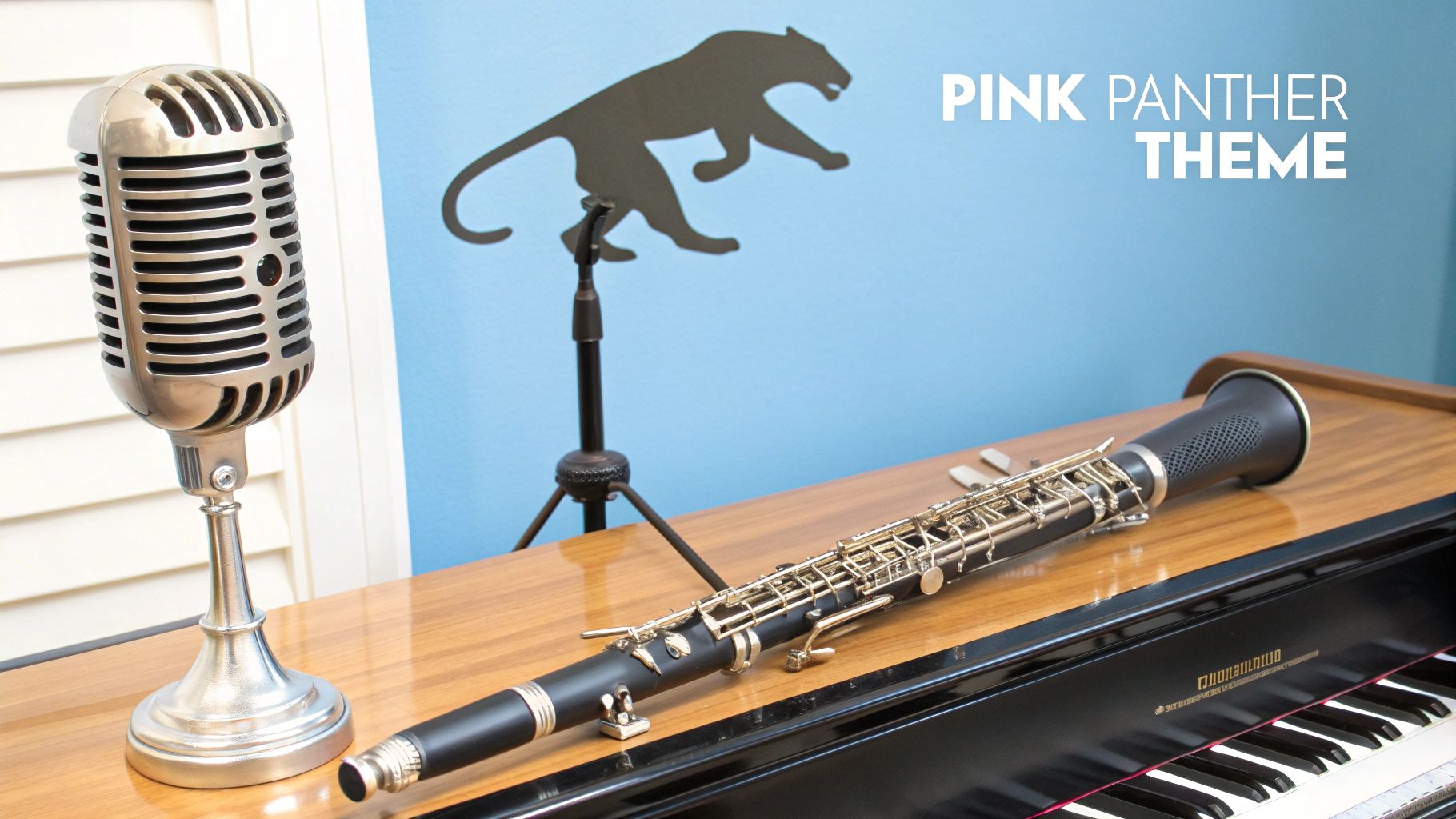
Its enduring appeal and approachable technical demands make it a staple in student repertoire. The theme is frequently featured in school band concerts, film music appreciation programs, and as an engaging solo piece that always delights an audience.
Practice and Performance Tips
- Embrace the Style: Listen to Henry Mancini's original recording multiple times to internalize the relaxed, stealthy feel. The goal is not just to play the notes, but to capture the "cool" character of the theme.
- Focus on Smoothness: The melody requires seamless, connected phrasing (legato). Practice slurring the main melodic lines slowly to ensure there are no breaks in your sound between notes.
- Use a Backing Track: Practicing with a quality jazz backing track is crucial for absorbing the correct swing rhythm and tempo. This will make your performance much more authentic and engaging.
This piece is perfectly suited for intermediate players, typically those in middle school or early high school who have a solid grasp of their instrument. It's an excellent choice for developing dynamic control, breath support, and overall musicality in a fun, recognizable context. For guidance on mastering the specific jazz articulations and stylistic nuances required for this iconic tune, connect with a knowledgeable instructor through our East Valley woodwinds instructors page.
9. Minuet in G – Clarinet Solo (J.S. Bach arr. for Clarinet)
Featured in nearly every beginner method book, this elegant arrangement of a J.S. Bach minuet is a foundational piece for young clarinetists. Originally for keyboard, its simple, graceful melody translates beautifully to the clarinet, making it one of the most popular clarinet songs for students just starting their musical journey. It serves as an excellent introduction to Baroque style, teaching crucial concepts of articulation and phrasing.
This piece is a rite of passage for first- and second-year players. Its inclusion in books like Standard of Excellence and the Suzuki method, along with its frequent use in early recitals, solidifies its role in developing a strong musical foundation before students tackle more demanding classical repertoire.
Practice and Performance Tips
- Steady Tempo: The minuet is a dance, so a consistent tempo is key. Practice with a metronome, starting slowly to ensure every note is even and controlled before gradually increasing the speed.
- Light Articulation: Baroque phrasing requires a light, crisp articulation. Focus on a clean "tah" tongue start for each note, avoiding a heavy or sluggish sound. This helps give the piece its characteristic dance-like quality.
- Musical Phrasing: Think of the melody in short, two-bar phrases. Use your breath to shape these phrases, creating a gentle rise and fall like a musical sentence. Listen to recordings of the original keyboard version to understand the intended style.
Ideal for beginners, this piece can typically be prepared for a recital in 4-8 weeks. It provides an essential bridge from basic exercises to performing complete musical works. An instructor can help a new student master the specific articulations and stylistic nuances required for a polished performance. Find the perfect guide for your beginner by checking out our East Valley woodwinds instructors.
10. Oh Danny Boy – Clarinet Arrangement (Traditional Irish Ballad)
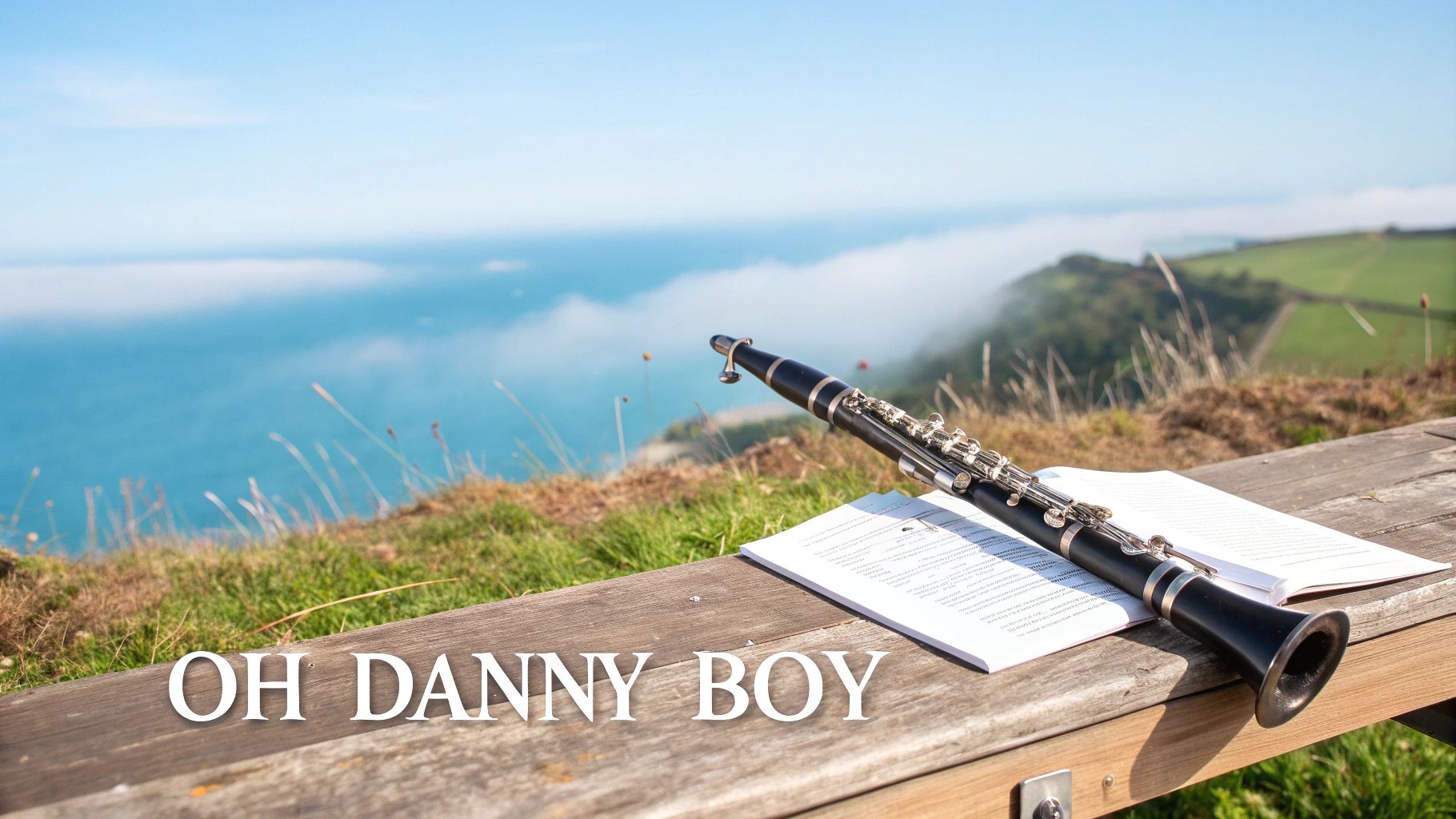
"Oh Danny Boy" is a traditional Irish ballad whose haunting and expressive melody makes it a beautiful addition to the list of popular clarinet songs. Originally set to the tune of "Londonderry Air," this piece offers a profound opportunity for clarinetists to develop a lyrical tone and mature musical interpretation. The arrangement's technical accessibility allows players to focus entirely on storytelling through music, exploring deep emotional expression and phrasing.
This ballad is a staple in various performance settings, from school concerts and cultural heritage events to community orchestra programs. Its powerful emotional core makes it a perfect vehicle for students learning to convey a narrative and connect with an audience on a deeper level, moving beyond mere technical proficiency.
Practice and Performance Tips
- Storytelling Through Music: Even without words, the melody tells a poignant story. Listen to versions with lyrics, sung by artists like Celtic Woman or Frank Patterson, to understand the emotional arc and infuse your playing with narrative intent.
- Breath and Phrasing: The long, flowing melodic lines require careful breath planning. Mark your sheet music with breath points that preserve the integrity of the musical phrases, avoiding breaks in the middle of a thought.
- Tone and Vibrato: Focus on producing a consistently warm, rich tone. This is an excellent piece for developing a tasteful vibrato to add color and emotion to sustained notes. Practice long tones to build the endurance needed for its soaring phrases.
This piece is ideal for intermediate players who are ready to focus on expressive performance. It provides a platform for developing musicality that will benefit their playing across all genres. To refine your interpretive skills and showcase your emotional maturity, consider working with a teacher who can guide you toward performance opportunities. Explore our East Valley woodwinds instructors to find the right mentor for your musical journey.
Comparison of 10 Popular Clarinet Songs
| Piece | Implementation complexity | Resource requirements | Expected outcomes | Ideal use cases | Key advantages |
|---|---|---|---|---|---|
| Clarinet Concerto in A Major, K.622 (Mozart) | Very high — advanced, multi-movement concerto | Orchestra or orchestral reduction; long practice & teacher support | Advanced technique, breath control, lyrical musicality | Conservatory auditions, professional recitals, competitions | Canonical repertoire; high prestige; benchmark for progress |
| Carnival of the Animals — The Elephant (Saint-Saëns) | Low — short, simple solo line | Orchestral/piano backing; minimal rehearsal time | Warm low-register tone, expressive phrasing, confidence | Student recitals, early ensemble, tone-building lessons | Instantly engaging; great for young learners |
| Gotta Feeling — Clarinet Arrangement (The Black Eyed Peas) | Low–Moderate — rhythmic syncopation, pop phrasing | Electronic backing track or band; teacher guidance | Improved rhythm, contemporary phrasing, high motivation | Recitals, student showcases, social-media performances | High student engagement; modern repertoire appeal |
| Clarinet Polka — Traditional (Bohemian) | Low–Moderate — fast tempo, repetitive form | Ensemble accompaniment recommended; group rehearsal | Rhythmic precision, articulation, ensemble skills | School ensembles, community festivals, beginner group classes | Fun, memorable, culturally instructive |
| Sunny — Clarinet Jazz Arrangement (Bobby Hebb) | Moderate — swing feel and phrasing | Jazz backing/piano; basic jazz coaching | Jazz phrasing, rhythmic flexibility, intro to improvisation | Jazz combos, crossover lessons, informal recitals | Teaches authentic jazz style; enjoyable for players |
| When the Saints Go Marching In — Clarinet Arrangement | Low — simple, singable melody | Ensemble accompaniment; group practice ideal | Ensemble pulse, basic jazz/folk phrasing, improvisation | School bands, parades, beginner jazz introduction | Familiar to audiences; culturally significant; motivating |
| Clarinet Sonatina (Paul Harris) | Moderate — three movements for intermediate players | Piano accompanist; several months study | Structured musical development, performance preparation | Intermediate recitals, exams, auditions | Pedagogically designed; clear learning objectives |
| The Pink Panther — Clarinet Arrangement (Mancini) | Moderate — subtle swing and articulation | Piano or high-quality backing track; stylistic coaching | Smooth legato, stylistic expression, dynamic control | Recitals, showcase pieces, film-music programs | Highly recognizable; builds phrasing and tone nuance |
| Minuet in G — Clarinet Solo (Bach arr.) | Low — simple Baroque dance form | Optional accompaniment; minimal rehearsal | Basic phrasing, articulation, Baroque style introduction | Beginner lessons, early recitals, method-book repertoire | Excellent starter piece; teaches clear musical lines |
| Oh Danny Boy — Clarinet Arrangement (Irish Ballad) | Moderate — expressive, sustained lines | Piano or guitar accompaniment; interpretive coaching | Lyrical tone, breath control, emotional depth | Intermediate recitals, community concerts, solo features | Deep audience connection; develops musical storytelling |
Taking the Next Step in Your Clarinet Journey
Navigating the vast world of clarinet repertoire can feel overwhelming, but as this curated list demonstrates, the journey is filled with exciting and rewarding music for every stage of development. From the classical elegance of Mozart’s Concerto to the playful swing of "The Pink Panther," each piece offers a unique set of challenges and opportunities for growth. This collection of popular clarinet songs proves that learning an instrument is about more than just scales and exercises; it's about connecting with music that inspires you.
The key takeaway is to choose repertoire that aligns with your current skill level while pushing you just outside your comfort zone. A piece that is too difficult can lead to frustration, while one that is too easy can cause stagnation. The right piece, however, acts as a powerful motivator, encouraging you to refine your technique, develop your musicality, and build the confidence needed for auditions, recitals, or simply playing for your own enjoyment.
From Practice Room to Performance
Mastering these pieces isn't just about hitting the right notes. It's about understanding the context, style, and emotional core of the music. For instance, successfully performing a traditional piece like "Clarinet Polka" requires a different approach to articulation and rhythm than a smooth jazz standard like "Sunny."
Here are actionable steps to internalize these songs and grow as a musician:
- Active Listening: Don't just listen to one recording. Find multiple interpretations of your chosen piece. Compare how different clarinetists handle phrasing, dynamics, and tempo in Mozart's Concerto or a jazz standard. This will expand your own creative possibilities.
- Isolate and Conquer: Break down difficult passages. Use a metronome to slow down the technical runs in Paul Harris's Clarinet Sonatina or the syncopated rhythms in "Gotta Feeling." Master small sections before piecing them together.
- Tell a Story: Every piece of music tells a story. What is the mood of "Oh Danny Boy"? What character are you portraying in "The Pink Panther"? Connecting with the emotional narrative will transform your playing from a technical exercise into an expressive performance.
Ultimately, the most effective way to progress is with expert guidance. A skilled instructor can help you select appropriate repertoire, correct technical issues before they become ingrained habits, and provide the structured feedback needed to prepare for any performance goal. They act as your musical guide, helping you navigate the challenges and celebrate the victories on your path. Finding the right piece is the first step; working with a great teacher is how you bring it to life.
Ready to find the perfect piece and unlock your potential? The experienced woodwind faculty at East Valley School of Music specializes in creating personalized lesson plans for students of all ages, helping them master these popular clarinet songs and achieve their musical goals. Explore our private clarinet lessons today and schedule a visit to our Chandler facility.