Introduction: Why Progress Tracking Matters in Music Education
In any discipline where growth unfolds over months and years, clear visibility into progress is essential. In music education, structured progress reporting turns weekly lessons into a coherent journey, helping students know exactly where they stand and what to do next. When families see tangible evidence of effort—improved tone, faster tempos, better reading skills—engagement rises and practice becomes purposeful rather than routine.
For Arizona learners at East Valley School of Music in Chandler, progress documentation ties together many facets of study: personalized one-on-one instruction, collaborative group dynamics, instrument rentals, and biannual recital opportunities. Thoughtful student progress reports music programs build are especially helpful for families using ESA scholarship reimbursement, because they provide transparent goals, verification of instructional hours, and measurable outcomes. The result is a shared roadmap that keeps instructors, students, and parents aligned on both the “what” and the “why” of each lesson.
Understanding the Components of Effective Progress Reports
A concise, useful report captures what was taught, how well it was absorbed, and what comes next. It should avoid vague descriptors and instead rely on observable, measurable indicators tied to the student’s goals. While each studio will have its own format, comprehensive music lesson tracking systems typically include:
- Baseline and current level: A snapshot of starting skills and present benchmarks for quick comparison.
- Focus areas: Technique, repertoire, theory, aural skills, sight-reading, rhythm literacy, improvisation, and ensemble readiness.
- Assessment rubrics: Clear rating scales (e.g., 1–5 or beginning–advanced) for tone, intonation, rhythm accuracy, note reading, dynamics, articulation, and posture/ergonomics.
- Repertoire log: Titles, composers, keys, tempos, and dates started/completed, plus performance readiness status.
- Practice habits: Minutes per day, frequency, segmentation strategies (e.g., slow practice, looped passages), and at-home tools (metronome, tuner, backing tracks).
- Learning objectives: Short- and long-term SMART goals (specific, measurable, achievable, relevant, time-bound).
- Next steps: A prioritized weekly plan—technique drills, section targets, and checkpoints.
- Reflections: Brief qualitative notes about musical expression, confidence, and mindset.
Music education assessment methods work best when they connect numbers to narrative. A teacher might rate rhythm stability as “3/5” while noting, “Eighth-note syncopation consistent at 84 bpm; aim for 96 bpm next week using subdivision counting.” This combination leaves little ambiguity and gives students a clear runway for improvement.
How Regular Assessment Improves Student Motivation and Engagement
Motivation thrives when students can see progress. Regular, digestible assessments break long-term goals into visible, near-term wins: a higher metronome marking, cleaner scale fingerings, or smoother phrasing in a difficult passage. The structure prevents discouragement, especially during plateaus, because it reframes practice as a set of manageable experiments rather than a vague expectation to “get better.”
Short-cycle check-ins also support student achievement monitoring between formal reports. Instructors can reference a prior week’s tempo target, celebrate a two-bpm gain, and explain what specifically unlocked it—perhaps subdividing with a metronome or isolating tricky syncopations. Adults benefit from this granularity as much as children; busy learners appreciate knowing which 15 minutes yield the best return.
In group settings, shared progress criteria foster healthy accountability. When ensemble members operate with a common rubric for blend, balance, and timing, they can self-correct more effectively and arrive at rehearsal with agreed-upon standards. Consistent checkpoints keep people engaged because they understand the purpose of each assignment and how it ladders up to a performance.
The Role of Progress Reports in Individualized Learning Plans
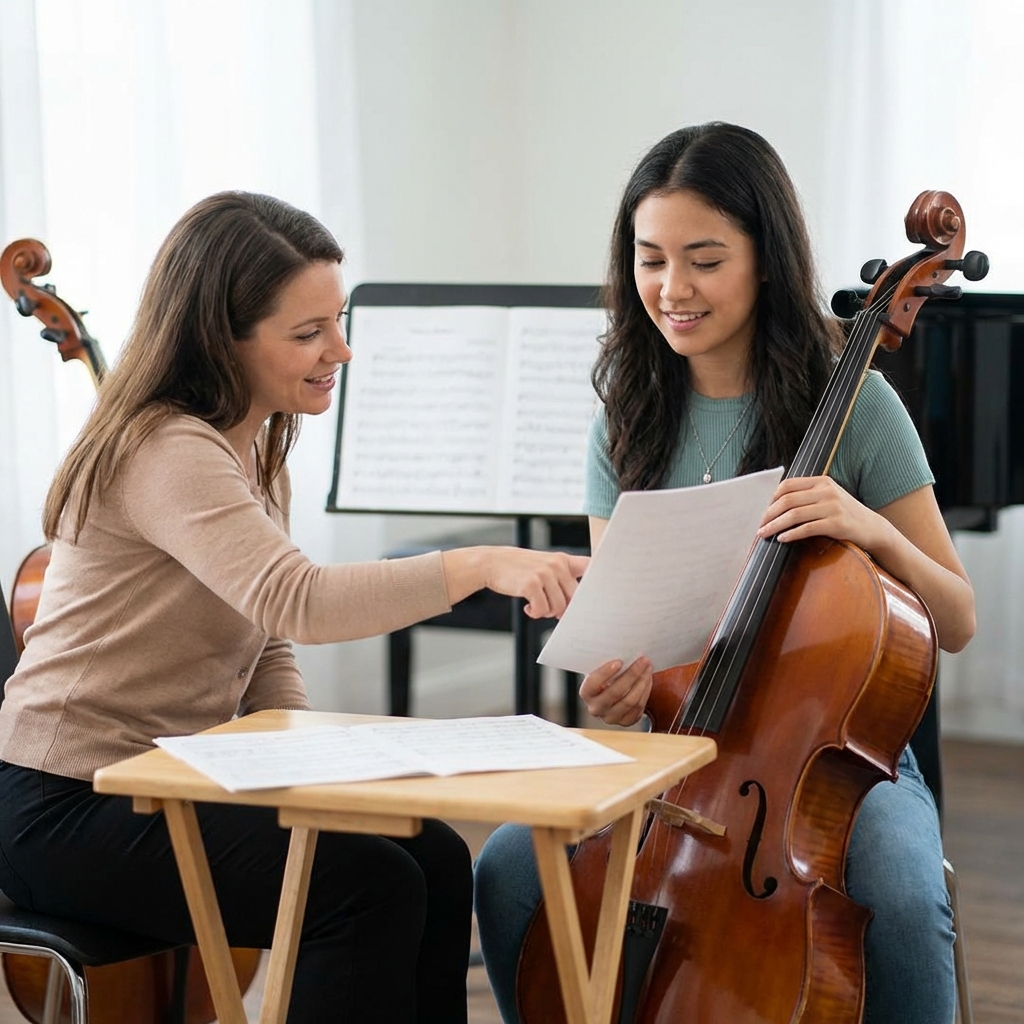
Every student brings a different entry point and goal set, making personalization indispensable. Effective reports map individual strengths, needs, and interests to a tailored learning plan—particularly valuable in settings where both private and group learning options coexist. At East Valley School of Music, degree-holding instructors design plans that flex with the learner’s pace, instrument, and preferred styles, whether that’s classical piano, jazz saxophone, rock guitar, or voice.
A strong individualized plan starts with a diagnostic: reading fluency, rhythmic accuracy, aural memory, technical facility, and comfort with improvisation or harmonization. From there, repertoire selection serves the goals—etudes to target finger independence, pieces that introduce new articulations, or lead sheets to develop chordal awareness. For neurodiverse learners or students with sensory preferences, the plan might incorporate shorter task cycles, visual schedules, or color-coded notation.
Progress documentation is not just pedagogical; it’s practical. Families pursuing ESA reimbursement often need clear records of instruction and outcomes. Reports clarify what was taught, how mastery was demonstrated, and what is planned next—useful for both scholarship evidence and home practice support. To see the breadth of expertise guiding these plans, families can review our instructors and find a teacher aligned with their goals.
Measuring Technical Skills and Musical Growth Milestones
Technical facility and musicality develop in parallel, and both deserve structured measurement. Clear milestones make tracking musical development less subjective and more actionable. Common technical indicators include:
- Scales and arpeggios: Accurate fingerings and intonation across keys, at target tempos.
- Rhythm precision: Subdivision accuracy, consistent pulse, and reliable transitions between note values and meters.
- Articulation and tone: Evenness of legato/staccato, breath support, bow control, pick technique, and dynamic contrast.
- Reading mechanics: Range recognition, interval reading versus note-by-note, common rhythmic cells, and clef fluency.
- Dexterity and coordination: Hand independence for keyboardists, alternate picking for guitarists, sticking patterns for percussionists, or vowel alignment for vocalists.
Musical growth milestones expand the lens beyond mechanics. A report might log phrasing choices, expressivity, stylistic authenticity, ensemble responsiveness, and a student’s ability to shape a line or communicate a musical idea. Music education assessment methods can include:
- Aural skills checks: Interval identification, melodic playback, chord quality recognition.
- Musicianship demonstrations: Transposition of simple melodies, lead-sheet comping, or basic improvisation over a 12-bar blues.
- Performance outcomes: Successfully presenting repertoire in studio class or recital, with feedback on stage presence.
Students benefit when the evaluation uses consistent scales across time. For example, a five-level rubric for sight-reading can show a multi-month climb from “pattern recognition beginning” to “decodes rhythm and pitch with minimal hesitation,” turning abstract progress into a visible trajectory.
Communication Between Instructors, Students, and Parents Through Reports
Progress reports underpin transparent, low-friction communication. Families know what to expect each week, instructors can tie lesson content to clear targets, and students receive feedback that is specific rather than general. To keep communication smooth, many studios use predictable cadences:
- Brief weekly notes: A few lines summarizing wins, hurdles, and next steps.
- Monthly snapshots: A rubric-based overview of technical and musical domains.
- Seasonal or semester reports: A fuller narrative with milestone highlights and an updated learning plan.
The format matters less than the clarity. If a student is preparing for a winter recital, the report should state the piece, current tempo, memorization status, and what needs rehearsal at home, such as “mm. 25–40 transitions at 72 bpm with metronome, hands separate.” Sensitive topics—like posture, tension, or motivation dips—are best framed as shared problem-solving with concrete strategies, not criticisms.

Group classes also benefit from succinct ensemble notes outlining blend goals, balance, cue-following, and listening assignments. When everyone receives the same summary of rehearsal priorities, the next session feels more productive and focused.
Celebrating Achievements: Using Progress Data to Build Confidence
Data is not just for diagnosis—it is also for celebration. Recognizing the exact skills a student has mastered builds confidence and reinforces effective habits. Rather than a generic “Great job,” specific praise such as “Your dotted-eighth/sixteenth rhythm stayed consistent at 92 bpm for the entire chorus” tells the learner what worked and encourages repetition.
Studios can formalize this encouragement with small rituals:
- Level badges for technical milestones (e.g., all major scales at target tempos).
- Repertoire certificates when a piece is performance-ready.
- “Spotlight moments” in group classes where students demonstrate a skill they’ve recently locked in.
At East Valley School of Music, biannual recital opportunities turn documented growth into a public celebration. Performing on stage, especially in a dedicated 100-seat hall, makes progress tangible, gathering family and peers around achievements that began as quiet practice goals. Over time, these celebrations cultivate resilience: students learn to set a target, work toward it, and commemorate the win before aiming higher.
How Progress Reports Support Diverse Learning Goals and Levels
Students arrive with varied aspirations—auditioning for a jazz band, accompanying in a faith community, composing original songs, or simply playing for relaxation. Good reports flex to these goals by adjusting metrics and evidence of mastery. For example:
- College-bound performers: Juried repertoire, etude requirements, sight-reading at advanced levels, and mock audition feedback.
- Ensemble-focused learners: Section-leadership skills, blend/balance metrics, cue responsiveness, and transposition readiness.
- Creators and improvisers: Harmonic vocabulary growth, loop-based composition demos, and improvisation over chord progressions.
- Adult hobbyists: Sustainable practice plans, ergonomic comfort, and repertoire lists tied to enjoyment and stress reduction.
Instrument-specific nuances matter. A violinist’s intonation targets, a drummer’s limb independence milestones, and a vocalist’s vowel unification metrics won’t look identical, yet all can be captured in a common framework. Practical access also shapes growth: when families use East Valley School of Music’s partnership with Milano Music for rentals, proper instrument fit and maintenance support more reliable technique gains, which the report can note explicitly.
Finally, collaborative classes benefit from team-based checkpoints. Clear ensemble metrics—count-ins, dynamic mapping, sectional blend—let mixed-skill groups improve together without losing sight of individual growth.
Best Practices in Documenting and Sharing Student Feedback
Effective documentation balances thoroughness with readability. A one-page monthly summary, backed by weekly lesson notes, is often sufficient for most learners. To make feedback actionable:
- Use SMART goals: “Hanon No. 1 at 88 bpm, even tone, no tension; increase 4 bpm weekly.”
- Prioritize the next three tasks: Avoid overwhelming the student with a laundry list.
- Pair numbers with narrative: “Tone consistent at pp through mf; explore ff without strain.”
- Include short media: A 20-second clip demonstrating desired articulation can save paragraphs of text.
- Track practice methods, not just minutes: Interleaving passages, slow practice ratios, and metronome strategies.
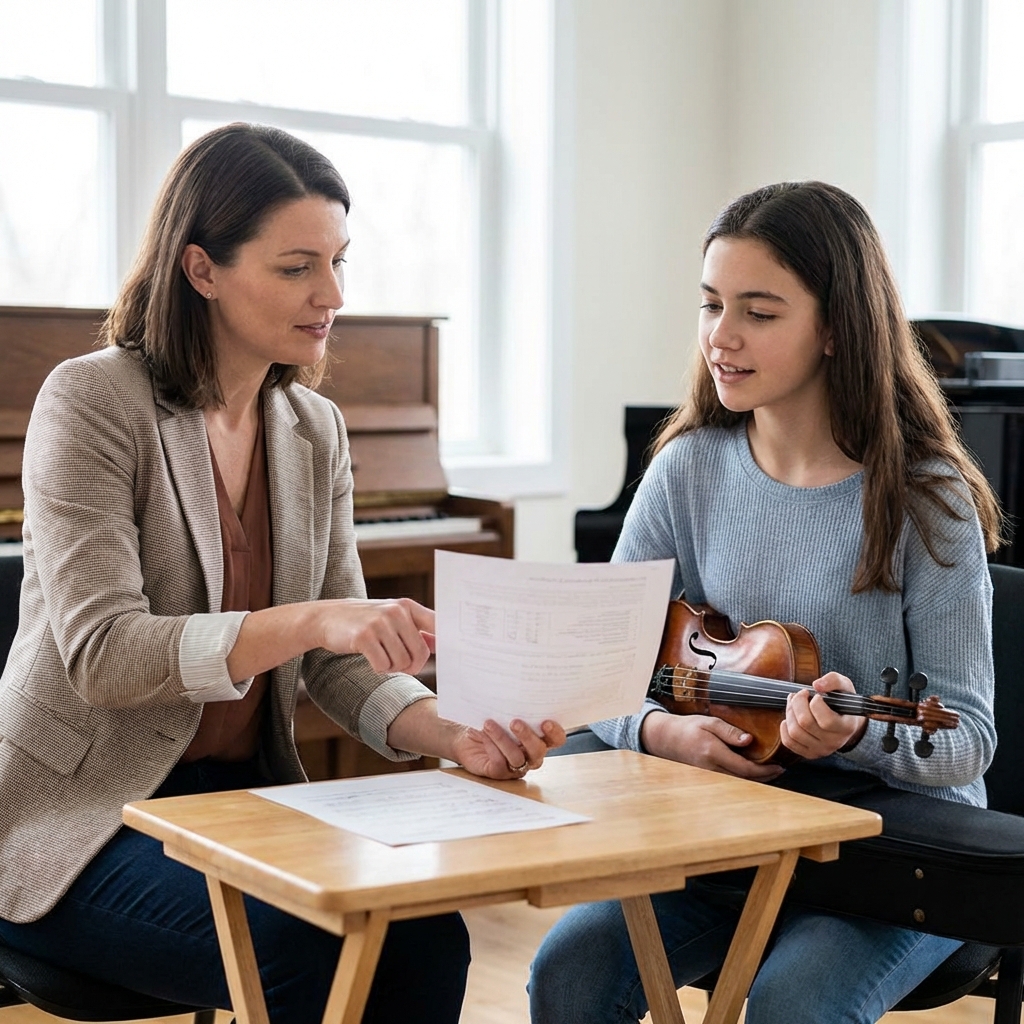
Tools vary from printed sheets to shared digital folders. Music lesson tracking systems that timestamp updates and archive past reports help families see long arcs of development. Regardless of format, keep accessibility in mind: legible fonts, concise headings, and consistent placement of key sections (goals, progress, next steps).
Privacy and professionalism are part of best practice as well. Reports should focus on skills and strategies, not labels. If motivation dips, frame it with support plans: practice scheduling experiments, interest-based repertoire, or short-term “win” pieces to restore momentum.
Leveraging Progress Insights to Refine Teaching Strategies
Progress reports are only as valuable as the instructional changes they inspire. When a student stalls at a given tempo, the data can suggest new tactics: rhythmic chunking, hands-separate work for pianists, bowing pattern isolation for string players, or anchor-finger strategies for guitarists. If sight-reading lags behind repertoire level, the teacher might add daily two-minute reading drills using progressively challenging materials.
Data also illuminates practice design. A report noting “20 minutes daily, low error correction” might lead to adopting:
- Spaced repetition for memory.
- Interleaving different passages to prevent autopilot.
- Errorless learning techniques (reducing tempo until accuracy is guaranteed).
- Mental practice and audiation before play-throughs.
Ensemble insights guide rehearsal planning too. If entries consistently rush after dynamic peaks, future sessions can prioritize breath planning, stickings, or cue-following. Over time, these changes compound; the report becomes a laboratory notebook for progress evaluation for musicians, making teaching iterative and responsive rather than static.
Preparing Students for Performance Opportunities and Recitals
Performance is a natural proving ground for what reports measure. Preparation is smoother when the report outlines repertoire readiness, memorization status, and staging details weeks in advance. A typical performance runway might include:
- Week 6 out: Select piece; confirm key, edition, and target tempo; begin form mapping.
- Week 4: Technical clean-up; record and review phrasing; schedule a mock performance.
- Week 2: Run-throughs at performance tempo; finalize stage walk, tuning routine, and count-ins.
- Week of: Mental rehearsal, light run-throughs, and rest to prevent overuse.
Reports help clarify each checkpoint so the student knows what “ready” looks like. They can also integrate strategies for performance anxiety—breathing protocols, pre-stage routines, or visualization—tracked like any other skill. Public sharing of progress culminates beautifully in East Valley School of Music’s biannual student recitals, with the option to perform in a 100-seat hall or participate in smaller studio classes. Students in private lessons can pair one-on-one preparation with group run-throughs to simulate concert conditions, closing the loop between assessment and artistry.
Conclusion: Progress Reports as a Foundation for Musical Excellence
When thoughtfully designed and consistently used, student progress reports music programs rely on become far more than paperwork. They align teacher expertise with student goals, show families exactly how growth is happening, and turn weekly practice into a sequence of meaningful wins. By combining clear metrics with musical reflection, reports honor both the craft and the art of learning.
For Chandler-area families and adult learners, this approach meshes naturally with East Valley School of Music’s strengths: personalized instruction, collaborative classes, recital opportunities, and practical supports like instrument rentals and ESA reimbursement documentation. Across ages and instruments, a well-kept record becomes the student’s map—pointing to where they began, highlighting the ground they’ve covered, and illuminating the next steps toward confident, expressive performance.