Introduction: Understanding Two Musical Paths
Classical Music vs Pop Music Instruction: Choosing Your Learning Path
Every musician starts somewhere, often with a question that shapes years of learning: should I study classical technique or focus on contemporary pop styles? This music instruction comparison isn’t about declaring a winner—it’s about aligning your lessons with the music you want to make, the skills you need, and the time you can commit. For families and adult learners in Arizona, particularly around Chandler and the East Valley, the choice impacts everything from daily practice to performance opportunities.
At East Valley School of Music (EVSM), we see the strengths of both approaches. Classical training offers a deep technical and theoretical foundation built over centuries. Contemporary pop music lessons bring creativity, collaboration, and modern production skills to the forefront. Many students thrive in a hybrid path that borrows from each. The goal is to be intentional from the start, then adjust as your interests and schedule evolve.
Practical considerations matter, too. Access to professional music teachers, instrument rentals, and performance venues can make your first year of study smoother. EVSM supports both paths with degree-holding instructors, Milano Music instrument rentals available on-site, biannual student recital opportunities, and a 100-seat performance hall that can be rented for studio recitals, auditions, or band showcases. With Arizona ESA scholarship reimbursement eligibility, families can also plan a learning path that’s financially sustainable.
This guide walks through what classical and pop instruction include, how they differ in day-to-day training, and how to choose the route—or combination—that best supports your goals.
What is Classical Music Instruction?
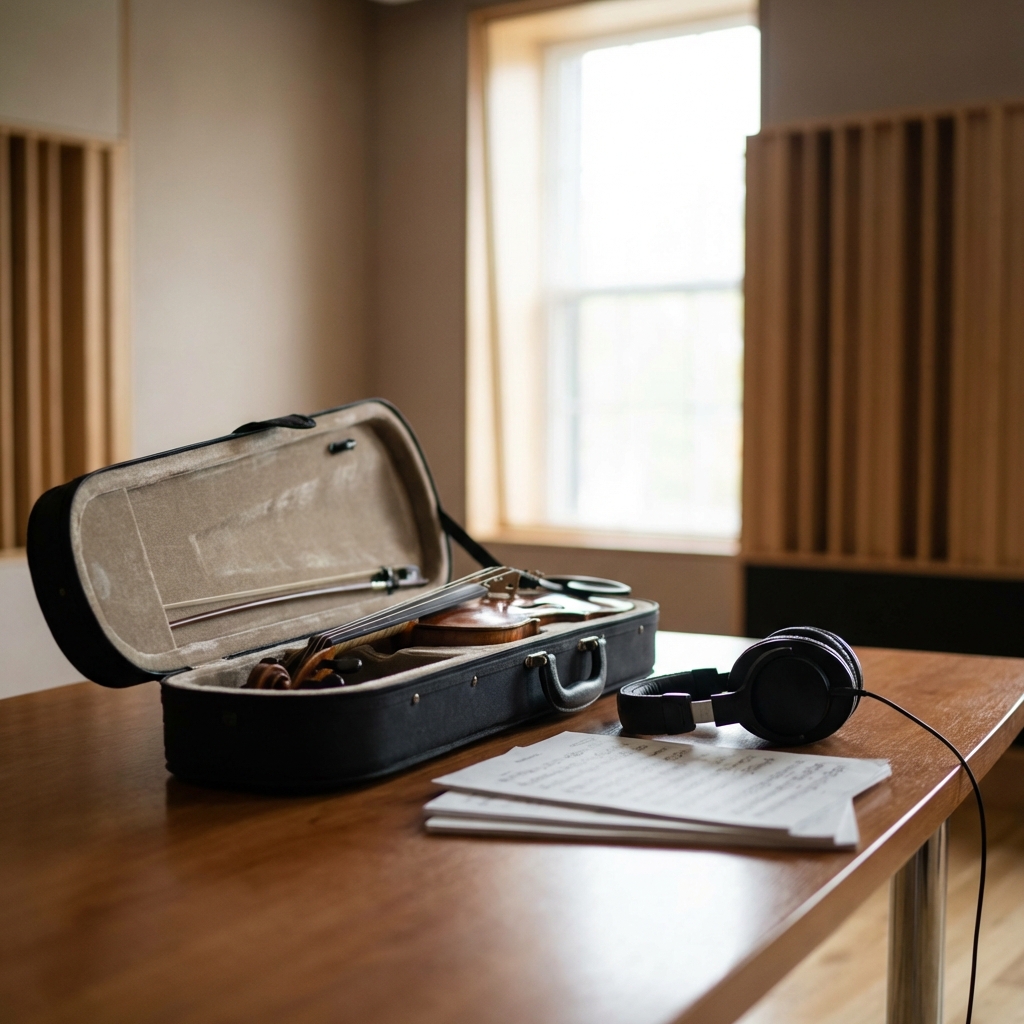
Classical instruction is a structured approach that teaches music through written notation, graded repertoire, and disciplined technique. Students build skills methodically: posture, tone production, scales and arpeggios, sight-reading, and the expressive nuances of phrasing and articulation. The repertoire typically spans Baroque, Classical, Romantic, and 20th-century works, with method books and etudes aligned to each instrument’s development.
A classical curriculum often includes:
- Repertoire study with progressive technical demands
- Theory fundamentals (key signatures, intervals, harmony, form)
- Aural skills and sight-reading drills
- Technique routines (e.g., Hanon for piano, Wohlfahrt for violin, vocalises for singers)
- Performance practice and historical context
Because of its depth, classical music training prepares students for auditions, competitions, school orchestra or choir placements, and college music programs. It also cultivates a musical vocabulary that translates easily to other genres. The discipline learned from this method—measured practice, close attention to tone and intonation, careful interpretation—tends to serve musicians for a lifetime.
At EVSM, classical students work one-on-one with degree-holding teachers across piano, strings, woodwinds, brass, and voice. Lessons may be paired with theory and ear-training support, and the school’s biannual recitals offer structured milestones. Those who want to benchmark progress against national or international standards can prepare for juries, festivals, or conservatory-style evaluations in consultation with their instructor.
What is Contemporary Pop Music Instruction?
Contemporary pop instruction centers on learning the music heard on today’s playlists—pop, rock, R&B, country, indie, praise and worship, and singer-songwriter styles. Instead of long-form scores, students often work from lead sheets, chord charts, and tabs. The focus leans toward functional harmony, rhythm and groove, arranging, and performance skills like accompaniment, stage presence, and collaboration with other musicians.
Key elements typically include:
- Chord-based playing (triads, seventh chords, extensions, and voicings)
- Ear training for learning songs quickly and transposing on the fly
- Rhythm studies (groove, syncopation, pocket)
- Improvisation and fills appropriate to the style
- Songwriting, arranging, and basic production, often with DAWs
- Microphone technique for singers, and amplification basics for instrumentalists
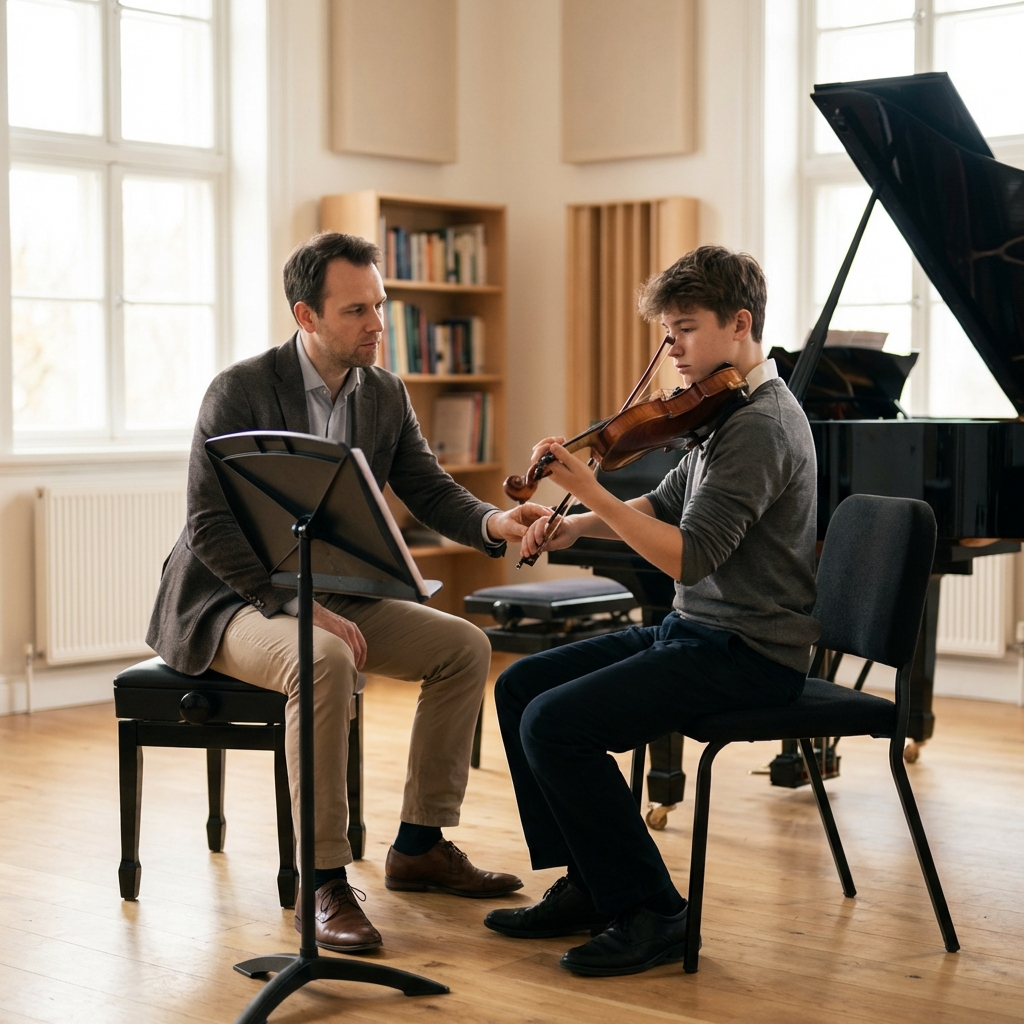
Students who want to accompany themselves while singing, join a worship team, form a band, or post performances online often gravitate to pop instruction. The learning curve can feel fast because recognizable songs are introduced early, which motivates consistent practice. At EVSM, collaborative group classes bring the “band room” energy to life, while one-on-one lessons target technique gaps and song-specific challenges. The approach is flexible, creative, and tailored to the genres a student loves most.
Comparison: Musical Theory and Technical Foundation
Both classical and pop tracks teach theory and technique, but the emphasis and sequence differ.
Classical path:
- Theory is cumulative and analytic: harmonic functions, voice-leading, counterpoint, and form. Students learn to understand why a piece sounds the way it does and how to interpret it precisely.
- Technique is systematic: scales and arpeggios across all keys, etudes for agility and tone control, and detailed articulation work. Reading fluency is central, with increasing demands for sight-reading and ensemble literacy.
Pop path:
- Theory is practical and pattern-based: diatonic chords, common progressions (I–V–vi–IV), modal flavors, and reharmonization. Students learn to transpose, capo, and voice chords to fit a vocalist or band texture.
- Technique is stylistic: comping patterns, groove consistency, riffing and runs for singers, tone-shaping with pedals or EQ, and timing with a click. Ear training is continuous—recognizing intervals, rhythms, and production layers by listening.
Shared core:
- Rhythm accuracy and timing with a metronome or click
- Ear training for pitch, intervals, and harmonic recognition
- Healthy body mechanics to prevent strain
- Expressive musicianship—dynamics, phrasing, and communication
Many students benefit from a hybrid approach: use classical studies to build robust technique and reading, then apply those tools to pop repertoire for creative versatility. EVSM’s our instructors include teachers experienced in both tracks, making it straightforward to shift emphasis over time without losing continuity.
Comparison: Performance Opportunities and Venues
Your chosen path will influence where and how you perform.
Classical path:
- Recitals and juries provide structured checkpoints with clear repertoire standards.
- Chamber music, orchestra, wind ensemble, or choir placements are common goals.
- Competitions and festivals offer adjudication and scholarship opportunities.
- Venues typically include recital halls, churches with acoustical clarity, and school auditoriums, where unamplified tone and precision are spotlighted.
Pop path:
- Showcases, open mics, worship services, and community events are frequent outlets.
- Bands and duos perform in coffeehouses, school events, and outdoor stages.
- Recording becomes a “venue” too—students release covers or originals, build reels, and collaborate remotely.
- Amplification and stagecraft matter: microphone technique, monitors, and basic sound checks are part of the experience.
EVSM supports both trajectories. Students can perform in biannual recitals, and the school’s 100-seat performance hall is available for rentals—ideal for studio recitals, audition recordings, or band showcases where family and friends can attend. Around Chandler and the broader East Valley, students often blend school-based ensembles with community stages, gaining experience across different acoustics and audience sizes.
Comparison: Practice Requirements and Time Commitment
Practice looks different depending on the track and stage of study, but consistency is the common denominator.
Classical path:
- Focus: technique routines (scales, arpeggios, etudes), slow practice for accuracy, and targeted problem-solving within repertoire.
- Time: beginners often start with 20–30 minutes daily; intermediate students move to 45–60 minutes; advanced players may need 90+ minutes to maintain multiple pieces and prepare for auditions.
- Structure: a timer and a written plan help manage energy and track progress. Practicing away from the instrument (score study, silent fingering, or listening) also supports learning.
Pop path:
- Focus: chord vocabulary, rhythm/groove drills, setlist preparation, singing while playing, and learning songs by ear. For producers/singers, practice may include DAW sessions and arranging.
- Time: beginners see results with 20–30 minutes daily if they target chords, transitions, and strum/picking patterns. Band-oriented students add rehearsal time. Vocalists often split sessions between technique, repertoire, and mic work.
- Structure: a weekly goal (e.g., two solid songs or one new arrangement) keeps motivation high. Recording practice on a phone doubles as accountability and performance prep.
For busy families, reducing commute time can make consistent practice more achievable. EVSM offers in-home lessons, which can ease scheduling for Chandler-area students and help younger learners practice immediately before or after a lesson—often the most focused time of the week.
Pros and Cons of Classical Music Training
Pros:
- Deep foundational literacy: strong sight-reading, harmonic understanding, and form analysis support any future style.
- Technical longevity: attention to posture, tone, and efficient motion reduces injury risk and enables advanced repertoire.
- Audition readiness: clear pathways to school ensembles, youth orchestras/choirs, competitions, and collegiate study.
- Transferable discipline: methodical practice habits and attention to detail carry over to academics and other skills.
Cons:
- Time-intensive: graded repertoire and technique take sustained effort before complex music sounds “performance-ready.”
- Delayed stylistic payoff: students who want to play current hits quickly may feel frustrated if repertoire pacing is slow.
- Repertoire boundaries: while classical music is vast, students seeking groove-based creativity may crave more improvisation and arranging earlier.
Best fit:
- Students who enjoy structure, long-term goals, and historical repertoire
- Learners with ensemble or audition ambitions
- Musicians who plan to read charts fluently in any context and value a strong technical base
Pros and Cons of Pop Music Training
Pros:
- Quick musical payoffs: playing or singing favorite songs early boosts motivation for beginner music learning.
- Creativity-centric: songwriting, improvisation, arranging, and collaboration are integral from the start.
- Real-world application: students learn mic technique, amplification, and performance craft relevant to gigs and recording.
- Flexible pathways: suits solo acts, bands, worship teams, content creators, and producers.
Cons:
- Potential theory gaps: if reading and analysis are overlooked, future transitions to advanced study can be harder.
- Technique variability: without careful guidance, players may adopt habits that limit range, speed, or vocal health.
- Inconsistent benchmarks: progress can feel uneven without structured checkpoints, especially for self-directed learners.
Best fit:
- Students eager to perform familiar repertoire and develop a personal sound
- Vocalists and multi-instrumentalists who want to accompany themselves
- Teens and adults exploring bands, worship teams, and online content creation
Cost and Accessibility Considerations
Costs vary by instrument, materials, and how frequently you study, but some patterns are consistent.
Lessons and classes:
- Private lessons offer the fastest individual progress; group classes introduce collaboration and can reduce per-student cost.
- Pop and classical lessons are usually priced similarly, though preparation for competitions or recording projects may require additional time.
Instruments and gear:
- Classical: acoustic instruments (piano, strings, winds) may require higher upfront costs. Renting is often the most practical start for families.
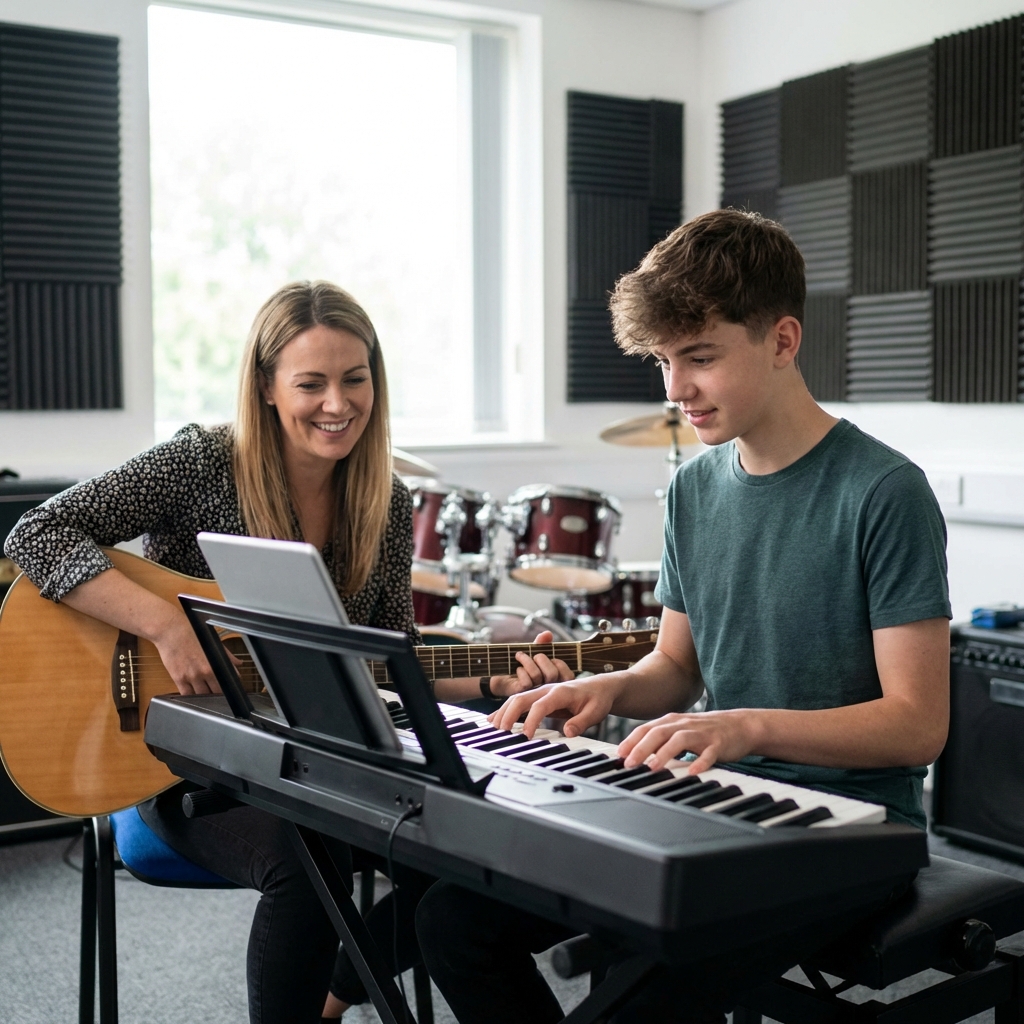
- Pop: guitars, keyboards, and microphones can be cost-effective; however, amplification, pedals, or a DAW subscription add to the budget over time.
Rentals and maintenance:
- As a Milano Music instrument rental agent, EVSM helps families access quality instruments and ongoing maintenance—especially helpful for orchestral strings and band instruments that children may size up from year to year.
Materials and events:
- Classical students often buy method books, scores, and pay festival/competition fees.
- Pop students may purchase charts, software, plug-ins, or invest in modest recording setups for demos.
Scholarship support:
- Arizona families using the Empowerment Scholarship Account (ESA) can seek reimbursement eligibility for lessons at EVSM, which helps manage long-term costs for both classical music training and contemporary pop music lessons.
Accessibility:
- Lesson location matters. In-studio instruction provides consistent acoustics and equipment; in-home lessons remove travel barriers. Both can be effective when guided by professional music teachers who tailor goals to your situation.
Choosing the Right Instruction Style for Your Goals
Start with the music you want to perform and the skills you want to build this year, then map long-term possibilities.
If your goals sound like:
- “I want to audition for school orchestra/choir or prepare for college music.” Choose a classical-first path with robust theory and technique, then add pop elements later for versatility.
- “I want to write songs, perform at open mics, or join a worship team.” Begin with pop-focused lessons that emphasize chords, arranging, and stagecraft, while weaving in reading and technique as you go.
- “I’m returning to music after a long break.” Let your previous experience guide you. Classical returners might start with easier repertoire to rebuild technique; pop-focused returners can rekindle motivation with favorite songs while improving reading in parallel.
- “My child is a beginner, and I want to keep them engaged.” Combine early success (a pop tune they love) with structured classical exercises that quietly build long-term skills.
A simple decision process:
- Identify two short-term outcomes (e.g., play two recital-ready pieces, learn a three-song set for an open mic).
- Choose the path that achieves those outcomes most directly.
- Add one complementary skill from the other path (e.g., pop student adds sight-reading drills; classical student adds chord-based arranging).
- Reassess every 8–12 weeks with your teacher and adjust the mix.
Hybrid study is not a compromise—it’s a strategic blend. Many EVSM students move fluidly between Bach and Billie Eilish, or between choir anthems and worship band sets. The key is continuity: one instructor who understands both approaches can sequence skills so nothing falls through the cracks.
Conclusion and Recommendations for Arizona Music Students
The classical vs pop music lessons decision isn’t about choosing a side; it’s about building the skills that serve your music today and keep doors open tomorrow. Classical instruction lays a precise, durable foundation—technique, reading, and analytical listening—while pop instruction accelerates creativity, collaboration, and performance readiness. Students who combine both often gain the widest range of real-world options.
For Chandler-area families and adult learners, a few practical recommendations:
- If you value structure, auditions, and ensemble literacy, start classically and set clear performance checkpoints (recitals, festivals, juries).
- If you want fast onstage wins, begin with pop and protect your long-term growth by adding steady reading, theory, and healthy technique.
- Consider logistics that keep you consistent: in-studio or in-home lessons, a rental instrument that fits your budget, and realistic weekly practice goals.
- Use performance milestones to stay motivated. EVSM’s biannual recitals and 100-seat performance hall rentals give classical and pop students alike a professional setting to share progress.
- Plan financially for the long term. ESA reimbursement eligibility and access to Milano Music rentals can make sustained study more accessible.
Whichever path you choose, work with a teacher who meets you where you are and knows how to connect day-one motivation with year-two mastery. In the East Valley, professional, degree-holding instructors help students of all ages discover that the “right” style of study is the one that moves you forward, one intentional lesson at a time.