Starting the clarinet is an exciting journey into the world of music, but finding the right learning materials can feel overwhelming. With countless method books, apps, and resources available, how do you choose the best clarinet music for beginners? This guide is designed to cut through the noise and provide a clear, actionable starting point. We have curated a list of essential, teacher-approved resources that build a strong foundation for any new player.
This article offers a practical roadmap, detailing the most effective tools to help you succeed. We will explore everything from foundational method books used in school bands across Arizona to modern digital platforms that make practicing engaging and effective. You will discover exactly what you need to begin, including specific exercises, recommended gear, and the best beginner songs.
Whether you are a young student joining a school ensemble, an adult picking up a new hobby, or a parent supporting your child's musical education, this list provides a clear path. Our goal is to help you develop a beautiful tone, master fundamental techniques, and enjoy the process of learning your first pieces. Let's find the perfect starting point for your musical adventure.
1. Standard of Excellence Book 1 (Kjos Music)
Widely considered a cornerstone for aspiring musicians, the Standard of Excellence Book 1 by Bruce Pearson is a comprehensive method book that serves as an exceptional starting point for beginner clarinet music. Published by Kjos Music, this book is structured to guide a new player from their very first notes to playing recognizable melodies in a logical, step-by-step progression. Its curriculum is so effective that it has become the go-to resource for countless school band programs across the country, including many K–12 programs right here in Arizona.
This book’s strength lies in its all-in-one approach. It integrates music theory, ear training, and performance pieces, ensuring a well-rounded musical education from day one. The exercises are designed to build a solid foundation in clarinet fundamentals such as embouchure, tone production, and articulation before moving on to more complex skills.
How to Maximize This Resource
To get the most out of Standard of Excellence Book 1, it is crucial to approach it systematically. The book is designed for sequential learning, so even if you're an adult beginner, starting from the very first page is essential to avoid missing foundational concepts.
- Pair with Private Lessons: While the book is clear, a private instructor can provide personalized feedback on your technique, ensuring you develop good habits from the start.
- Practice Consistently: Work through one or two lines of an exercise per day, focusing on tone quality and rhythmic accuracy rather than speed.
- Utilize Accompaniments: Many versions of the book come with access to online audio tracks. Playing along with these can help develop your sense of rhythm and pitch.
Pro Tip: When you feel confident with the solo exercises, explore the full-band arrangements included in the book. This is excellent preparation for joining a school band or community ensemble, helping you learn to listen and blend with other instruments.
This method book is a trusted and pedagogically sound choice, making it one of the best sources of clarinet music for beginners. It provides a clear roadmap for your musical journey and is conveniently available for purchase at the East Valley School of Music's on-site store.
2. Essential Elements Book 1 (Hal Leonard)
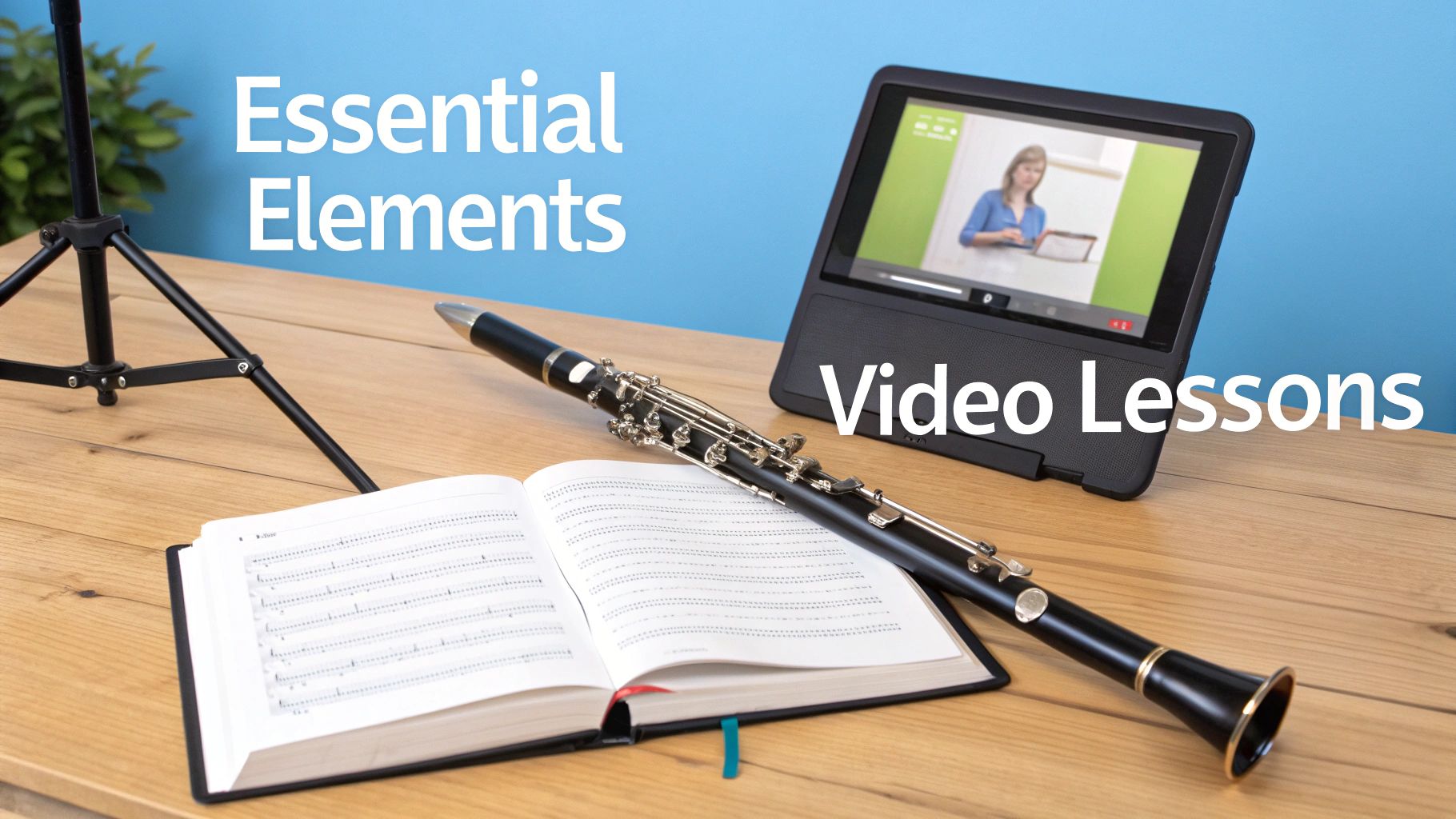
Another industry-standard method book, Essential Elements for Band: Clarinet Book 1 from Hal Leonard, is a phenomenal resource for finding effective clarinet music for beginners. This book is celebrated for its clean layout, exercise-focused approach, and seamless integration of digital tools. Its curriculum is designed to support both individual lessons and full band class instruction, making it a popular choice for homeschool families in the East Valley seeking a structured curriculum and for many Arizona school districts.
The book excels at breaking down fundamental concepts into manageable exercises. It methodically introduces new notes, rhythms, and musical ideas, reinforcing each concept with short, engaging tunes. The real power of Essential Elements lies in its online component, Essential Elements Interactive, which provides students with a wealth of video lessons, play-along tracks, and practice tools to enhance their learning experience outside of lessons.
How to Maximize This Resource
To truly benefit from Essential Elements, beginners should leverage both its print and digital features. The combination provides a comprehensive learning system that caters to different learning styles and keeps practice sessions engaging.
- Activate Online Access: Use the code inside the book's front cover to access Essential Elements Interactive. The video lessons are an excellent supplement to in-person instruction.
- Focus on Tone First: Begin with the dedicated tone production and long-tone exercises. A beautiful sound is the most important foundation you can build.
- Coordinate with Instructors: If your child is in a school band, check with their director to ensure your at-home practice aligns with the class curriculum. This coordination is a key benefit of structured music lessons for kids.
Pro Tip: Use the recording feature in the online portal. Recording yourself playing an exercise and listening back is one of the fastest ways to identify and correct issues with rhythm, pitch, and tone quality.
Essential Elements Book 1 offers a modern, interactive, and pedagogically sound path for any new clarinetist. Its blend of traditional print with powerful digital tools makes it an outstanding choice for today's beginner. You can find this book, along with other essential supplies, at the East Valley School of Music's on-site store.
3. Rubank Elementary Method (Rubank/Hal Leonard)
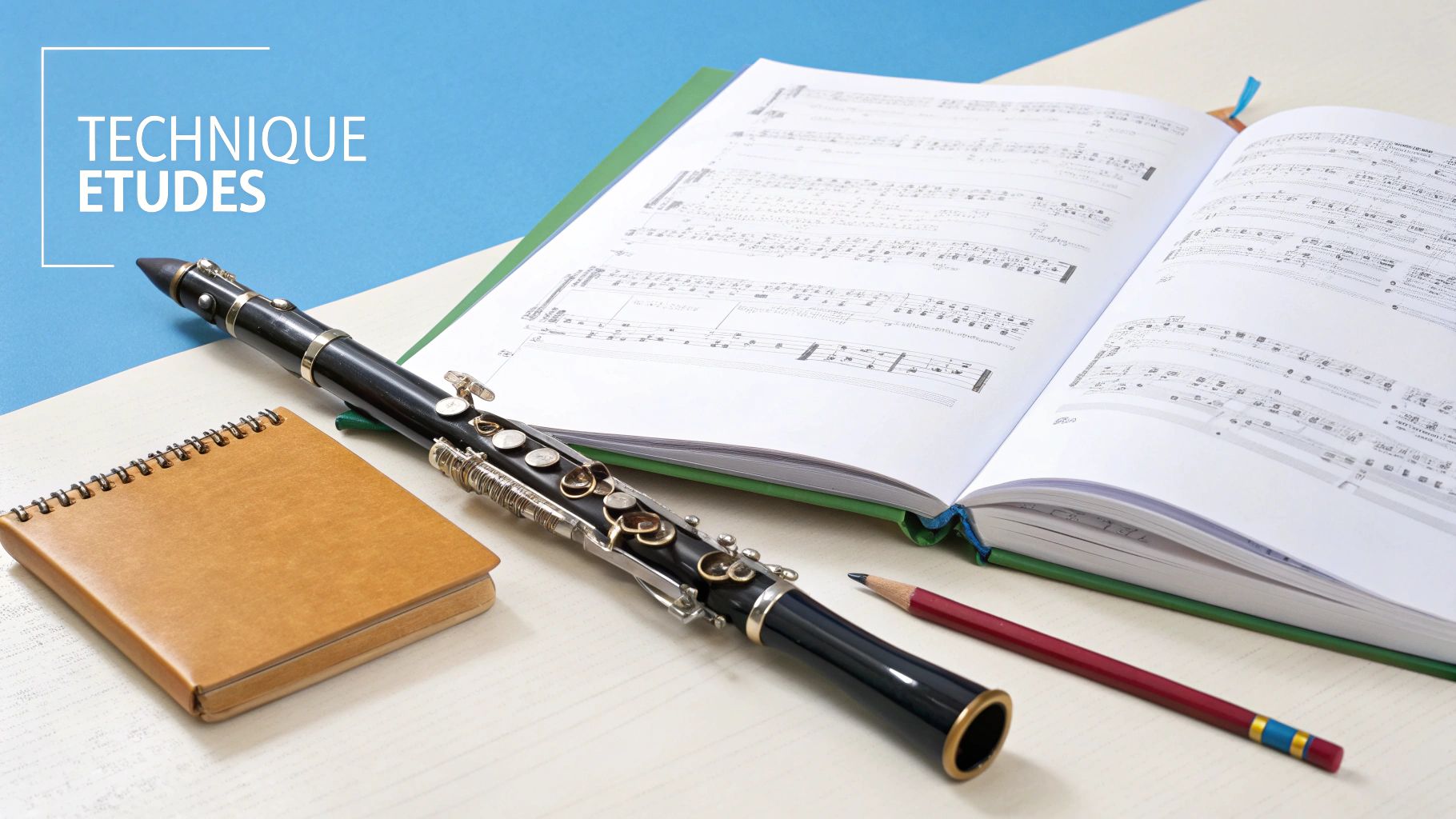
A time-tested classic in music education, the Rubank Elementary Method is a highly respected resource for beginner clarinet music that has been a staple for private instructors since its initial publication. Unlike modern band methods that integrate full-band arrangements, this book focuses purely on developing a clarinetist's individual technique through a series of carefully sequenced etudes, scales, and solos. Its traditional approach emphasizes building strong fundamentals in reading, rhythm, and finger dexterity.
While modern books like Standard of Excellence are ideal for a classroom setting, many private teachers, including those at East Valley School of Music, use the Rubank series as a powerful supplementary tool. This allows them to assign specific exercises that target a student's unique challenges, from mastering the break to developing smooth, connected articulation.
How to Maximize This Resource
The key to the Rubank Elementary Method is using it to reinforce, rather than introduce, new concepts. It is most effective when paired with a primary method book that first explains fingerings and basic theory.
- Use as a Supplement: Introduce Rubank exercises after a student has learned the corresponding notes and rhythms in a book like Standard of Excellence or Essential Elements. This solidifies their understanding.
- Focus on Specific Skills: An instructor can select specific etudes to address areas needing improvement, such as "crossing the break" or legato tonguing, rather than working through the book page by page.
- Strengthen Music Reading: The book is fantastic for strengthening sight-reading skills once a student is in their third to sixth month of playing. The melodic studies are musically engaging and build confidence.
Pro Tip: Don't feel pressured to work through this book sequentially. Its greatest strength is its flexibility. A skilled teacher will cherry-pick the perfect exercise to solve a specific technical problem, making it a customized tool for student growth.
The Rubank Elementary Method remains a gold standard for building solid, independent musicianship. Its focus on technical development makes it an indispensable source of clarinet music for beginners who are serious about building a strong foundation for their future musical pursuits.
4. Clincher & Clincher's "Starting the Clarinet" (Digital Resources)
Embracing modern technology, Clincher & Clincher's "Starting the Clarinet" offers a dynamic digital platform that serves as a powerful supplement to traditional learning. This resource is not a physical book but an interactive online program featuring video lessons, digital sheet music, and practice-tracking tools. It’s designed to provide on-demand guidance, making it an excellent tool for remote learners and students seeking reinforcement between lessons.
The platform's strength is its flexible and engaging format, which appeals to tech-savvy learners. It breaks down complex concepts into bite-sized video tutorials, allowing students to learn at their own pace and re-watch lessons as needed. This approach is particularly beneficial for homeschool families in the East Valley who use digital tools to complement their private instruction, or for any student wanting to solidify fundamental skills like fingerings and posture between their weekly sessions.
How to Maximize This Resource
To effectively integrate this digital tool into your learning, it should be viewed as a powerful practice aid rather than a replacement for one-on-one instruction. Its interactive nature helps maintain motivation and provides structure for daily practice.
- Supplement, Don’t Replace: Use this platform to review concepts covered in your private lessons at East Valley School of Music. It’s an ideal way to reinforce what your instructor teaches.
- Schedule Focused Sessions: Dedicate 15–20 minutes daily to working through specific modules or exercises. The app's structured format makes it easy to set and achieve small, consistent goals.
- Share Progress with Your Teacher: Many digital platforms offer progress reports. Sharing these with your private instructor can help them tailor your lessons to address specific challenges.
Pro Tip: Use the video demonstrations to check your own posture and hand position. You can even record yourself playing and compare it to the instructor on screen. This self-correction is a valuable skill for any developing musician.
This digital approach to clarinet music for beginners is perfect for self-directed students (typically ages 9 and up) who thrive with interactive media. It provides a structured, modern way to practice fundamentals and stay engaged on your musical journey.
5. Easy Classical Solos for Young Clarinet (Various Publishers – Schott, Hal Leonard, PWM)
Once a student has a firm grasp on the basics, collections of easy classical solos serve as the perfect bridge between method book exercises and traditional solo repertoire. Publishers like Hal Leonard, Schott Music, and PWM offer books filled with simplified arrangements of famous works by composers like Mozart, Bach, and Tchaikovsky. This type of clarinet music for beginners is designed to introduce developing musicians to musical expression, phrasing, and performance practices.
These collections are invaluable for building confidence and a sense of accomplishment. Instead of just playing short exercises, students get to perform complete, recognizable tunes, often with piano accompaniment. This format makes the music feel more "real" and is a fantastic motivator. At East Valley School of Music, we frequently see students in our spring and winter recitals perform pieces from these books, marking a significant milestone in their musical development.
How to Maximize This Resource
To successfully transition into solo repertoire, it is important to select and approach these pieces thoughtfully. The goal is to develop musicality without overwhelming the student.
- Choose Appropriate Pieces: Select a solo that aligns with the student's current reading level and technical ability. A good starting point is to find pieces that use notes and rhythms already mastered in their primary method book.
- Work with Accompaniment: Most arrangements include a piano part. Practicing with a teacher or a recording of the accompaniment helps students learn to listen, keep a steady tempo, and understand how their part fits into the larger musical picture.
- Focus on Musicality: Encourage the student to think beyond the notes. Discuss dynamics (loud and soft), articulation, and phrasing to bring the music to life. Selecting a piece the student genuinely enjoys listening to will significantly boost their motivation to practice.
Pro Tip: Plan to work on one solo piece over the course of three to four weeks. This timeline allows enough room to master the technical challenges and then shift focus to artistic expression and performance readiness, which is ideal preparation for our recital opportunities in the EVSM performance hall.
These collections are a crucial step in a student's journey, providing rewarding performance material that reinforces foundational skills. The guidance of an experienced teacher is key to selecting the right piece and preparing it for performance; you can learn more about our dedicated woodwind instructors who excel at guiding students through this exciting stage.
6. MusicCA & SmartMusic (Digital Practice Platforms)
In today's tech-driven world, digital platforms like SmartMusic and MusicCA are revolutionizing how students access and practice clarinet music for beginners. These cloud-based tools offer interactive sheet music, professional accompaniments, and real-time feedback, transforming solitary practice into an engaging, game-like experience. Instead of just a static page, students play along with their digital sheet music and the program assesses their pitch and rhythm, providing instant scores and highlighting areas that need work.
The strength of these platforms is their integration with established curricula. Many popular method books, including Standard of Excellence, are available within the SmartMusic library, allowing students to seamlessly blend traditional learning with modern technology. This approach is particularly effective for homeschool families looking to track practice time digitally and for our own East Valley School of Music teachers who use these tools to assign and review homework between lessons.
How to Maximize This Resource
To get the most out of these powerful digital tools, it is best to introduce them as a supplement to, not a replacement for, traditional instruction. The goal is to enhance practice, not to automate the learning process entirely.
- Teacher-Guided Setup: Ask your instructor to walk you through the platform during a lesson. A proper introduction ensures you understand the features and can use the technology without frustration at home.
- Start Small: Begin by assigning just two or three familiar pieces within the app. This prevents the student from feeling overwhelmed by the vast library and encourages focused, quality practice on specific goals.
- Combine with Human Feedback: While the app's feedback on notes and rhythms is helpful, it cannot assess crucial elements like tone quality or posture. Continue to rely on your private teacher for this comprehensive, nuanced guidance.
Pro Tip: Use the recording feature to listen back to your own playing. This is a powerful tool for self-assessment, helping you hear your progress and identify inconsistencies in your tone and articulation that you might not notice while you are actively playing.
These platforms are an excellent way to structure at-home practice and provide motivation for students who are comfortable with technology, typically ages nine and up. They make practicing clarinet music for beginners more interactive and accountable, bridging the gap between weekly lessons.
7. Clarinet Fingering Chart & Visual Reference Guides
While not a piece of music itself, a clear and accurate fingering chart is arguably one of the most critical tools for any new clarinetist. These visual guides are an indispensable reference, illustrating the correct key combinations for every note on the instrument. For beginners, who are learning dozens of new fingerings, having this chart on hand demystifies the instrument and accelerates the learning process, making it a foundational component of any collection of clarinet music for beginners.
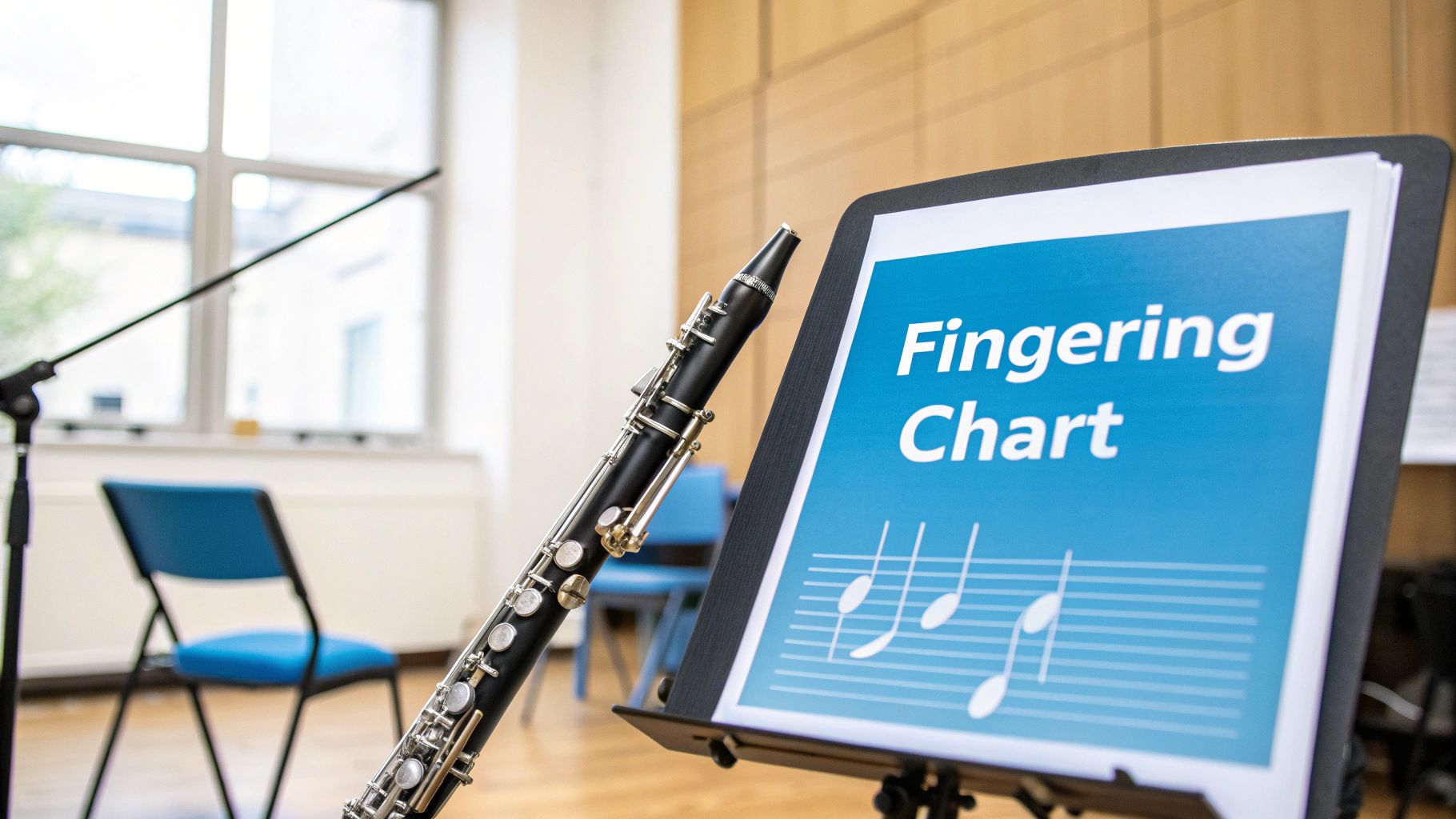
These guides serve as a constant, reliable resource that empowers students to troubleshoot notes independently during at-home practice. At East Valley School of Music, our instructors often provide laminated charts during the first lesson, which helps students build good habits from day one. Parents find these charts equally valuable, as they can use them to help reinforce correct hand positions during practice sessions without needing to be musicians themselves.
How to Maximize This Resource
A fingering chart is more than just a poster; it's an interactive learning tool. To ensure it effectively supports your progress, it’s important to integrate it properly into your practice routine.
- Make It Visible: Keep a laminated chart on your music stand or post a larger version on the wall in your practice space. Constant visual access helps reinforce memory.
- Learn to Read It: Have your teacher walk you through the chart to ensure you understand how the diagrams correspond to the keys on your clarinet. This initial guidance prevents confusion later.
- Use It Actively: When you encounter a new note in an exercise or song, first try to recall the fingering. Then, use the chart to confirm it. This process actively builds your knowledge base.
Pro Tip: Use small, removable sticky tabs to mark the notes you are currently learning. As you master a fingering, move the tab to the next new note. This creates a visual roadmap of your progress and keeps your practice sessions focused and efficient.
This simple yet powerful tool bridges the gap between seeing a note on the page and physically producing it. You can find durable, easy-to-read fingering charts available for purchase right here at the East Valley School of Music's on-site store.
8. Vandoren Reed & Mouthpiece Recommendations with Beginner Clarinet Starter Packs
While not a piece of music itself, having the right equipment is a non-negotiable prerequisite for producing a good sound, and it directly impacts a beginner's ability to play any clarinet music. A quality reed and mouthpiece are as foundational as the first method book. Brands like Vandoren and Buffet Crampon have set the industry standard, and their products are often bundled into beginner starter packs to ensure new players begin with appropriate, high-quality gear. These packs simplify the initial setup process for parents and students.
The impact of a good reed and mouthpiece cannot be overstated. A poor-quality or improperly matched setup can make it nearly impossible for a beginner to produce a clear, stable tone, leading to immense frustration. Starter packs, like those offered through the East Valley School of Music's partnership with Milano Music, often combine a rental instrument with a recommended Vandoren reed pack, a quality mouthpiece, and essential accessories like a fingering chart, ensuring a successful start from the very first lesson.
How to Maximize This Resource
Proper equipment is an investment in your musical progress. To ensure your gear supports rather than hinders your learning, follow these guidelines.
- Start with Softer Reeds: Beginners should start with a softer reed strength, typically a 1.5 or 2.0. Vandoren's traditional "blue box" reeds are a reliable choice.
- Teach Reed Care Immediately: Proper reed care is as critical as learning notes. In the first lesson, instructors should teach students how to wet, place, and store their reeds in a proper reed case to prolong their life and performance.
- Plan for Replacements: Inform parents that reeds are a consumable supply and will need to be replaced regularly. Broken or worn-out reeds are a common source of playing difficulties.
Pro Tip: Don’t underestimate the mouthpiece. While most rental instruments come with a stock mouthpiece, upgrading to a beginner-friendly model like a Vandoren M13 Lyre or a Fobes Debut can make a significant difference in tone production and ease of playing, helping a student progress faster with their clarinet music for beginners.
Choosing a well-curated starter pack removes the guesswork from selecting equipment. At the East Valley School of Music, we can guide you toward the right combination of instrument, mouthpiece, and reeds to set you or your child up for immediate success.
Beginner Clarinet: 8-Item Comparison
| Item | Implementation complexity | Resource requirements | Expected outcomes | Ideal use cases | Key advantages |
|---|---|---|---|---|---|
| Standard of Excellence Book 1 (Kjos) | Low — straightforward, teacher-led sequence | Print book, instrument, optional audio QR access | Solid foundational note reading, basic rhythms, ensemble readiness | School band beginners, classroom curriculum, ages 8–12 | Proven progression, full-band arrangements, affordable |
| Essential Elements Book 1 (Hal Leonard) | Low–Medium — print + digital integration | Print/digital book, device, (subscription for full features) | Strong tone production foundation, multimedia-supported practice | Students who benefit from video lessons, school & homeschool | Video lessons and digital accompaniments, curriculum-aligned |
| Rubank Elementary Method (Rubank/Hal Leonard) | Medium — teacher-directed etude use | Print book, teacher guidance, instrument | Improved technique, reading skills, focused etude development | Private lessons, technique-focused students (10+) | Time-tested etudes, deep technical emphasis |
| Clincher & Clincher "Starting the Clarinet" (Digital) | Low–Medium — app setup and ongoing use | Device, reliable internet, subscription | Increased engagement, self-paced skill reinforcement, gamified practice | Tech-savvy beginners, homeschoolers, between-lesson practice | Interactive videos, progress tracking, gamification |
| Easy Classical Solos for Young Clarinet (Various) | Low — piece selection and rehearsal planning | Sheet music, accompanist or piano, teacher coaching | Enhanced musicality, recital-ready repertoire, interpretive skills | Performance-focused students after initial months | Accessible classical repertoire, motivating performance material |
| MusicCA & SmartMusic (Digital Platforms) | Medium — setup, teacher-dashboard integration | Subscription, microphone/headset, internet, compatible device | Objective pitch/rhythm feedback, accompaniment access, practice analytics | Structured learners, teachers monitoring practice, older beginners | Auto-feedback, large accompaniment library, teacher monitoring |
| Clarinet Fingering Chart & Visual Guides | Very low — immediate reference tool | Laminated chart/poster or digital file, teacher review | Accurate fingerings, better posture awareness, fewer bad habits | All beginner students, home practice support | Inexpensive, clear visual reference, parent-friendly |
| Vandoren reeds & beginner starter packs | Low — purchase and distribution | Starter pack (mouthpiece/reeds), ongoing reed replacements | Appropriate initial equipment, improved early tone and setup | All beginners starting clarinet, rental programs | Ensures correct gear, cost-effective bundles, instructional cards |
Putting It All Together: Your Next Steps to Success
Embarking on your clarinet journey is an exciting adventure, and you've now explored a comprehensive roadmap of essential tools. From foundational method books like Standard of Excellence and Essential Elements to the time-tested exercises in the Rubank Elementary Method, you have a solid arsenal of resources to build your skills. We've also highlighted how modern digital platforms like MusicCA and SmartMusic can supercharge your practice sessions, providing instant feedback and an endless library of music to explore.
Remember, the goal isn't just to play notes; it's to make music. This starts with mastering the fundamentals: a steady embouchure, correct hand position, and consistent airflow. Utilizing resources like fingering charts and investing in quality equipment, such as a Vandoren mouthpiece and appropriate reeds, removes technical barriers and allows you to focus on developing a beautiful, resonant tone. Each piece of clarinet music for beginners you tackle, from the simple melodies in your method book to your first classical solo, is a stepping stone toward musical fluency.
From Resources to Results: The Role of Guidance
Choosing the right materials is the first critical step, but consistent, guided practice is what truly transforms a novice into a confident musician. While method books and digital apps provide an excellent framework, they cannot replace the personalized feedback of an experienced teacher. A qualified instructor can identify and correct subtle issues with your posture, breath support, or embouchure before they become ingrained, hard-to-break habits. This targeted guidance saves you months of potential frustration and accelerates your progress exponentially.
An expert teacher doesn't just assign pages; they customize your learning path. They know when to push you with a challenging new technique from a method book and when to reward your hard work with a fun, recognizable tune that keeps you motivated.
Your Personalized Path to Progress
The journey to mastering the clarinet is unique for every student. An instructor can help you create a balanced practice routine that blends technical exercises with inspiring musical pieces. They can help you select the perfect easy classical solos that match your current skill level, ensuring you feel a sense of accomplishment rather than discouragement. This combination of structured learning and musical exploration is the key to long-term success and enjoyment. By integrating the high-quality resources we've discussed with expert instruction, you'll build a powerful foundation, gain confidence, and unlock the profound joy of creating music. Your clarinet is waiting; your musical adventure starts now.
Ready to take the next step with personalized, expert instruction? At East Valley School of Music, our experienced woodwind faculty specialize in guiding beginners through these crucial first stages, using the very resources highlighted in this article. Visit our website to learn more and schedule your first lesson today at East Valley School of Music.