Introduction: Why Renting Instruments Makes Sense for Music Students
For many families and adult learners in Chandler, the smartest first step into music study is renting rather than buying. With instrument rentals Chandler programs, students can begin lessons quickly, keep upfront costs manageable, and adjust as needs evolve. Whether you’re evaluating violin for a young beginner, clarinet for middle school band, or trumpet for jazz ensemble, rental programs make it easy to start with confidence and minimal risk.
East Valley School of Music (EVSM) supports this path by pairing professional instruction with reliable access to quality student instruments. As a Milano Music instrument rental agent, EVSM helps students match the right instrument to the right teacher and class environment—all without a long-term commitment. If a student changes their mind, grows into a larger size, or progresses to a step-up model, it’s a straightforward swap rather than a major purchase decision.
The result is a more flexible entry point into music education. Renting aligns naturally with skill development, school-year timelines, and family budgets. It also encourages consistent practice—students are more likely to stay engaged when their instrument fits properly, plays in tune, and can be serviced quickly if something goes wrong.
Criteria for Evaluating Quality Instrument Rental Services
Not all rental programs are the same, and the fine print matters. Before you sign, compare these criteria to ensure your student receives a reliable, educator-approved instrument that supports progress from the first lesson:
- Instrument quality and setup: Look for reputable brands appropriate for beginners and educator-approved setups. Violins, violas, and cellos should arrive with properly fitted bridges and strings; woodwinds should have clean pads and smooth key action; brass valves and slides should be responsive.
- Maintenance and repair coverage: A solid plan includes normal wear-and-tear repairs, adjustments, and loaner instruments when service is needed. Clarify whether accidental damage is covered and what’s excluded.
- Exchange and size upgrades: For string students who grow (or switch from violin to viola), confirm easy size exchanges. For advancing players, ask about step-up options and how your rental credit transfers.
- Transparent pricing: Understand monthly rates, taxes, and any protection plan fees. Know exactly what accessories are included and what’s optional.
- Rent-to-own equity: Many programs credit a portion of your monthly payments toward purchase. Ask how equity builds and if early-purchase discounts apply.
- Local service and turnaround: Local partners streamline adjustments and minimize practice downtime. On-site pickup, delivery to studios, and quick repair turnaround are strong pluses.
- Educator input: The best programs align with local school and studio requirements—including mouthpiece sizes, string gauges, and percussion kit contents—so your student shows up lesson-ready.
- Clear contract terms: Look for flexible return policies, no hidden penalties, and straightforward cancellation procedures.
EVSM’s role as a local education hub adds an extra layer of support: teachers can assess an instrument’s setup in the first lesson and provide immediate feedback if an adjustment would help.
Benefits of Renting vs. Buying Your First Instrument
A thoughtfully chosen instrument can transform lessons, but first-time buyers face a maze of models, sizes, and subtle quality differences. Renting streamlines that decision and offers concrete advantages:
- Lower initial cost: Monthly fees for student instrument leasing let you allocate budget to lessons—where progress truly happens.
- Right-size fit: Young string players typically change sizes every 12–18 months. Rental programs make size exchanges routine and affordable.
- Maintenance built in: Coverage plans include repairs, adjustments, and sometimes replacement for accidental damage—critical when students are still mastering handling and care.
- Room to pivot: If a student starts on clarinet and decides saxophone better suits them, you can rent instruments for music lessons with minimal disruption.
- Faster start: School-year demand spikes in August and January. Rentals ensure students are lesson-ready without waiting for a special-order purchase.
- Educator-aligned quality: Reputable rentals are curated to meet director and instructor standards—something low-cost online purchases often fail to deliver.
Buying can still be a good decision under certain circumstances—especially for intermediate and advanced players who’ve established commitment and know exactly what specifications they prefer. If you do purchase later, the equity accumulated during a rent-to-own plan can help reduce the final cost.
How to Choose the Right Instrument for Your Skill Level

Picking the right instrument isn’t only about musical taste—it’s about fit, ergonomics, and realistic practice conditions. A few practical guidelines can help you narrow the field and select beginner instrument rental options that match your goals:
- Age and size considerations:
– Strings: Measure arm length to determine violin or viola size; cellists need height and endpin adjustments for posture. – Woodwinds: Younger students often start on flute or clarinet; saxophone typically begins at alto due to weight and reach. – Brass: Trumpet and trombone are common starts; French horn is rewarding but benefits from early guidance on embouchure and air.
- Stamina and physical comfort: Hand span, finger strength, and breath control develop over time. Short trial sessions in the studio can reveal whether an instrument feels manageable.
- Practice environment: Consider noise levels and space. A digital piano with headphones may be best for apartments; a percussion bell kit is quieter than a full drum set for early study.
- Musical context: School band or orchestra requirements, jazz ensemble interests, and personal genre preferences all shape your choice.
- Teacher consultation: Instructors can quickly identify mouthpiece sizes, reeds, string tension, and accessory needs that set beginners up for success.
If you’re unsure where to begin, observe a group class or try a short hands-on evaluation at the studio. A 10-minute trial with coach feedback can clarify more than hours of online research.
Rental Options Available Through Local Music Education Partners
Chandler families benefit from a strong network of education-focused vendors. As a Milano Music instrument rental agent, East Valley School of Music connects students with reliable, school-approved gear for band and orchestra, including:
- Strings: Violin, viola, cello, and double bass in multiple sizes with educator-approved setups.
- Woodwinds: Flute, clarinet, alto saxophone, tenor saxophone (when appropriate for age/size), and oboe or bassoon via special request.
- Brass: Trumpet, trombone, baritone/euphonium, and French horn, with mouthpiece guidance from your instructor.
- Percussion: Bell kits and practice pads for early fundamentals; consult the teacher for snare or mallet-focused study.
- Selected keyboard or guitar rentals: Availability varies; a digital piano or student classical guitar may be an option through specific programs.
The advantage of aligning rentals with your lesson provider is logistical as much as musical. Instruments can often be picked up or sized at the studio, teachers can verify setup in the first session, and any early adjustments happen locally. EVSM also schedules biannual student recitals in its 100-seat performance hall, giving renters a clear milestone to work toward and a professional space to gain stage experience.
To see current offerings and start a reservation, review EVSM’s Instrument Rentals page. Availability changes seasonally, so reaching out a few weeks before a school semester or new lesson cycle is wise.
Flexible Rental Plans and Affordability for Arizona Families
Affordability is more than the monthly fee. Thoughtful plans take into account school calendars, growth spurts, and shifting schedules. When comparing music lesson rentals, look for:
- Month-to-month vs. school-year terms: Month-to-month adds flexibility; school-year plans may reduce rates during high-demand periods.
- Summer bridges: Short-term summer rentals keep students practicing between semesters without committing to a full year.
- New vs. like-new inventory: Lightly used instruments can offer significant savings while remaining teacher-approved.
- Accessory bundles: Starter packages (case, cleaning supplies, reeds, valve oil, shoulder rest) eliminate last-minute store runs and can be more economical than piecemeal purchases.
- Family-friendly features: Multi-student discounts, auto-pay incentives, and equity transfer between siblings can lower the total cost of participation.
- Rent-to-own transparency: Understand how much of each payment builds equity toward eventual purchase. Clear statements help families plan long-term.
The combination of flexible terms, transparent pricing, and local service typically reduces total cost of ownership—especially during the first 12–24 months of study, when needs change most.
Instrument Care and Maintenance During Your Rental Period
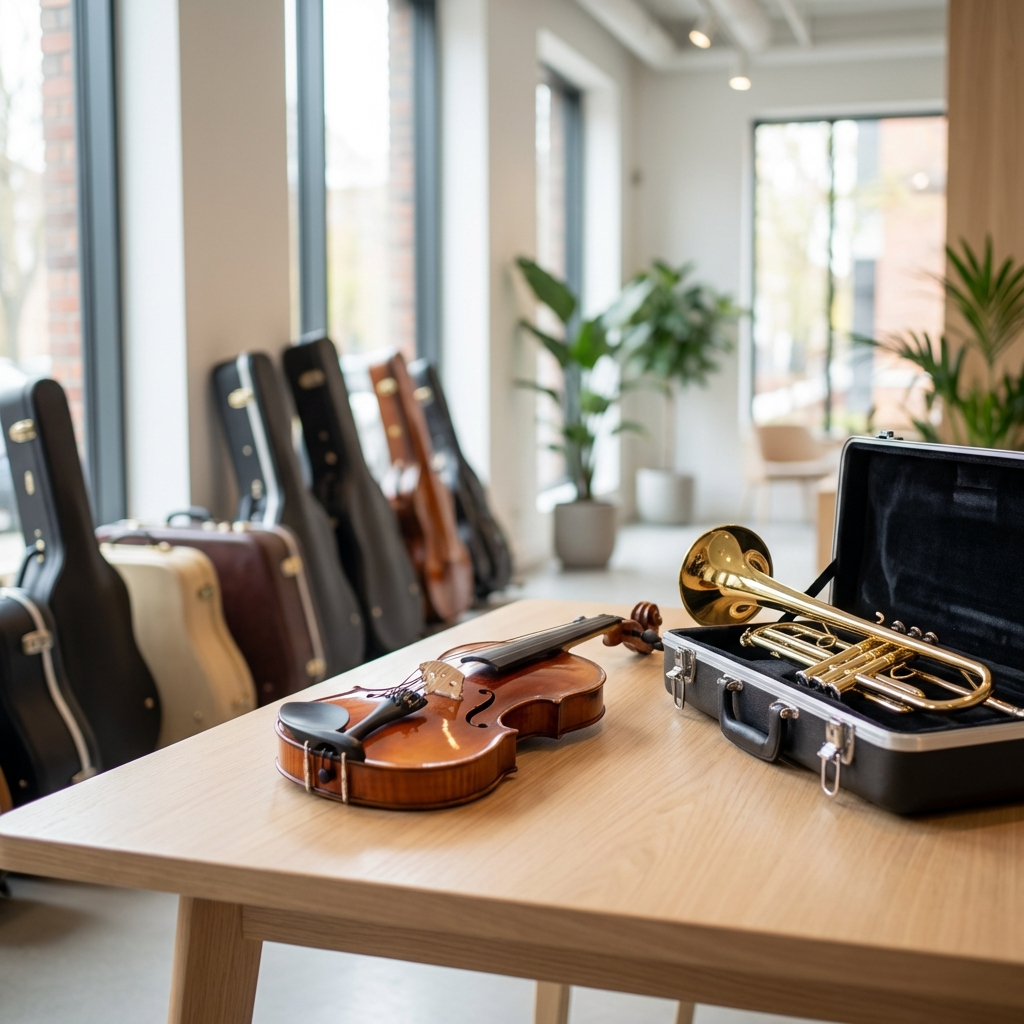
Arizona’s climate is unique: hot, dry, and frequently dusty. Good care practices protect your rental investment and keep your instrument playing its best.
General best practices:
- Never leave instruments in a parked car. Heat can warp wood, soften pads, and damage finishes within minutes.
- Store in a climate-stable area at home. For strings, aim for a stable humidity range; 40–60% is a helpful target.
- Keep the case latched whenever you’re not playing. Unsecured lids lead to avoidable damage.
Strings (violin, viola, cello, bass):
- Wipe rosin dust from strings and top after each session with a clean, dry cloth.
- Loosen the bow when storing; over-tightening warps the stick.
- Use a properly fitted shoulder rest or endpin stopper to support posture and reduce stress on joints.
- If pegs slip in dry weather, consult your rental provider for a quick adjustment rather than forcing a fix.
Woodwinds (flute, clarinet, saxophone):
- Swab moisture from the bore after every practice to protect pads and prevent odors.
- Keep a small pack of appropriate reeds on hand (for beginners, strengths 2–2.5 are common starting points per teacher guidance).
- Avoid overtightening ligatures and neck screws; gentle, firm contact is sufficient.
- Do not use household cleaners on keys or pads; a soft, dry cloth is safest.
Brass (trumpet, trombone, baritone, horn):
- Oil valves and grease slides regularly following the teacher’s guidance.
- Empty water keys during and after practice to prevent corrosion.
- Use a mouthpiece brush and gentle soap for periodic cleaning.
Percussion:
- Store mallets and sticks in a stick bag to protect tips and maintain balance.
- Keep bell kits clean and free of dust; soft cloths only on bars.
If anything feels or sounds off—stiff valves, buzzing pads, or intonation that suddenly shifts—contact your rental provider or instructor promptly. Small adjustments handled early preserve practice momentum.
Comparison of Rental Terms and Upgrade Policies
Understanding rental terms protects your budget and ensures your student isn’t boxed in as they progress. When evaluating instrument rentals Chandler programs, compare the following features:
- Equity accrual vs. flat-fee plans:
– Equity plans: A portion of your monthly payment builds toward eventual purchase. – Flat-fee plans: Lower monthly cost, no purchase credit—useful for short-term or exploratory rentals.
- Size exchanges (strings): Confirm no- or low-cost size swaps as your student grows. Ask how often exchanges are allowed and whether accessories transfer.
- Instrument exchanges (switching instruments): If a student moves from clarinet to alto sax, clarify whether your existing equity can apply to the new instrument category.
- Step-up instrument upgrades: As skills develop, students may benefit from intermediate or advanced (“step-up”) models. Ask whether accrued equity from a beginner model can be applied to a step-up rental or purchase.
- Early purchase discounts: Many programs offer a percentage off if you buy within a defined timeframe. Get the deadline and percentage in writing.
- Included accessories and coverage: Reeds, valve oil, cleaning kits, cases, and stands may be bundled. Compare coverage for lost parts, accidental damage, and consumables.
- Repair and loaner policy: A reliable loaner during repairs keeps lessons on track. Confirm turnaround times and whether you need to bring the instrument to a local partner.
- Return and cancellation: Look for clear, no-penalty returns at the end of a billing cycle and straightforward cancellation procedures.
Before signing, read the contract end to end. A five-minute review—especially of damage exclusions and equity rules—prevents surprises later.
ESA Scholarship Reimbursement and Financial Assistance Options
Arizona’s Empowerment Scholarship Account (ESA) program can help eligible families manage education costs, including music instruction. EVSM is eligible for ESA scholarship reimbursement, and many families successfully use ESA funds to offset lesson fees. Policies evolve, but a few practical points apply:

- What may qualify: Private music lessons, group classes, and required instructional materials. Instrument rentals may be eligible if they’re necessary for instruction and properly documented—confirm current guidelines before submitting.
- Documentation to keep:
– Itemized invoices with student name, service dates, and instrument details when applicable. – Proof of payment (receipts or bank records). – Lesson attendance records or teacher confirmations if requested.
- Submission timing: Follow ESA deadlines closely to avoid processing delays. Retain digital copies of all documents.
- Coordination with your provider: Ask your studio for ESA-ready invoices that clearly separate lesson fees from rental or accessory charges.
Additional financial supports to consider:
- Multi-student or sibling discounts from studios.
- School district instrument loan programs for certain band or orchestra instruments.
- Short-term rentals for auditions and festivals rather than long commitments.
- Community foundations and booster clubs that offer need-based assistance.
For precise eligibility and current rules, consult the official ESA program resources. Studio administrators at EVSM can share practical tips on documentation and workflow, but final approval always rests with the ESA program.
Getting Started: Steps to Reserve Your Rental Instrument
A clear plan speeds up the process and reduces back-and-forth. Use this simple roadmap to secure the right instrument on time:
- Confirm your goals: Decide on private lessons, group classes, or both. Align your instrument choice with school ensemble requirements if applicable.
- Consult your teacher: Ask for recommended brands, sizes, mouthpieces, reed strengths, or string setups before reserving.
- Measure and fit: Especially for strings, get sized accurately at the studio or by your instructor.
- Review availability: Check current inventory and rates on the EVSM Instrument Rentals page and note any seasonal lead times.
- Choose a plan: Select monthly or school-year terms, add a maintenance plan, and confirm what accessories are included.
- Submit your request: Provide student details, pickup preferences, and payment information. Ask about delivery or in-studio pickup options.
- Pickup and verify: At pickup, inspect the instrument for proper setup. Schedule a quick check-in during your first lesson for fine-tuning.
- Set your routine: Establish a consistent practice schedule and store the instrument in a climate-stable spot at home.
If travel is a challenge, consider scheduling in-home lessons where available. Keeping instruction and instrument logistics convenient is one of the best predictors of steady progress.
Student Success Stories from the Chandler Music Community
- A fourth-grade clarinetist moves up: After beginning on a quality student clarinet from a local rental partner, a Chandler student advanced quickly in school band. Midyear, the instructor recommended a different mouthpiece and slightly stronger reeds. Because the program allowed easy accessory swaps and maintenance, the change took one week—just in time for the spring concert in EVSM’s 100-seat performance hall. The student finished the year earning first-chair placement.
- A growing violinist navigates sizes: One family started their daughter on a 1/4-size violin with rental coverage. After eight months, she was ready for 1/2 size. The exchange happened at the studio, and her teacher verified string height and bridge fit in the first lesson back. By the fall recital, intonation improved noticeably, and the family opted into a rent-to-own path with equity rolling forward.
- An adult beginner finds the right fit: A Tempe professional who always loved jazz decided to learn trumpet. Unsure about long-term commitment, he chose a month-to-month rental with a practice mute for apartment living. After six months of private lessons and a group improvisation class, he upgraded to an intermediate model using accrued equity, citing easier response and tone control.
- A sibling duo balances budget and progress: Two Chandler siblings joined orchestra and band the same year—cello and alto sax. Their family used a plan that bundled accessories and maintenance to avoid surprise costs. When festival season arrived, quick in-town repairs kept both instruments performance-ready. The predictable monthly expense helped the family sustain private lessons and ensemble participation without interruption.
These stories highlight a common thread: quality rentals aligned with professional instruction reduce friction. Students stay focused on music-making, not equipment hassles, and families can plan with confidence.
In the end, the best rental is the one that supports consistent practice, aligns with educator standards, and remains flexible as students grow. With strong local partners and clear, student-centered policies, Chandler families can enter the world of music with the right tools—and the right plan—to succeed.